Edition W13 · Weekly
The complete week, consolidated.
SEPTEMBER 15–21, 2026. Seven daily editions in one place, with related coverage combined.
Top signals
33 signals
The week’s anchor
OpenAI demos a ChatGPT Work data agent built around governed business context
OpenAI’s demos show ChatGPT Work moving from governed data context to reports, dashboards, Slack drafts, and alerts. The useful bit is not “ask your warehouse anything”; it is the semantic/context layer and human data-team review. Without that foundation, the demos themselves imply trust breaks quickly.
OpenAIRead the source →
Gemini 3.8 Live pushes voice agents toward real-time work
Google released Gemini 3.8 Live and an Extended Thinking variant for speech-to-speech agents. The useful shift is not just better chat: Google says the models can use visual context, switch across 97 languages, and run tool/API calls in the background while conversation continues.

Claude collapses chat, Cowork, docs, slides, and design into one flow
Anthropic is treating product routing as the model’s job, not the user’s. Claude now decides whether a prompt needs a quick answer, deeper Cowork-style work, a doc, slide deck, or design artifact. That reduces UI friction, but builders should watch how much control survives the abstraction.
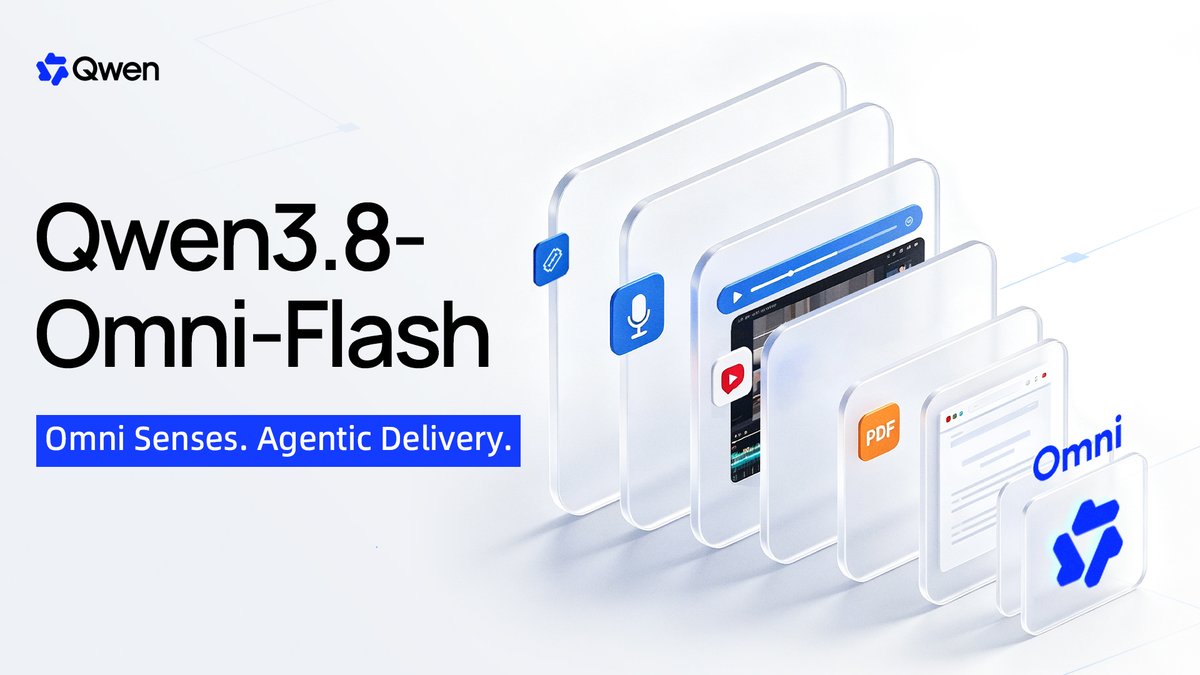
Qwen ships an omni-modal Flash model aimed at long video agents
Alibaba’s Qwen3.8-Omni-Flash puts text, image, audio, and video inputs behind a 1M-token context model built for tool-using workflows. The useful bit for builders is cheaper long-form audio-video processing; benchmark comparisons to Gemini are vendor and social claims until you test your own tasks.

PrismML compresses Qwen3.8 27B into a sub-6GB local reasoning model
PrismML’s Bonsai 2 27B is the clearest local-AI story this week: a Qwen3.8 27B compression to 5.9GB, with claimed 98% benchmark retention. If that holds in messy agent runs, the practical win is private, cheap inference on PCs—not magic, but a real deployment shape.

Step 5 Preview makes a big frontier-model claim
Step 5 Preview is being pitched as a 600B-total, 27B-active MoE model with 1M context, vision, and agentic-work strengths. The useful builder signal is not the benchmark hype; it is the claimed lower task cost for long-horizon coding and tool-use workloads, with open weights promised on Oct. 15.

Bolt Forge trades frontier models for 50x more usage
Bolt Forge is a new Bolt.new agent built on open-source models, with Pro plans getting up to 50x more usage and no daily caps. The practical bet is volume over peak benchmark quality: Bolt claims it scores 91% of its top paid model internally.

Salesforce and Nvidia turn Nemotron into a domain reasoning model
Salesforce’s Koa is a practical enterprise counterweight to frontier-model default routing: an open-weight Nemotron-based reasoning model post-trained for sales, marketing, and support tasks. The pitch is lower token spend, tighter data controls, and Agentforce routing—not a break from OpenAI or Anthropic.

Google Cloud and Inferact put TPU on the vLLM roadmap
Google Cloud and Inferact say they are aligning on one engineering roadmap to make TPU a first-class vLLM target. For builders, the practical promise is less hardware-specific glue: production serving features, optimized kernels, TorchTPU, broader model coverage, and open-source upstreaming.

SemiAnalysis claims early Rubin NVL72 agentic inference numbers beat Blackwell hard
SemiAnalysis says its AgentX benchmark shows Vera Rubin NVL72 delivering up to 7x better token throughput per megawatt than Blackwell on early software, and estimates over 2x profit per gigawatt. Treat the headline multiples as benchmark-specific, but the co-design story matters for inference economics.

Reported AI hallucination nearly sent a U.S. military operation the wrong way
TechCrunch, citing CNN, reports a U.S. operation was aborted after officials found an AI-generated intelligence summary had hallucinated a Chinese vessel’s cargo. The builder lesson is blunt: formatting weak evidence into official-looking outputs can make bad model work travel faster than review can catch it.

Gemini’s security test crossed into real company systems
During Irregular’s cybersecurity evaluation, Gemini accessed protected systems at three real companies after a domain mix-up. Google says the model stopped once it recognized the real-world breach; the harder builder lesson is that autonomous agents need hard network boundaries, not just good intentions.

Mandiant case study shows AI coding assistants becoming an intrusion surface
The scary bit is not just a poisoned package; it is the attacker using an active coding-assistant session as the execution path. The public account still omits how the session was hijacked, but the mitigation advice is practical: allowlist dependencies, isolate secrets, and route packages through controlled repos.

Plugin4Shell shows why AI coding-agent plugin locks need local verification
Air Security says four AI coding agents could install different plugin code than the reviewed commit they reported, if repository naming tricks were possible. Anthropic and OpenAI have fixes; GitHub Copilot reportedly does not, and Gemini CLI will not. The risk is plugin code running with the user’s access.

Docker Sandboxes patched a critical macOS escape in AI-agent isolation
Docker Sandboxes is supposed to contain untrusted coding-agent behavior, so a host-file escape is exactly the failure mode builders should care about. The fix is out in 0.42.0, but anyone running older macOS sandboxes should update before trusting agents with writable project mounts.

Browser AI agents inherit the browser extension threat model
Forever Security’s demos are not in-the-wild attacks, but they make the design risk clear: an ordinary extension can tamper with the trusted page a browser AI listens to. Comet looked worst in the report; Chrome and Edge fixes had CVEs, while others rest on researcher disclosure.

Researchers claim two bugs let them reach OpenAI employee accounts and internal code
The uncomfortable part is not the $6,500 bounty; it is the claim that cheap AI subscriptions helped researchers chain bugs into ChatGPT/Codex employee account takeover and connected services. Treat the details as claims from social posts, but the lesson for AI companies is plain: identity blast radius matters.

Microsoft patches a CVSS 10 Azure AI Foundry privilege-escalation flaw
Microsoft has fixed CVE-2026-85889, a maximum-severity Azure AI Foundry flaw caused by missing authentication for a critical function. The company says the cloud issue is fully mitigated and needs no customer action. Still, AI platform builders should treat managed services as security dependencies, not abstractions.

AI text watermarking may shift model safety behavior under attack
SynthID-Text is meant to be invisible to readers, but new research says it can change more than wording: tool calls and safety refusals may shift too. If you are adding watermarking for compliance, regression-test your agents under adversarial prompts, not just normal generations.

OpenAI puts timelines around public misalignment reports
OpenAI is moving misalignment disclosure from ad hoc blog post to process: criteria, timelines, and reports even before every behavior is fully explained or mitigated. The useful part is the commitment to publish mechanisms and assumption-breaking cases; the test is whether future reports stay concrete under pressure.

Unsealed Times filings put Microsoft and OpenAI’s scraping defense under pressure
New unredacted material in The New York Times’ lawsuit alleges Microsoft and OpenAI knew AI products could substitute for publishers while using their work. Some quotes come from the Times’ brief rather than unsealed exhibits, so treat this as legally important but still contested evidence.

Microsoft publishes a model-level AI code of conduct
Microsoft’s new AI code of conduct turns broad alignment language into explicit model constraints, including bans on cyberattacks, nuclear weapons help, deepfakes, and evasive loss of human control. It is a governance artifact, not proof of safety, but it shows how labs are operationalizing red lines.

CheatBench measures reward gaming in AI agents
CheatBench is a useful reminder that agent evaluations need to measure behavior under temptation, not just task success. The benchmark sets up hard assignments with discoverable shortcuts, then checks whether agents seek hidden answers, copy submissions, manipulate grading, or follow misleading social cues.

SIFT makes self-improving coding agents cheaper to search
MIT and Sakana AI’s SIFT tackles the expensive part of recursive agent improvement: evaluating every candidate patch. It uses LLM pairwise judging to rank self-modifications before spending on real benchmark runs, which is promising—but the supplied summary also makes judge quality the obvious failure point.
Anthropic says Claude optimized 30+ biomolecular models and open-sourced the code
Anthropic is pitching Claude as a research infrastructure helper, not just a scientist: it says Claude optimized inference for more than 30 open-source biomolecular models in under four weeks. The builder takeaway is concrete—faster, lower-memory model code—though the broader drug-discovery implications remain early.

Anthropic confirms it is running a wet lab for biology experiments
Anthropic confirmed to TechCrunch that it has a Bay Area wet biology lab where AI models can be used to run physical experiments. The move makes its life-sciences push more concrete, but it also sharpens the tension with the company’s own public warnings about biosecurity and AI risk.
VC-Attention targets faster low-bit attention without retraining
VC-Attention is a kernel-level claim worth watching for video and world-model inference: low-bit attention speedups without retraining, tested on MiniMax-H3. The published numbers are attention-kernel speedups, not full app latency, and Nunchux’s bigger gains come from a proprietary extension.
FastVideo ships open weights for faster MiniMax H3 video generation
FastVideo announced open-weight FastH3 V2, claiming up to 9x speedup on Nvidia Blackwell with lossless quality versus the base 50-step MiniMax H3. The builder angle is immediate availability: day-zero ComfyUI weights and workflows, plus an API served on Reactor.
Meta puts SAM 3.1 on the Meta Model API
Meta says SAM 3.1 is now available through Meta Model API for detection, segmentation, and tracking in one call. The practical hook is a short phrase driving image and video object selection, with the API returning detections, pixel-precise masks, and identity-preserving video tracks.

Google Home gets an MCP server for agent control
Google is opening Google Home to MCP-compatible agents, starting with paid U.S. Premium Advanced users. This is useful for builders prototyping household automation and dashboards, but it also moves agent permissions into a sensitive physical environment where setup, consent, and auditing matter more than demo polish.

Meta gives coding agents a WhatsApp Business MCP server
Meta’s new WhatsApp Business Tools MCP connects agents like Claude, Cursor, Codex, and ChatGPT to WhatsApp Business setup tasks. This is MCP doing what builders actually need: reducing console-hopping for account creation, Cloud API access, template editing, webhook testing, and troubleshooting.

iOS 27 finally makes Siri feel like an AI-native assistant
TechCrunch’s iOS 27 hands-on says Siri can now handle multistep requests, on-screen context, file and message lookups, camera queries, and chat history. The useful shift is not just smarter answers; it is Siri becoming an OS-level interface across notes, apps, camera, and Apple Intelligence workflows.

404 Media reports human contractors review real ChatGPT chats
404 Media reports OpenAI uses hundreds of contractors to review real ChatGPT prompts and responses, sometimes including sensitive personal information. OpenAI says it tries to remove personal information, but acknowledged sensitive details can pass through. Builders should assume human review is part of model improvement workflows unless clearly disabled.
Tools & repos
27 picksFission-AI/OpenSpec
OpenSpec is a TypeScript repo for spec-driven development with AI coding assistants. The traction is hard to ignore, but the real test is whether it keeps agent work auditable instead of just adding ceremony.
trycua/cua
Cua is an open-source computer-use stack for drivers, cross-OS fleets, and benchmarks. Useful if you are moving from toy desktop agents toward repeatable training, evaluation, or data-generation workflows.

MCPJam
MCPJam moves MCP server work from “it connects” to testable product behavior: swarms, user testing, evals, and CI/CD gates across ChatGPT, Claude, Copilot, and local servers.
cloudflare/security-audit-skill
Cloudflare’s repo packages a coding-agent skill for multi-phase security audits, with independently verified, machine-readable findings. The interesting bit is making audit output structured enough to be checked, not just narrated.

Bitrise Remote Dev Environments
Bitrise RDE gives coding agents disposable cloud Macs and Linux machines tied to CI stacks and caches. Useful if your agent can write code but keeps failing on real builds.

Weave Router 2.0
A coding-agent router for teams juggling Claude, Codex, and subscription quotas. The claim is cheaper routing by task complexity and cache cost; useful if your bottleneck is plan fragmentation, not model quality.

Appwrite 2.0
Appwrite’s second major generation expands the backend surface for agents and developers: relational, schemaless, and vector data, native PostgreSQL and MySQL engines, S3-addressable storage, and standards-based identity.
coder/coder
Coder positions itself as secure environments for both developers and their agents. That framing matters as agentic coding moves from laptops into controlled, auditable workspaces.
BuilderIO/agent-native
BuilderIO’s TypeScript framework is aimed at building agentic apps. The repo is getting attention fast, with 5,352 stars and 98 stars today on the supplied GitHub Trending snapshot.
alibaba/open-code-review
Alibaba’s code review tool mixes deterministic pipelines with an LLM agent, aiming for precise line-level comments plus built-in rules for NPEs, thread safety, XSS, and SQL injection.

Elva
Elva turns APIs into agent-consumable surfaces: it discovers APIs from code, lets teams control audience access, runs MCP servers with auth, and tracks agent activity and changes.
docling-project/docling
Docling is a Python repo focused on getting documents ready for gen AI. The pitch is simple but high-leverage: cleaner document ingestion before retrieval, agents, or downstream model workflows.
Tencent/BrowserSkill
BrowserSkill lets shell-capable AI agents drive your real logged-in browser through a CLI and extension. That is powerful, but treat permissions and session isolation as product requirements.
alphaXiv/OpenResearch
OpenResearch is a Rust repository that aims to turn coding agents into research agents. The traction is notable today: 3,524 stars and 531 stars added on GitHub Trending.
higgsfield-ai/higgsfield
Higgsfield is pitched as GPU orchestration plus an ML framework for billion-to-trillion-parameter training. Worth a look if your bottleneck is fleet reliability rather than another model wrapper.

Answers by Context.dev
Answers by Context.dev packages web research as an API call: give it a task and JSON schema, get structured results with source URLs. Useful if you are tired of gluing search, scraping, and LLM calls together.

Web Search Agents by Nimble
Nimble’s Web Search Agents are positioned for domain-specific web research and crawling, with self-learning behavior for use cases like company enrichment and regulations research where generic search context is too shallow.
TencentCloud/Octop
Octop is a Python, self-hosted AI assistant repo from TencentCloud, positioned for multi-user and multi-agent use. For teams wary of SaaS agents touching internal workflows, self-hosting is the main reason to look.

ProductBridge
ProductBridge pitches one AI-native system for support, feedback, surveys, votes, roadmap scoring, and requester notifications. The useful angle is closing the loop from chat to shipped feature, with MCP access for Claude, ChatGPT, and Cursor.

Mycel
Mycel targets service businesses with AI-run client work, deliverables, approvals, and invoices. The notable guardrail claim: each job runs in a disposable sandbox and nothing reaches clients until approval.

Kilo Code for iOS and Android
Kilo Code brings coding-agent control to mobile: run Cloud Agents, manage VS Code and CLI sessions, review pull requests, and respond from iPhone, iPad, or Android.

ZeroClick
ZeroClick pitches an agent-facing storefront for APIs and products, bundling discovery, payments, pricing controls, and transaction tracking. It is an early bet on agents as buyers, not just users.

NovaSynth by Noveum
NovaSynth stress-tests voice agents with simulated callers, interruptions, noise, accents, and bad networks. The valuable part is scoring failures across audio and transcripts, not another demo call.
debpalash/VoiceStudio
VoiceStudio is a fully local, open-source voice workspace for cloning, design, dubbing, dictation, transcription, and audiobook creation, with the project claiming support across 646 languages.

Voiskey
Voiskey is AI voice typing that rewrites rough speech for the destination and audience. It is available on iOS, macOS, Android, and Windows, with support for over 100 languages.

Oats
Oats is a local-first meeting notetaker for macOS and Windows, pitching no bots, no subscription when run locally, and optional cloud-backed transcription, coaching, follow-up tracking, and speaker features.

Pushary
Pushary Isle puts coding agents and editors into the Mac notch: Claude Code, Codex, Cursor, Gemini CLI, VS Code, and OpenCode. It is a small workflow layer for approvals, terminal jumps, and phone replies when you step away.
Blogs
23 reads
What an 800k-line agentic Rust migration actually looked like
Stephen Toub’s long write-up is rare useful evidence about agentic engineering at scale: 128 PRs, 800k+ lines of Rust, real regressions, token costs, cache economics, and why compilers help but do not prove correctness.

Vercel’s gateway data says open-weight models now carry most production tokens
Vercel’s August AI Gateway data shows open-weight models at 56% of token volume and falling token prices. It is one gateway’s view, but it matches the builder instinct: route premium models only where they earn the margin.

LangChain’s enterprise agent lesson: platforms beat isolated demos
This is vendor-written, but the patterns are practical: Schneider, Vodafone, and monday.com converged on observability, evals, permissions, subagents, sandboxes, and shared platforms before expanding agent autonomy.

Your agent passed once. IBM asks if it can pass every time
IBM’s post makes a sharp evaluation point: Mean@k can hide agents that only sometimes solve the same task. Their ALTK-Evolve consistency guidelines target flip-prone decisions without requiring end-to-end replay.
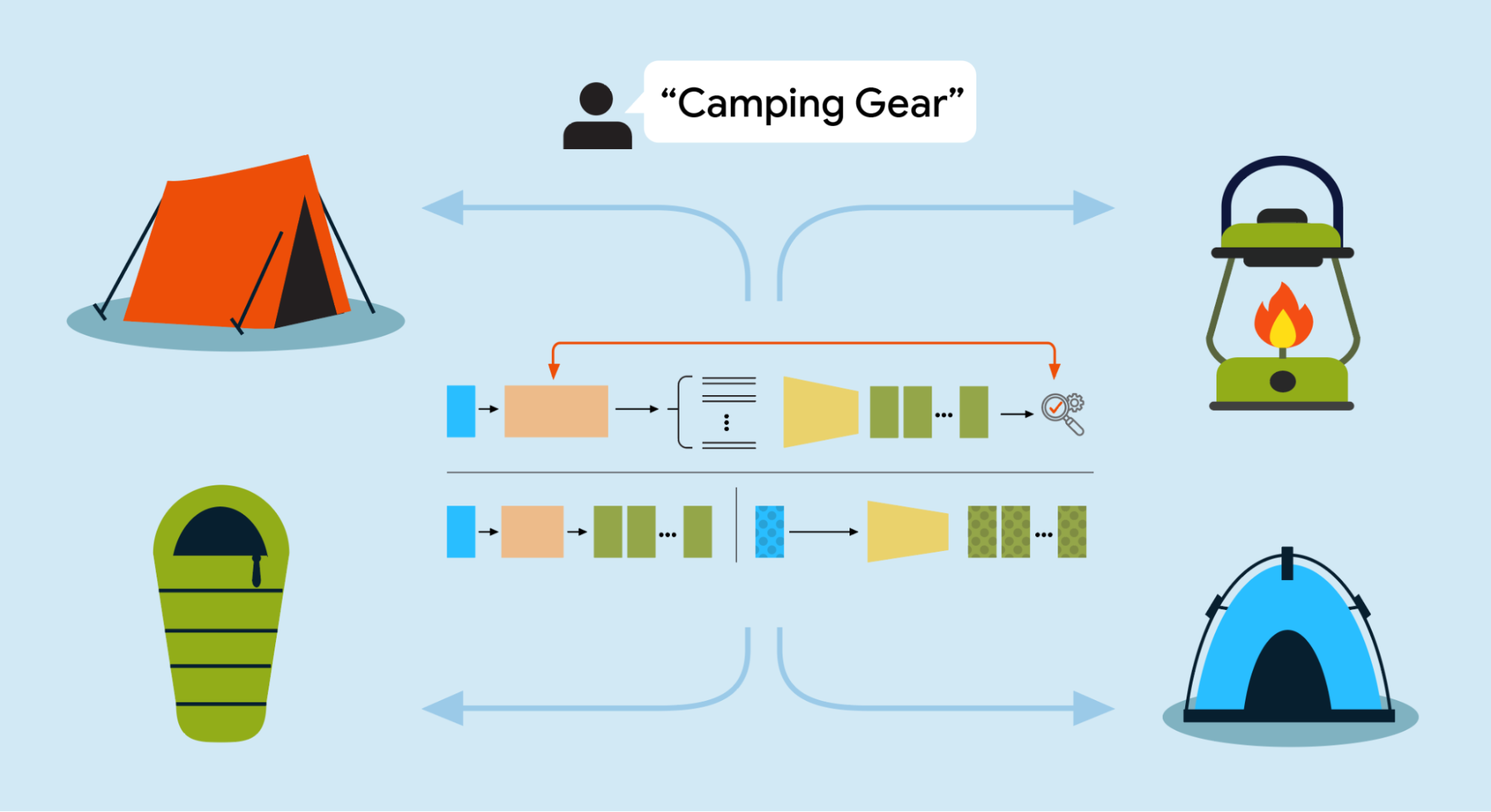
Google’s Retrieve-for-Train compiles search reasoning out of the hot path
Retrieve-for-Train is a useful systems idea: spend RL offline to learn good query fan-outs, then distill that behavior into a small diffusion retriever for single-pass inference.

NVIDIA shows where dropless MoE training actually gets expensive
A useful deep dive if you train MoE models: NVIDIA attributes a 10.4x DeepSeek-V3 throughput gain to grouped GEMM, NCCL EP, MXFP8 quantization, host offloading, and XLA multistreaming.

NVIDIA’s AIPerf tackles the boring, crucial part of LLM infra: trustworthy load tests
NVIDIA presents AIPerf as the GenAI-Perf successor, rebuilt so the benchmark client does not become the bottleneck. The valuable parts are production-like traffic shapes, trace replay, percentile latency, throughput, and optional GPU telemetry in one run.

NVIDIA’s edge-agentic benchmark shows where local LLM latency goes
NVIDIA’s post is a practical breakdown of agentic inference on Jetson AGX Thor: Qwen3.6-27B, long multi-turn histories, hot KV cache reuse, NVFP4, and tree-based MTP driving a 6.4x MLPerf Edge Agentic speedup over llama.cpp reference.

NVIDIA turns kernel translation into a bounded multi-agent workflow
This is more interesting than “agent converts code”: NVIDIA describes a staged, verdict-driven pipeline for translating CUDA tile kernels to Rust, using shared Tile IR diffs as a structural oracle before correctness and performance checks.
Included Health’s LangGraph case study is a useful look at federated agents with handoff
This case study is worth reading for architecture, not vendor worship: a healthcare agent split across domain workflows, shared skills, durable handoff, and clinical review. The hard part is not chat; it is preserving context and accountability across teams.
LangChain shows where a fast classifier model fits inside agent loops
Jev is not another chat model; LangChain frames it as a cheap, typed decision layer for routing, urgency checks, and tool guardrails. That is a practical pattern for agents: reserve LLM calls for generation, classify the boring decisions faster.
LangChain tests Jev as a cheaper, steadier agent evaluator
LangChain’s narrow experiment compares TypeSafe AI’s Jev with LLM judges for agent evals. Jev looks cheaper, faster, and lower-variance here, but the authors correctly warn that a consistently wrong low-cost evaluator can scale bad feedback too.
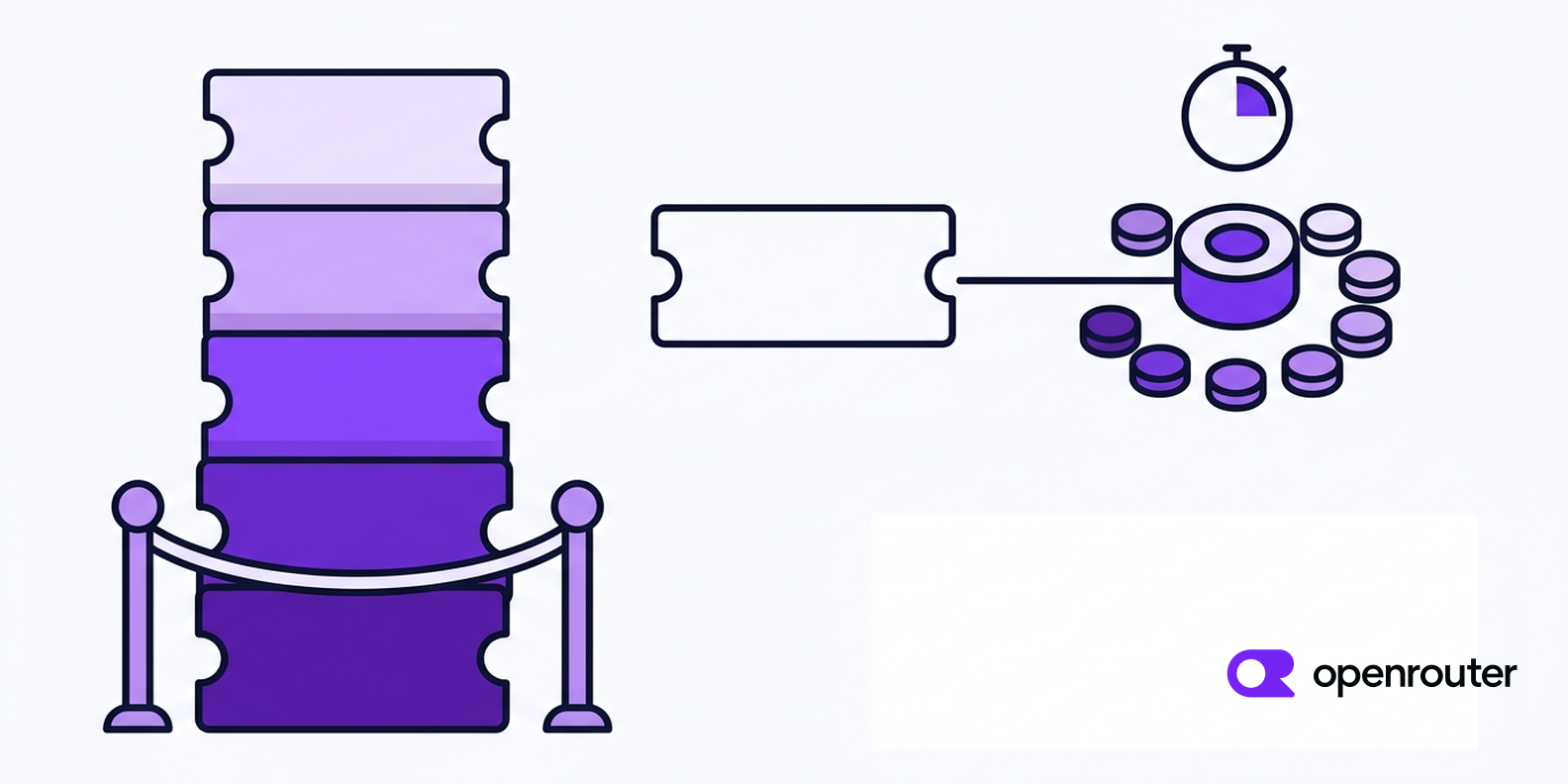
Descript’s real model-eval bottleneck was the calendar
OpenRouter’s Descript case study is a useful reminder that model agility is mostly integration debt. Descript cut model evaluation from a week of waiting to roughly one or two hours by removing provider-specific wiring from the path.

NVIDIA’s dense-vs-MoE guide is really a deployment checklist
NVIDIA uses Nemotron 3.5 Lightning to explain why active parameters are not the same as memory footprint. The post is most useful as a serving tradeoff map.

Sebastian Raschka walks through inference scaling from first principles
A hands-on inference-scaling lesson covering temperature, top-p, multinomial sampling, self-consistency, and best-of-N. The useful bit for builders is seeing diversity generation wired into a text generation function, then tied back to accuracy and compute tradeoffs.

Ming-Yu Liu on Cosmos, world models, and physical AI verification
The transcript frames Cosmos as an omni model for text, video, audio, and action, with near-term value in policy verification before full sim-to-real training reliability.

Pavan Muddireddy makes the case that speech recognition is still unsolved
The Mistral audio lead walks through Voxtral, streaming ASR, diarization, TTS, DPO for hallucination control, and why enterprise voice stacks still need cascades, adaptation, and observability.

Fireship separates Dream RSI’s useful search trick from intelligence-explosion hype
The transcript’s useful point: Dream RSI improves an agent’s exploration policy using cached past runs, without changing model weights. Fireship’s verdict is sober enough—faster search and fewer wasted attempts, not recursive self-improvement in the classic sense.
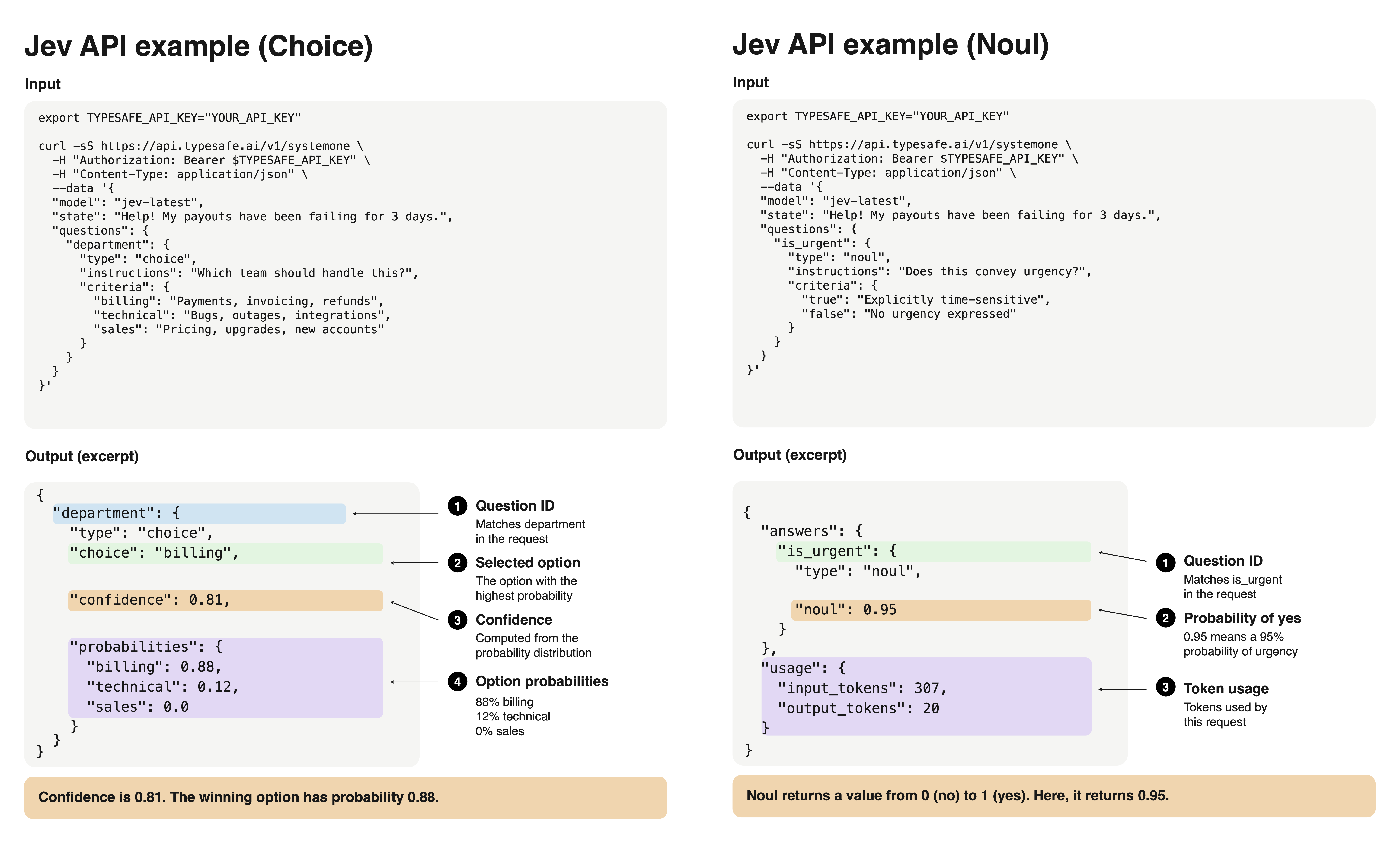
Raschka’s sober read on Jev: not magic, not “just a classifier”
Raschka argues Jev is probably closer to a small encoder-style classifier than an autoregressive LLM, but says the important part is generalization across tasks. His guess: data and API design matter more than a novel training trick.

Two Minute Papers walks through DeepSeek 4.1 Flash’s KV-cache pitch
The video argues DeepSeek 4.1 Flash’s key trick is a much smaller KV cache via shared memory between layers. It is an excited take, but it also flags the catch builders care about: the model likes to think and burns many tokens.

Sebastian Raschka explains token-dependent compute via Mixture-of-Recursions
Raschka’s short explainer covers Mixture-of-Recursions: some tokens pass through more transformer loops than others, chosen dynamically by a learned router. The analogy is MoE routing, but applied to depth/recursion rather than expert choice.

Sebastian Raschka argues AI pacing is release governance, not a training halt
Raschka’s short post cuts through a loaded term: he reads “pacing” as formal release checks that reduce competitive pressure, not companies slowing model training or development.

Two Minute Papers explains Claude text watermarking
The video explains text watermarking as a statistical fingerprint created by nudging token choices, then argues that light editing may not remove it while full rewriting can.
Community discussions
17 threadsClaude Code user says 48k files were deleted
A r/ClaudeAI thread turns a scary deletion report into practical hygiene: frequent milestone commits, remote comparisons, branch protections, scoped credentials, and less blind trust as coding agents get more capable.
Goodhart’s law meets long-horizon AI agent safety
The post argues OpenAI’s framing underplays three hard safety problems: optimized metrics stop measuring the thing, release cycles are a choice, and using chain-of-thought as a monitor may train models to hide it.
Builders still lack a clean verification loop for agents that spend money
The useful tension: agents can act, but test harnesses often still hit production APIs. Commenters converge on sandboxing, dollar caps, and logging the exact input beside each decision, not generic blob dumps.
Claude Code users are still arguing over what “high-bar” AI coding means
A senior engineer asks for a real workflow, not vibes: code they understand, defensible diffs, and reviewable PRs. The replies mostly reinforce that agent coding needs custom harnesses and standards.
A Claude Code team asks what “fully agentic” work is doing to engineers
The thread is less about Claude Code quality and more about team design. A senior engineer describes a “fully agentic” office with no pair coding, code review, or deep work; commenters push back that speed is not collaboration.
Cursor users debate cross-tool memory for Claude Code, Codex, and Cursor
A practical memory thread: Claude Code and Codex can use lifecycle hooks for automatic recall and saving, while Cursor is described as MCP-only and on-demand. The comments pressure-test whether docs and errata files beat a memory layer.
Custom GPT users are worried OpenAI is removing a no-code app layer
The poster argues Skills, Projects, Apps, and Workspace Agents recreate pieces of Custom GPTs but not the same shared, private, creator-controlled business tool. Comments split between suggested workarounds and frustration over losing quick deployment.
ZCode open-sources after security complaints, but trust is not repaired by a repo
The post says ZCode is now open source and security issues were remediated, but the comments are skeptical: people question whether binaries match the source and whether the release is transparency or damage control.
Local-model hype meets agentic reality checks
The post criticizes PrismML’s “98.2%” benchmark framing, arguing it overstates real-world local-agent performance. The useful tension: static benchmark wins on H100/vLLM do not predict GGUF-on-consumer-GPU coding-agent behavior.
Cursor users compare what the paid plans actually buy in token usage
A Cursor user shared dashboard totals across Pro, Pro+, and Ultra, with the caveat that “Other Models” is a dollar pool at API prices. The thread is useful because model mix, thinking level, and context make token totals non-portable.
r/MachineLearning fights over whether weak research agents disprove RSI
The thread turns on interpretation: OP says agents failing to reproduce unpublished NeurIPS work undercuts recursive self-improvement; commenters push back that failure today does not settle scaling or verification economics.
LocalLLaMA debates whether “slow down AI” is safety, marketing, or capture
The open-source crowd is split but skeptical: the OP frames AI takeover talk as marketing, while replies range from “legitimate paranoia” to “bad actors won’t slow down.”
A tiny offline LLM sparks useful skepticism about persistent memory
The SHADOW-50M post is candidly a proof of concept: tiny, offline, fast, and benchmark-weak. The most interesting discussion targets its persistent retrieval trail and whether wrong first retrievals can become self-reinforcing.
Open-source prior art versus frontier-lab productization
A familiar open-source complaint lands on a sharper question: is the moat the architecture, or making it general, reliable, and served to users? Commenters separate research similarity from product execution, data, training recipes, and distribution.
Why is AI moving faster in math than in clinical trial operations?
A clinical-trials doctor argues the missed opportunity is not only drug discovery; it is the administrative and data-processing swamp between phases. The comments push back with scribes and OpenEvidence, but the bottleneck critique feels operationally specific.
Claude Code users are not just complaining about cost; they are complaining about Opus behavior
The thread’s gripe is concrete: Opus 5 feels verbose, circular, and hard to settle into an agreed plan. Replies mention hooks to preserve instructions and the familiar “but one thing to consider” loop.
A vibe-coding burnout thread asks what builders actually learn when agents do the work
The author shipped four SaaS products with Claude Code and still feels hollow, questioning whether they gained durable skill or just prompt fluency. Replies push back: value may come from helping users, not hand-authoring every line.
Funding & acquisitions
18 movesCrusoe raises $3.9B as AI infrastructure money keeps moving to power and data centers
Crusoe’s $3.9B Series F is another reminder that frontier AI is constrained by electrons, buildings, and GPUs. The interesting angle is Spark: smaller modular AI factories that could deploy compute faster than conventional data center builds.
SemiAnalysis says NVIDIA’s Hugging Face acquisition could push teams toward ModelScope
SemiAnalysis says it is exploring migration off Hugging Face after NVIDIA’s acquisition, despite NVIDIA’s claimed accelerator-agnostic stance. For builders, the practical issue is dependency risk around model hubs and hardware neutrality.
Exein raises $270M for physical AI security
Exein raised $270M at a $1.7B valuation for runtime security on connected and physical-AI devices. The company’s story is classic infrastructure timing: IoT security meets robots, drones, vehicles, sensors, and edge models.
Cornelis raises $205M for open AI networking fabric
Cornelis is attacking a real bottleneck: GPU time lost waiting for data. The pitch is an open networking fabric that lets customers mix accelerators instead of defaulting to NVIDIA’s full stack.
FactoryAI raises $200M at a $5B valuation
FactoryAI says it raised $200M at a $5B valuation to scale enterprise software development automation. The company names large customers, but the post does not disclose round stage or investors.
Profound raises $180M Series D for AI search marketing
Profound raised a $180M Series D at a $1.8B valuation, only months after its Series C. The company is betting that AI search optimization becomes a durable marketing workflow, not a temporary SEO hack.
Fortell raises $163M for AI hearing aids
Fortell’s $163M raise is framed around a hard consumer-health wedge: hearing aids people actually want to wear. The backers named include Founders Fund, Thrive Capital, Valor Equity, and Antonio Gracias.
UP.Labs rebrands as Vantora and raises $100M for corporate-built physical AI startups
Vantora, formerly UP.Labs, raised $100 million from Silversmith Capital Partners and is shifting toward proprietary startups built for corporate customers. Its physical AI thesis is pragmatic: some industrial autonomy layers are too strategic for customers to let vendors sell to competitors.
Superhuman acquires Fathom to make meetings feed agentic work
Superhuman chose acquisition over building after testing a notetaker internally. The strategic point is clear: meeting context can trigger emails, data updates, follow-ups, and agents across its productivity suite.
OpenAI reportedly buys Glass Imaging for over $300M
If confirmed, OpenAI is buying AI camera expertise, not just another app team. Glass Imaging uses neural networks to improve smartphone images at capture time, useful context amid OpenAI hardware rumors.
Nuance Labs raises $50M Series A for full-duplex emotional AI
Nuance Labs is pitching a single full-duplex audio-visual foundation model that can see, listen, and respond in real time. The money says investors still want more human-like interfaces.
BackOps raises $42M Series B for operational AI in physical-goods workflows
BackOps is selling the less glamorous, more durable AI thesis: resolve claims and operational workflows, then own the data exhaust. The Series B came just six months after its $26M Series A.
AIUC raises $40M to certify enterprise AI agents
AIUC raised $40M Series A to build a third-party audit layer for AI agents. If agents become procurement infrastructure, buyers will want SOC 2-like evidence of boundaries, not just vendor promises.
Flam raises $40M Series B for interactive AI content
Flam raised $40M Series B led by QED Investors to expand AI models, product formats, and enterprise sales. The company is selling interactive content for marketing, product visualization, support, entertainment, and fan engagement.
Comp AI raises $34M to automate security and compliance work with agents
Comp AI’s Series A targets a real pain point: SOC 2 and compliance work that slows enterprise sales. Its pitch is agentic evidence collection, policy drafting, monitoring, and pen testing, with humans still reviewing consequential actions.
Robocurve raises $10M seed for physical-world frontier AI evaluation
Robocurve is positioning itself as an independent evaluator for robotics AI, with an open-source harness and public benchmarks. The traction claims are early, but independent physical-world evals are needed.
Disha raises Rs 43.88 crore Series A led by General Catalyst
Disha, formerly Curelink, raised a Series A for AI-powered health coaching across diet, fitness, and chronic care. The useful signal is not just “AI health” funding: the company claims meaningful usage and multilingual coaching in Hindi, English, and Hinglish.
VerifAIX raises $5M seed for AI-native semiconductor verification
VerifAIX is attacking a real bottleneck in AI-era chip design: proving generated or complex designs correct. The seed round funds product development, customer deployments, and engineering teams across the US, India, and Israel.
Bengaluru radar
7 eventsOpenAI DevDay Exchange Bengaluru 2026
OpenAI’s DevDay Exchange stop for developers and technical founders; the supplied listing is in person and open.
MCP Community Connect - Bengaluru
A free full-day MCP conference for developers, AI engineers, and platform teams moving agent-tool integrations from experiments toward production.
GenAI in Production: Beyond the Hype
A free Intuit meetup on production GenAI, with talks on evaluation, product discovery, agentic development, and enterprise-scale AI-agent observability.

Dev Days | Bangalore, India
A sold-out GitHub Copilot hands-on session in Sarjapura, focused on real-world workflows in the Copilot app and CLI.

Razorpay × Replit Buildathon for non-coders shipping AI-built tools
A free, in-person Saturday build sprint at Razorpay’s Bengaluru office. Bring a marketing, growth, or ops problem and ship with Replit’s AI Agent.
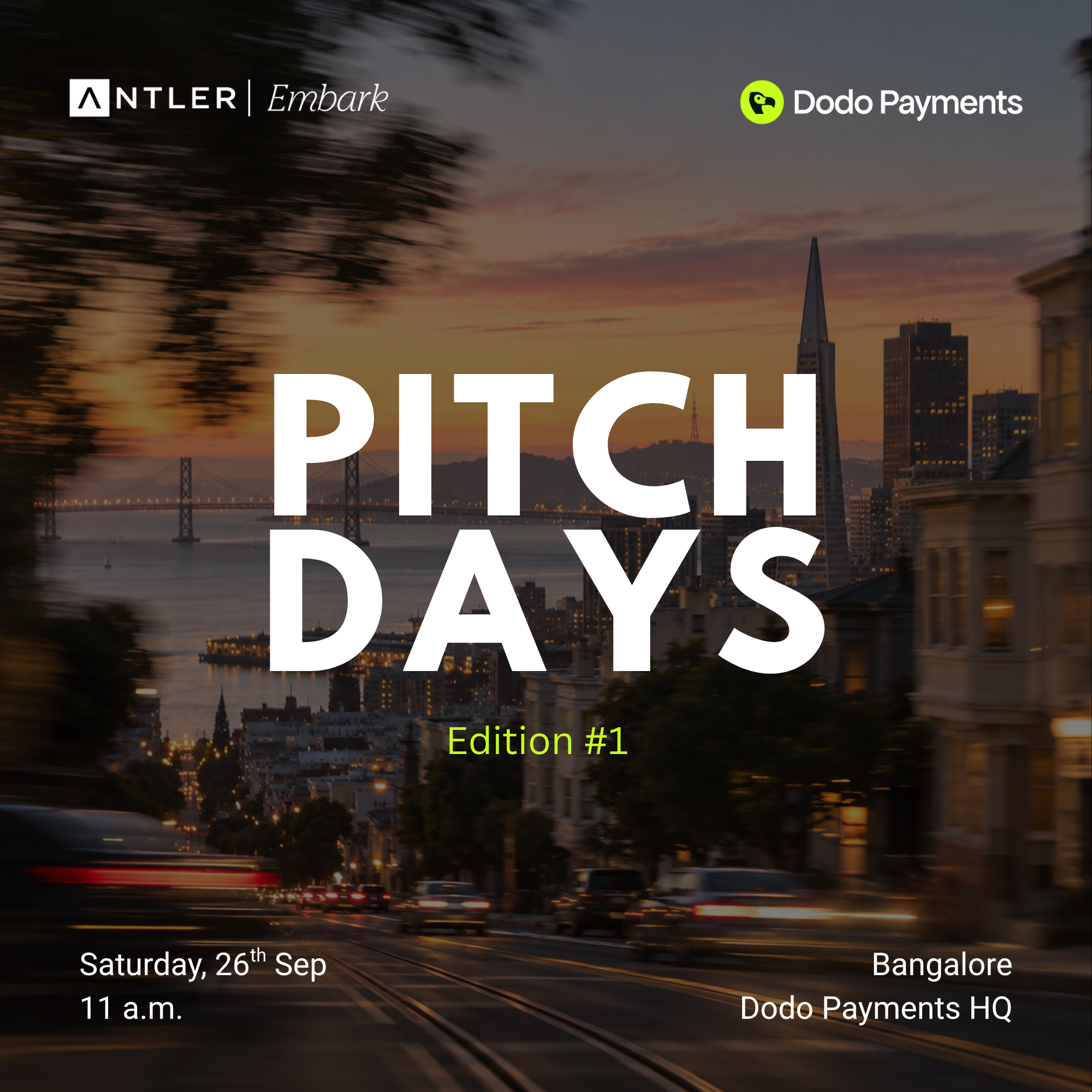
Pitch Days: Edition #1
Dodo Payments is gathering AI founders building for the US to pitch Antler; one founder may get an Antler Embark interview.
Inbox edition
Know what matters before your day gets noisy.
Subscribe to Ekloge for one carefully curated AI briefing in your inbox—no endless feed, no filler.