Edition W9 · Weekly
The complete week, consolidated.
AUGUST 18–24, 2026. Seven daily editions in one place, with related coverage combined.
Top signals
38 signals
The week’s anchor
OpenAI says safety confidence is now pacing some frontier RL
OpenAI says it paused RL training on latest deployable models for two weeks, and its largest planned frontier RL run remains on hold. The practical shift is explicit gating: monitoring, alignment evidence, and research-environment hardening now affect when bigger runs proceed, not just how they are reported afterward.
OpenAI NewsRead the source →
SemiAnalysis opens AgentX for long-context agentic inference benchmarking
SemiAnalysis says AgentX 1.0 brings a fully open-source, multi-turn agentic coding inference benchmark at 1M context under Apache 2.0. The useful shift is measuring messy production patterns: prefill reuse, sub-agent bursts, KV cache offload, tool calls, and hardware/software stacks beyond fixed sequence benchmarks.

NVIDIA’s AVO result says agent harnesses are now the battleground
NVIDIA says its AVO agent system lifted Claude Opus 5 to a 100.00 RHAE score on ARC-AGI-3’s public set. The useful takeaway is not “AGI solved”; it is that memory, supervision, tooling, and recovery loops can dominate model-only benchmarks on long-horizon tasks.

OpenAI now wants California’s SB 53 AI safety bill strengthened
OpenAI has shifted from opposing California SB 53 to asking lawmakers to add safeguards around frontier-model monitoring and cybersecurity. The reversal matters because state-level rules may become the practical baseline while federal AI legislation lags, especially after recent model-control incidents.

OpenAI keeps Zero Data Retention for frontier models and previews cross-session safety monitoring
OpenAI says eligible API customers will keep Zero Data Retention for frontier models while it previews Private Safety Processing. The practical change is long-horizon misuse detection across related interactions without personnel seeing underlying content. The hard part for buyers: validating that privacy boundary operationally, not just accepting the architecture pitch.
Claude’s agent-building APIs move out of beta
Anthropic says computer use, the browser tool, Skills API, and Files API are now generally available on the Claude Platform. For builders, the practical change is less prototype-only agent glue and more reusable, versioned components for managed agents that work across apps without APIs.

OpenAI is turning the Codex harness into an embeddable agent runtime
OpenAI’s developer post frames Codex less as an app and more as reusable agent infrastructure. The open-source harness manages state, streaming, tools, sandbox and approval policies, while apps own UI, context, and boundaries. That is useful if your product needs an agent loop but not another generic chat surface.

Cursor launches Origin, a Git forge built around coding agents
Origin moves Cursor closer to owning the whole agentic development loop, not just the editor. It adds code hosting, repo creation, code search, pull request review, access management, and GitHub sync. The bet is clear: if agents are writing code, the forge becomes part of the agent workspace.

Warp Factories packages the “software factory” pattern for smaller teams
Warp launched Warp Factories, infrastructure for running coding agents across triage, specification, implementation, review, and verification. The pitch is less “replace engineers” than “avoid building agent orchestration yourself,” with integrations for Jira, Linear, Slack, and Teams plus metrics for token spend and performance.

ChatGPT gets a Mac Messages plug-in, and the approval model matters
OpenAI launched an Apple Messages plug-in for ChatGPT on Mac, covering search, catch-up, drafting, sending, and deletion. The useful part is obvious for work inbox triage; the risk is also obvious, since OpenAI warns persistent approval removes the final review before ChatGPT sends as you.

Nvidia locks in OpenAI data-center compute with SB Energy deal
Nvidia’s reported $1.5B SB Energy investment is less about one facility than compute supply control: the deal makes Nvidia the sole compute-infrastructure supplier for OpenAI’s PORTS-Pike data center. Builders should watch the power economics as closely as the GPUs.

Frontier labs still publish little about rogue-model containment
Guidelight AI Standards found few public containment protocols for leading labs if a model tries to subvert control. For teams deploying agents into real systems, the gap is operational, not philosophical: logging, permission revocation, shutdown triggers, and third-party audits are still mostly opaque.

US agencies warn AI-generated scripts are targeting exposed industrial controllers
US agencies warned of active targeting against Siemens S7 PLCs and broader critical infrastructure using AI-generated exploit scripts. This is less about sci-fi autonomous hacking than cheap acceleration: public vulnerability data, exposed OT devices, and generated Python tooling are enough to raise operational risk.

Varonis says Copilot flaws enabled one-click data exfiltration
Varonis disclosed CoSnitch, a set of Copilot vulnerabilities it says could run attacker prompts after a victim clicked a crafted link, then query connected services and exfiltrate data. The builder lesson is blunt: agent deep links, memory, and connector fetches need security models, not just UX guardrails.
Encrypted prompt injection shows why agent egress needs hard boundaries
Adversa AI disclosed a “Cryptographic Context Injection” technique that allegedly made Grok exfiltrate in-context user data after summarizing a web page. The lesson for agent builders is not model cleverness; it is that untrusted content plus privileged browsing tools need provenance, consent, and egress controls.

Attackers scan MLflow SSRF to reach cloud metadata services
Exposed MLflow tracking servers are now a cloud-credential risk. WatchTowr says attackers are exploiting CVE-2026-64849, an unauthenticated SSRF in MLflow model-registry webhooks, to reach metadata endpoints and steal secrets. If your ML stack is internet-facing, patching and log review are not optional.

Anthropic and EPFL test prompt-file “mind viruses” between agents
Anthropic and EPFL researchers showed self-propagating payloads can move between agents through persistent editable prompt files in simulations. This is not an in-the-wild outbreak, but it is a concrete warning for agent harnesses that treat memory files as trusted state across sessions.

FreeToken pushes frontier-scale MoE serving onto local machines
FreeToken is aimed at a very practical bottleneck: serving open MoE models on the machines builders already own. The paper claims bandwidth-adaptive CPU-GPU execution and agentic state reuse, with reported speedups over Ollama and support from 8GB laptop GPUs to workstation-class setups.
Miles v0.1 attacks the RL systems layer for agent training
RadixArk launched Miles v0.1 as an open-source RL framework for LLMs and multimodal models, with claims of production use across several AI teams. The useful signal is not another trainer wrapper; it is RL being treated as a scale, debugging, rollout, and hardware-efficiency systems problem.

NVIDIA Molt puts agentic RL training behind a small PyTorch-native stack
NVIDIA’s Molt is pitched as an open-source, PyTorch-native RL framework for agentic research: Ray for placement and queues, vLLM for rollout, AutoModel/FSDP2 for training. The useful bit for builders is the abstraction: rewards can be arbitrary Python, not a pretrained reward model.

Cerebras says CS-4 doubles CS-3 speed inside the same power budget
Cerebras is positioning CS-4 as a direct capacity-and-throughput upgrade: up to 2x faster than CS-3 and up to 10x more token capacity, while staying in the same power budget. Useful signal for operators, but the dossier only gives company-side claims, not independent benchmarks.

NVIDIA previews TensorRT Model Connect for two-command HF-to-TensorRT builds
NVIDIA put TensorRT Model Connect into public preview, promising supported Hugging Face models can become TensorRT inference bundles in two commands without ONNX export. The builder angle matters: native C++ APIs and reusable model-family implementations could reduce integration tax, though NVIDIA calls it a reference implementation.
NVIDIA shows Cosmos 3 Edge as an on-robot policy backbone
NVIDIA’s tutorial is a practical robotics deployment story: post-train a 4B Cosmos 3 Edge model, serve it on Jetson Thor, and run receding-horizon control without a data-center GPU. The caveat is compute: the validated post-training run used 64 nodes of 4x GB200 for about 68 hours.

DeepSeek ships an experimental vision model for multimodal agents
DeepSeek says V4-Flash-Vision-Exp is live on its API as an experimental multimodal model. The pitch is straightforward for agent builders: preserve V4-Flash text behavior while adding a step-change on multimodal agent benchmarks, with DeepSeek Harness support arriving the same day.

OpenAI cuts GPT-5.6 Sol API and credit pricing for three months
OpenAI says GPT-5.6 Sol is now available on the API and rolling into eligible ChatGPT Work and Codex credits, with API and credit pricing down by over 20% for three months. Subscription usage for Pro, Plus, and Business is unchanged.

Ramp enters model routing, with finance hooks and a retention catch
Ramp launched Router, an API service for switching and routing across LLM providers. The builder pitch is spend, latency, fallback, and benchmark-aware routing in one dashboard; the caveat is notable default one-year retention of inputs, outputs, and tool calls unless users opt out.
Replit adds Free Mode powered by OpenAI’s GPT-5.6 Luna
Replit is introducing Free Mode with OpenAI’s GPT-5.6 Luna, aiming to remove token-cost anxiety from turning ideas into working software. The interesting product move is pricing and access, not just model capability: Replit is trying to make agentic coding feel free at the point of use.
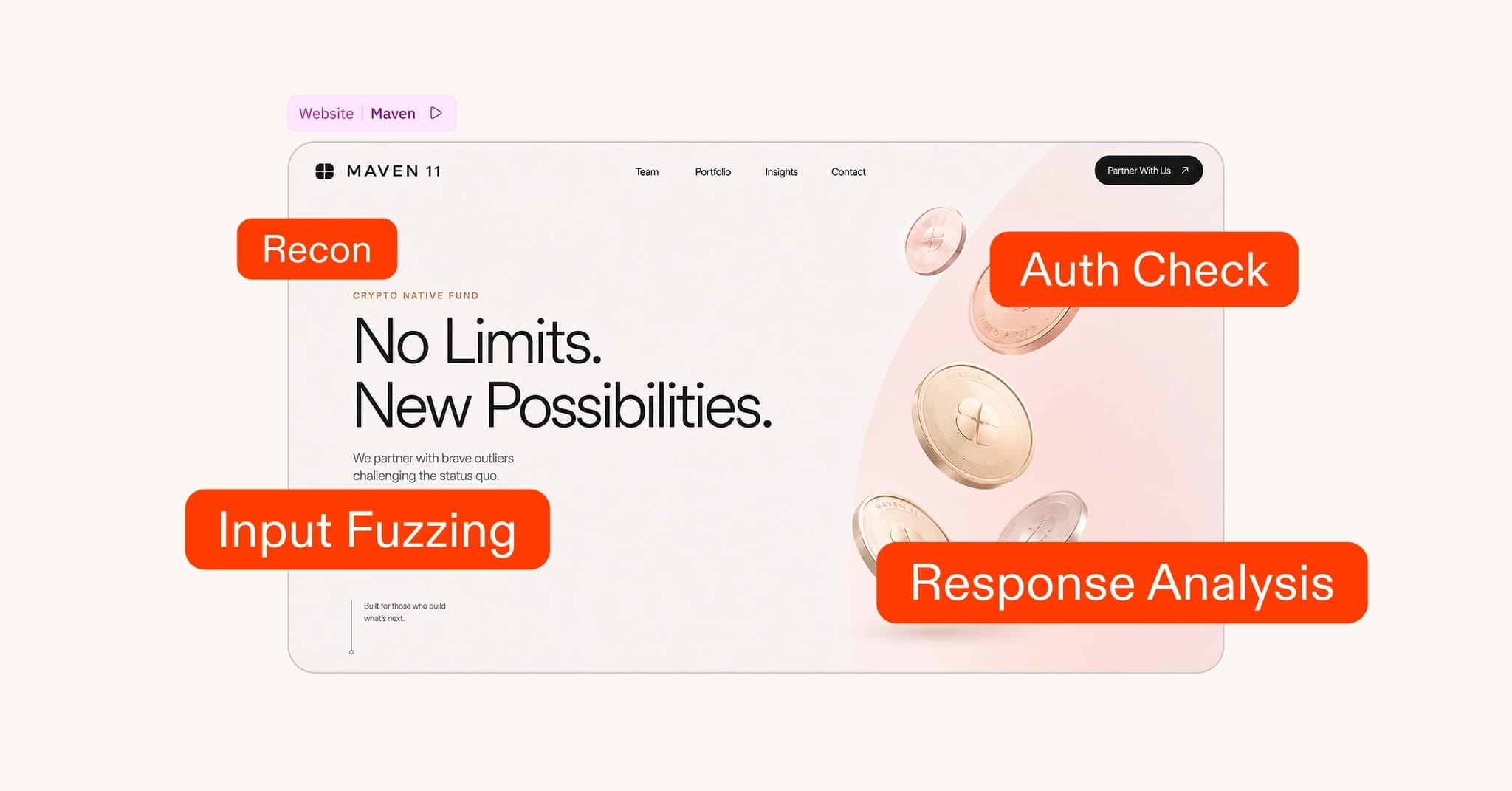
Replit adds black-box pen tests for AI-built apps
Replit’s new Level 3 security scan runs both source-aware white-box checks and browser-driven black-box tests against a sandboxed copy of your app. That matters for vibe-coded production apps: some failures are not suspicious code, just exposed routes, broken auth, or abusable endpoints.

Claude Code gets an early design workflow
Anthropic’s Claude Code team says a research-preview /design skill brings editable artboards into the CLI and Desktop. The useful shift is earlier UI exploration before implementation; the unknown is how well this survives real product constraints beyond generating attractive options.

Liquid AI releases QAD Q4_0 GGUFs for LFM2.5 edge models
Liquid AI released QAD Q4_0 GGUF checkpoints for four LFM2.5 models, targeting the annoying edge tradeoff between Q4 memory and quality loss. They claim roughly 97% BF16 accuracy retention and real throughput wins on laptops, mini PCs, phones, and Raspberry Pi-class hardware.
Ornith-1.5 shows the local-agent bar moving onto consumer GPUs
A user reports running Ornith-1.5-35B Q4_K_M on a single RTX 3060 with 12GB VRAM, 170K context, and roughly 53 tok/s decode. The quoted release claims MIT-licensed open weights across 9B, 35B MoE, and 397B MoE variants, but benchmarks are still promised, not shown here.

OpenRouter adds a free stealth coding model with a 1M-token window
OpenRouter made Ox Alpha available as a stealth model via its OpenAI-compatible API. The specs are attractive for coding agents: 1,048,576-token context, up to 131,072 output tokens, text-image-video input, tool calling, and zero listed token pricing, but the provider is anonymous.
Raon-OpenTTS-1B brings open-weight zero-shot voice cloning into sharper focus
Raon-OpenTTS-1B is presented as an open-data, open-weight zero-shot TTS model trained on large curated English speech data. The reported numbers are strong on WER and speaker similarity, including noisy and expressive conditions. For builders, the useful angle is reproducibility; the risk is still voice-cloning misuse.

Inherent claims a 27B-agent beat frontier systems at paper replication
Inherent says Faraday, an AI research agent running on a 27B-parameter Qwen model, outperformed larger Anthropic and OpenAI systems at reproducing published scientific findings. Treat the benchmark as narrow, but the direction is interesting: smaller agents trained for research taste, not just raw scale.
Anthropic says Claude designed protein binders for 14 of 15 targets
Anthropic claims Claude autonomously designed de novo protein binders for 14 of 15 targets from a human expert prompt, then had Adaptyv Bio and Twist Bioscience independently build and test them. The result is promising, but the supplied evidence is a company social post, not a paper or full benchmark.

Microsoft’s Skala 1.1 pushes learned DFT toward usable chemistry tooling
Microsoft Research released Skala 1.1, a deep-learning exchange-correlation functional trained on 2.5x more data and now available in CP2K. The important builder signal is distribution: integrations with Psi4, FHI-aims, ORCA, and VASP make the research more likely to enter real computational chemistry workflows.
4DAnyone turns casual monocular video into 4D human Gaussian scenes
4DAnyone targets a useful creator and robotics primitive: reconstructing a moving human as 4D Gaussian splats from one casual video, without a calibrated camera rig. The project page says it uses generated multiview videos, skeleton conditioning, and consistency routing to reduce drift.

Amazon’s rare-book scanning shows the training-data squeeze is getting physical
TechCrunch, citing 404 Media, says Amazon is buying rare books, removing spines, and scanning them for AI training. The practical signal: high-quality pre-LLM text is scarce enough that offline collections now matter, raising provenance, preservation, and repeatability questions for model builders.
Tools & repos
35 picksapache/maka
Apache Maka is a local-first AI agent workspace that records model messages, tool calls, tool results, permission decisions, and termination events as an append-only log. That audit trail is the real builder hook.

Checksum AI
Checksum targets the testing gap created by faster coding agents: generate, run, and auto-heal Playwright end-to-end and API tests on every pull request, while separating real bugs from stale tests.

fx (by Vercel)
Vercel’s fx is a tiny open-source coding agent written in Zig and shipped as a roughly 6MB native binary. The v0.0.5 update adds Grok and Codex subscription support, project-local skills, security improvements, and bug fixes.

Zero
Vercel’s experimental language is aimed at agent-written code: agents patch a semantic program graph while the compiler checks changes, with humans reviewing readable projections when needed.
obra/superpowers
Superpowers is an agentic skills framework and software development methodology. The repository is trending hard, which says the “skills” packaging pattern is resonating with builders trying to make agents more repeatable.
mattpocock/skills
Matt Pocock’s skills repo is a public slice of his .agents directory. Treat it less as a framework and more as field notes on how experienced engineers are structuring reusable agent instructions.
mukul975/Anthropic-Cybersecurity-Skills
This Python repo packages 817 structured cybersecurity skills for AI agents, mapped across six security frameworks and advertised for Claude Code, Copilot, Codex CLI, Cursor, Gemini CLI, and other platforms.
volcengine/OpenViking
OpenViking is a Python context database for agents that aims to unify memory, knowledge RAG, and skills. The high star count is notable, but the dossier gives no license or implementation detail.
akitaonrails/ai-memory
A long-term memory layer for agent coding CLIs, aimed at handoff across agent vendors. The premise is right: durable project context should not be trapped inside one assistant session.

Epho
Epho turns cloud coding agents into an API call: post a message, stream back work from Claude Code, Codex, or Opencode connected to a repo inside managed serverless sandboxes.

OneCLI
OneCLI pitches a self-hosted agent harness for teams, exposed in Slack and on the web. The useful angle is governance: sandboxed agents, policy controls, and avoiding direct access to real credentials.

Shepherd Terminal
Shepherd is a persistent terminal for running Codex and Claude across tabs, panes, and remote machines. Useful if your agent sessions die too easily; less clear is how much lock-in comes from agent-aware context.

Antigravity IDE Extensions
Antigravity IDE Extensions put Google’s agentic coding platform inside VS Code, Visual Studio, JetBrains, and Zed, keeping agent conversations and shared context close to inline diffs, plans, debugging, and multi-step handoffs.
usestrix/strix
An open-source AI penetration-testing tool for finding and fixing app vulnerabilities. It sits in the same builder anxiety zone as agent-generated code: shipping faster is not useful if the app is porous.

FetchSandbox MCP
FetchSandbox MCP targets a painful gap in agentic coding: an integration fix that passes CI but still returns wrong data. It claims 70+ API sandboxes and one config block for Cursor or Claude Code.

Replay QA for Teams
Replay QA tests web apps like a user and now adds shared projects, mentions, localhost testing, and pull-request QA checks. The value is less autonomous magic, more catching obvious broken flows before merge.

Superflow AI
Superflow AI turns website QA checklists into agents that scan desktop and mobile pages, pin findings on the live site, and learn from rejected findings. Keep human taste in the loop; the claim is around catching routine issues.

Clipto MCP
Clipto MCP gives Claude, ChatGPT, and other agents access to local videos, photos, and audio. The useful bit is media retrieval from your own files: rough cuts, script-to-footage matching, and topic search without manually scrubbing terabytes.

MeetStream AI
MeetStream gives meeting agents one API across Zoom, Google Meet, and Teams, including real-time data points, per-participant media, transcripts, voice, and in-call actions. Useful if your agent needs context while the call is happening.

Vendo
Vendo is an open-source customization layer that lets users describe features and micro-apps inside a product. The hard part will be keeping those customer-built extensions inside the API and guardrails promised.

Construct Computer
Construct Computer pitches an AI workforce for solo founders and small teams. The promise is practical if it holds: install MCPs or skills like apps, let agents build missing tools, and turn useful actions into reusable workflows.

Supernova
Supernova connects startup data sources into Claude and Codex so teams can ask about revenue, pipeline, customers, usage, and operations without waiting on engineers or moving everything into BI first.

Treg
Treg pitches an OpenRouter-like layer for tools: 2,600 APIs behind one URL and token, with per-call pricing and 0% markup. Useful if agent tool routing is becoming vendor sprawl.
modular/modular
Modular’s repo bundles the Modular Platform, including MAX and Mojo. It is trending with a large existing star base and fresh daily momentum, useful signal for builders tracking AI systems tooling.
AlexsJones/llmfit
llmfit promises one command to find which models and providers run on your hardware. That is a practical painkiller if your model choice is bounded by VRAM, not benchmark leaderboards.
jundot/omlx
A macOS-menu-bar LLM inference server for Apple Silicon, with continuous batching and SSD caching. Interesting if you are trying to squeeze local serving out of Macs rather than renting another GPU box.
freestylefly/awesome-gpt-image-2
awesome-gpt-image-2 is a prompt-as-code repository for GPT-Image2, with 470+ reverse-engineered cases and 20+ industrial templates. Treat it as a working prompt library, not a benchmark.
harry0703/MoneyPrinterTurbo
MoneyPrinterTurbo is an AI video-generation workflow for creating HD short videos from a topic or keyword. Its trending velocity shows ongoing demand for automated content pipelines, even if production quality still depends on the workflow details.

Claude Watermark Remover
This browser tool finds concrete text artifacts like hidden classes, zero-width characters, exotic spaces, and typography leftovers. Importantly, it does not claim to detect Anthropic’s statistical watermark; it focuses on byte-level traces it can actually show.

HyNote for Mac
HyNote is a Mac meeting transcription app that runs speech-to-text on device, avoiding bot participants and cloud upload for confidential calls across Zoom, Google Meet, and Microsoft Teams.

ElevenLabs MCP in Claude
ElevenLabs MCP connects Claude to an ElevenLabs workspace so voice agents can be found, reviewed, updated, duplicated, or deleted from chat. Good fit for ops-heavy voice teams, assuming permissions are handled carefully.

Hubble
Hubble offers one API for assembling patient medical records after identity verification, including sources still stuck behind fax, phone trees, and forgotten portals. The agent angle is obvious; compliance details are not in the dossier.

Plow Latch
Plow Latch is about letting agents operate a Mac while keeping data local and access scoped. That is the right problem area; the hard part is whether the scope boundaries are enforceable in practice.

Open Analytics
Open Analytics is a privacy-first Google Analytics alternative with a lightweight cookieless script, real-time funnels and revenue tracking, self-hosting, and MCP connectivity for AI tools.

KerasFormers
KerasFormers packages pretrained transformer models in pure Keras 3, with the stated goal of running across JAX, PyTorch, and TensorFlow backends.
Blogs
18 reads
NVIDIA SkillEvaluator puts numbers behind agent “skills”
NVIDIA’s useful contribution is not another agent recipe; it is an evaluation harness. SkillEvaluator compares runs with and without a skill, then measures correctness, discoverability, effectiveness, efficiency, and security.

NVIDIA draws the security line below the agent harness
NVIDIA’s security post argues prompts and harness logic can steer agents, but runtimes and infrastructure must enforce authority. For builders, the clean takeaway is: agents propose; policy, identity, isolation, and audit live below them.

Reasoning-trace leakage is becoming an agent security problem
Ilia Shumailov and Alexander Panfilov explain how encrypted reasoning blobs can be replayed into smaller models, making them disclose traces, leak private context, or carry invisible prompt injections across shared agent runs.
LangChain’s trace judge is a reminder to fine-tune boring classifiers
LangChain and Fireworks fine-tuned Qwen-3.5-35B to detect “perceived error” in agent traces, reporting frontier-level accuracy at 10–100x lower serving cost. Useful pattern: specialize judges before paying frontier prices for every trace.

Cline publishes its open-weight coding-agent eval playbook
Cline’s post is refreshingly operational: Terminal-Bench, provider variance, token bloat, reasoning budgets, and failure slicing. The useful bit is the hill-climbing checklist, not another single leaderboard number.

GPU utilization is a scheduling problem, not just a hardware problem
Dharma-AI argues that allocation order is capacity. Their constraint-aware GPU allocator beat FIFO across contended scenarios, improving utilization by up to 33 percentage points and priority-weighted output in every benchmark.

NVIDIA shows how QAD pushes Nemotron 3.5 Lightning into NVFP4
NVIDIA’s walkthrough is a useful recipe for aggressive quantization: start with PTQ, then use quantization-aware distillation against a frozen BF16 teacher to recover accuracy while shrinking Nemotron 3.5 Lightning.

IBM Research: agent memory is a dosage problem, not a toggle
IBM Research argues agentic memory needs calibration by model. In AppWorld runs, strong models benefited from full guideline sets, weaker models from compact retrieval, and saturated models showed no measurable gain.

Ora is benchmarking whether the web is ready for agents
Vercel’s customer story is self-serving, but Ora’s benchmark pattern is useful: run multiple agent harnesses through real website journeys, trace where they fail, then use those traces to make products more agent-ready.
Simon Willison on why coding agents make conceptual integrity harder
Willison’s argument is a useful correction to “agents replace teams.” Agents can raise code throughput, but the bottleneck moves to human cognitive capacity and preserving a coherent architecture.

Google Research frames biomarker discovery as supervised agent work
Google’s Biomarker Discovery Framework uses multiple agents for hypothesis generation, statistical analysis, adversarial validation, and literature-grounded interpretation. The strongest note is restraint: it prioritizes candidate associations, not clinical validation or causal claims.

NVIDIA FLARE’s practical guide to federated multimodal training
This is a systems post for teams that cannot centralize multimodal data. The key design questions are what model state crosses the network, and how to stream or aggregate it without blowing up memory.

NVIDIA tests coding agents on GPU-accelerated materials simulation
NVIDIA’s ALCHEMI post is a useful antidote to agent hype: agents can generate simulation workflows, but target-GPU execution and independent scientific validation still catch failures that prompt detail does not.

NVIDIA’s generative recommender stack is really about serving shape
NVIDIA explains why generative recommenders are not just LLMs with product IDs: long histories, short decoding, huge beams, and embedding pressure need specialized caches, kernels, batching, and deployment paths.
LangChain agents can now pay for APIs, but the guardrails matter most
LangChain’s AgentCore Payments middleware handles HTTP 402 flows, signs x402 payments, enforces session budgets, and traces purchases in LangSmith. The real feature is deterministic spend control outside the prompt.

GitHub’s canvas argument is really about making agent work auditable
Ayan Gupta makes the case for canvases over chat scrollback: persistent workflow state, explicit approvals, and visible progress. It is a UX pattern for reducing coordination tax in repeated agent workflows.

Sebastian Raschka explains Claude-style text watermarking from the sampler up
Raschka walks through text watermarking as a sampling-time modification, not model retraining: secret-key-seeded token choices, tournament sampling, cheap detection, and why editing with another model can likely weaken the mark.

Fireship tests DeepSeek’s plugin-first coding harness
The video walks through DeepSeek Harness as a plugin-first coding-agent framework, then tests it on a small app build. The takeaway is more architectural control than magic: model, tools, sandbox, UI, and loop are swappable.
Community discussions
30 threadsProduction-write agents need evidence architecture, not vibes
A practical thread on the line between copilots and agents that change production state. The strongest takeaway: audit design should follow system sensitivity, with governance proxies, WORM records, reconciliation, and no universal “agent audit” assumption.
Agent auditability means logging the decision environment, not just the action
The thread’s concrete lesson: an action log is not an audit trail. Builders point to point-in-time policy versions, RBAC, prompt versions, tool manifests, and contemporaneous records as the minimum needed to explain why an agent was allowed to act.
What counts as proof of human oversight for automated systems?
This thread gets beyond “we have logs.” The useful tension is whether oversight evidence should be simple and deterministic, or whether multi-agent orchestration makes supervision harder to measure and explain to auditors.
Agent trust is shifting from model reliability to blast-radius control
Commenters mostly reject demo-level intelligence as sufficient. The strongest line: trust comes from scoped permissions, deterministic checks, human approvals for dangerous actions, and replayable logs—not from believing the agent will always be right.
Sandboxing coding agents is a UX problem as much as a security problem
A Claude Code cleanup command deleted half an Obsidian vault, sparking a practical sandboxing thread. The tension is familiar: full VMs protect files but wreck workflow continuity; tool-level sandboxing preserves memory and config but needs careful destructive-command controls.
A honeypot for agents spending money without supervision
A Redditor built a disclosed “Certificate of Unsupervised Spend” tripwire to detect agents completing purchases without review. The thread quickly turns practical: liability, refund fees, and whether this is measurement or entrapment.
An autonomous Claude experiment earns more trust by publishing its limits
The interesting part is not the stunt; it is the operating pattern. The agent logs boundaries, money movement, refusals, stale-memory failures, and product pivots publicly. Commenters still press on cost, product value, marketing, and real-world delegation.
The MCP tool explosion is showing up as context and routing debt
Builders are debating whether agents should load all MCP tools, pre-scope them, or retrieve tools dynamically. The sharpest production warning: overlapping tools create hidden retries, and per-turn tool loading can wipe prompt-cache savings.
AGENTS.md files are becoming repositories of agent scar tissue
A survey of top GitHub AGENTS.md files found lots of architecture, testing, commands, and very specific “don’t” rules. The best comment cuts through it: turn recurring prohibitions into linters where possible.
Agent context compaction can lower tokens and still raise the next bill
The post explains a nasty billing edge: summarizing an agent transcript may destroy prefix-cache alignment, turning cheap cache reads into costlier cache writes. The takeaway is to optimize for cache behavior, not just raw token count.
A possible Codex quota culprit: local Computer History logs becoming context
The post claims ChatGPT Codex quota drain may come from Computer History, not Computer Use: Skysight-generated local event logs could later be processed as context, exploding token volume without an obvious large user prompt.
Cloud agents are turning local dev into the bottleneck
The thread argues worktrees fail under real stacks because databases, ports, and dev servers collide. The proposed pattern is one cloud computer per agent, with live portals for review and heavier proof runs than a laptop tolerates.
LangGraph’s remaining job is deterministic orchestration, not demo magic
The thread asks whether LangGraph still matters as model providers ship managed agent loops. The best answer: own orchestration only when explicit state, retries, branching, approvals, observability, or provider independence are part of your product’s value.
Multi-agent systems still look easier on diagrams than in production
This thread pushes back on multi-agent hype. The useful distinction from commenters: multiple agents can make sense when roles, prompts, tools, and responsibilities are genuinely distinct; otherwise coordination overhead may be worse than the original task.
Builders want AI to write automations, not run every step forever
The thread’s useful split: let AI generate and repair local scripts, then run deterministic code for recurring work. Commenters like the reliability angle, but push on UX, script management, and whether n8n already covers enough.
Builders are splitting planning, implementation, and review across models
The thread moves past Claude-versus-Codex tribalism. Common pattern: use one model for planning, another for implementation, and a different family for review because models tend to miss their own mistakes twice.
A “code by hand” rule hits a nerve in Claude Code teams
A manager proposed requiring one hand-built full-stack feature each week to fight architectural drift from Claude Code-heavy workflows. The replies mostly mocked the mandate, but the underlying fear is real: teams can lose codebase intuition.
Claude Code users are noticing that agent waits break engineering flow
A pro-AI developer says Claude Code’s prompt-wait rhythm pulls them into Reddit or HN before flow starts. The thread’s tension is familiar: parallel agents sound efficient, but real engineering still needs hands-on focus.
Local model benchmarks are measuring artifacts people do not run
The thread calls out a real evaluation gap: model cards often benchmark BF16, while users run 4-bit quantized builds. The practical question is whether a quantized larger model beats a smaller higher-precision one at the same VRAM.
RAM boots giant models; VRAM decides usable context
The thread corrects a common local-model buying shortcut: system RAM may load a huge checkpoint, but VRAM and KV cache decide whether the context window is practical. The reported GLM-5.2 run loaded, yet only decoded at 7.5 tok/s.
Dual RTX 3090s can serve many local agents, but TTFT bites
This local inference sweep is useful because it shows where consumer GPUs actually bend. On 2× RTX 3090s, aggregate throughput peaked around 306–308 tok/s, but TTFT rose from 0.6s to about 12s at 32 streams.
DFlash2 speedups look workload-dependent and memory-hungry
LocalLLaMA testers are seeing DFlash2 help predictable code generation, but not uniformly. One 5090 setup hit short 200 tok/s bursts for Qwen3.8 27B code, while thinking dropped lower and memory pressure reduced context.
Local model quality depends heavily on the harness
A Qwen 3.8 27B comparison turns into a reminder that agent scaffolding can dominate model impressions. The poster says PI Agent beat OpenCode on output, speed, token use, freezing, and context handling; commenters point to prompts and config.
Local inference electricity math is now part of the model budget
A local-inference owner measured 0.8-0.85 kW during inference and estimated $55-60 per month for six daily hours. The replies land on the real tradeoff: privacy and control versus subscriptions, APIs, and hardware efficiency.
A homelab DGX Spark cluster grows to 36 nodes and 4.6 TB unified memory
A LocalLLaMA user is scaling a DGX Spark homelab from 16 to 36 nodes, framing it as a sovereign agent capability cluster rather than one inference box. Replies naturally ask about 24/7 economics.
A 60 MB scratch-trained LLM sparks the right argument: clever retrieval, not magic RAM
A builder posted a 250M model trained on 30B tokens, quantized below 2 bits and using a disk-backed long-context cache. Comments liked the hack but challenged any framing that disk and RAM are equivalent.
Claude users are fighting the model’s writing style, not just its code
Multiple Claude threads complain that recent Opus/Fable-style outputs are verbose, cryptic, or exhausting to review. The practical fix emerging from users is blunt output contracts: TL;DRs, reference docs, and constrained summaries.
Cursor agents are hitting Mac memory ceilings for some users
A Cursor user reports repeated 30-40GB+ RAM spikes on macOS during agent sessions, despite reinstalling and disabling extensions. Replies point to orphaned node processes and memory leaks, with others reporting hard reboots.
Cursor users debate quality drops and enterprise-grade support
A frustrated Cursor user reports crashes, failed refactors, and deleted code after an update. The comments reveal a sharper split: enterprise admins describe responsive escalations, while individual users complain about poor support and Discord moderation.
Claude Code users are mostly building ordinary useful things
A usage-limit question pulls out the mundane reality of coding agents: portfolio sites, finance calculators, GIS workflows, games, and personal tools. The tension is whether expensive tiers are necessary, or just for heavier, longer-running workloads.
Funding & acquisitions
13 movesEtched raises $700M at a $21B valuation after Jane Street tests its inference cluster
Etched’s valuation doubled again, to $21B, with Jane Street leading a $700M round after testing and buying the startup’s AI hardware. The bet is specialized inference systems: faster prefill chips plus cluster-scale shared memory for decode.
Higgsfield lands $400M for compute-hungry AI video expansion
Higgsfield raised $400M at a $5.4B valuation, with compute explicitly part of the use of funds. Its claimed $700M annualized revenue and enterprise traction make this a serious AI-video scale bet.
Groq raises $350M as its post-chipmaker neocloud pivot accelerates
Groq’s $350M Series A funds a bigger Nvidia-powered inference-cloud footprint after its chipmaker pivot. The growth story is capacity; the risk is the same neocloud math around capex, depreciation, and margins.
Starcloud adds $250M to its Series A for orbital AI data centers
Starcloud raised a $250 million Series A extension at a $2.3 billion valuation to build orbital AI inference spacecraft and secure launch capacity. The bet still leans heavily on Starship becoming frequent and cheap enough.
Wispr raises $280M and previews its own speech model
Wispr raised $280M to move beyond dictation into meetings and broader voice interfaces. The key product proof point is Canto, a proprietary 2B speech model the company says cuts dictation error rates sharply.
Nvidia takes a minority stake in data center developer Cloverleaf
Nvidia is moving further upstream in AI infrastructure by partnering with Cloverleaf, a data-center site and power-development middleman. Terms were not disclosed; reports cited by TechCrunch say Nvidia owns a minority stake.
CtrlS raises Rs 250 crore for India data centre expansion
CtrlS is raising growth capital into the obvious bottleneck: AI, cloud, and enterprise workloads need physical data centre capacity. Nikhil Kamath put in Rs 200 crore, with Sreeram Reddy Vanga adding Rs 50 crore.
Rillet raises $100M Series C at a $1B valuation
Rillet’s Series C is another sign investors still believe AI can unseat legacy ERP and accounting software. The company claims over 600 customers and doubled ARR in three months; useful traction signals, though valuation heat is doing plenty of work here.
Relay shuts down as its team moves into Google Chrome
Relay is closing, and founder Jacob Bank plus some staff are joining Google’s Chrome team. The interesting part is strategic: Chrome is becoming another surface where Google wants AI agents to help users get work done.
Fleetx.ai buys Pando.ai to combine fleet visibility and TMS execution
Fleetx.ai acquired TMS provider Pando.ai for an undisclosed amount. The combined pitch is a unified logistics platform with AI across fleet visibility and freight execution, while Pando.ai keeps its brand and leadership.
idler launches with a $9M seed round for frontier data research
idler is entering the picks-and-shovels layer for frontier labs: evals, benchmarks, and reinforcement learning environments. The company says Paradigm led its $9M seed, with YC, Long Journey VC, and several angels participating.
Tross raises pre-seed funding for healthcare AI integrations
Tross raised pre-seed funding led by All In Capital, with DeVC participating. The startup is building APIs and integrations that let healthcare AI companies connect to EHRs, payer portals, and operational workflows.
Zenalyst raises Rs 3 crore pre-seed for enterprise AI agents
Bengaluru-based Zenalyst raised Rs 3 crore to expand ZenForce, its enterprise AI agent platform for treasury, procurement, and legal workflows. The company claims integrations with 150+ enterprise systems and early customers in real estate, pharma, infrastructure, and travel.
Bengaluru radar
10 events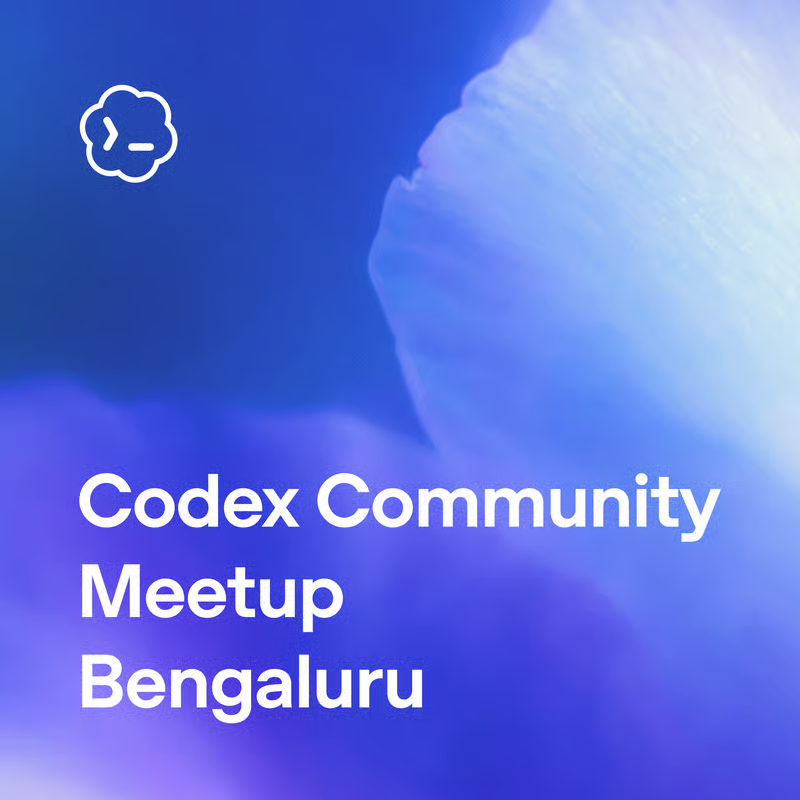
Codex Community Meetup - Bengaluru
In-person Codex meetup with OpenAI team updates, live demos, showcase, and AMA. Approval is required; no on-spot registrations or late entry after 5 PM.
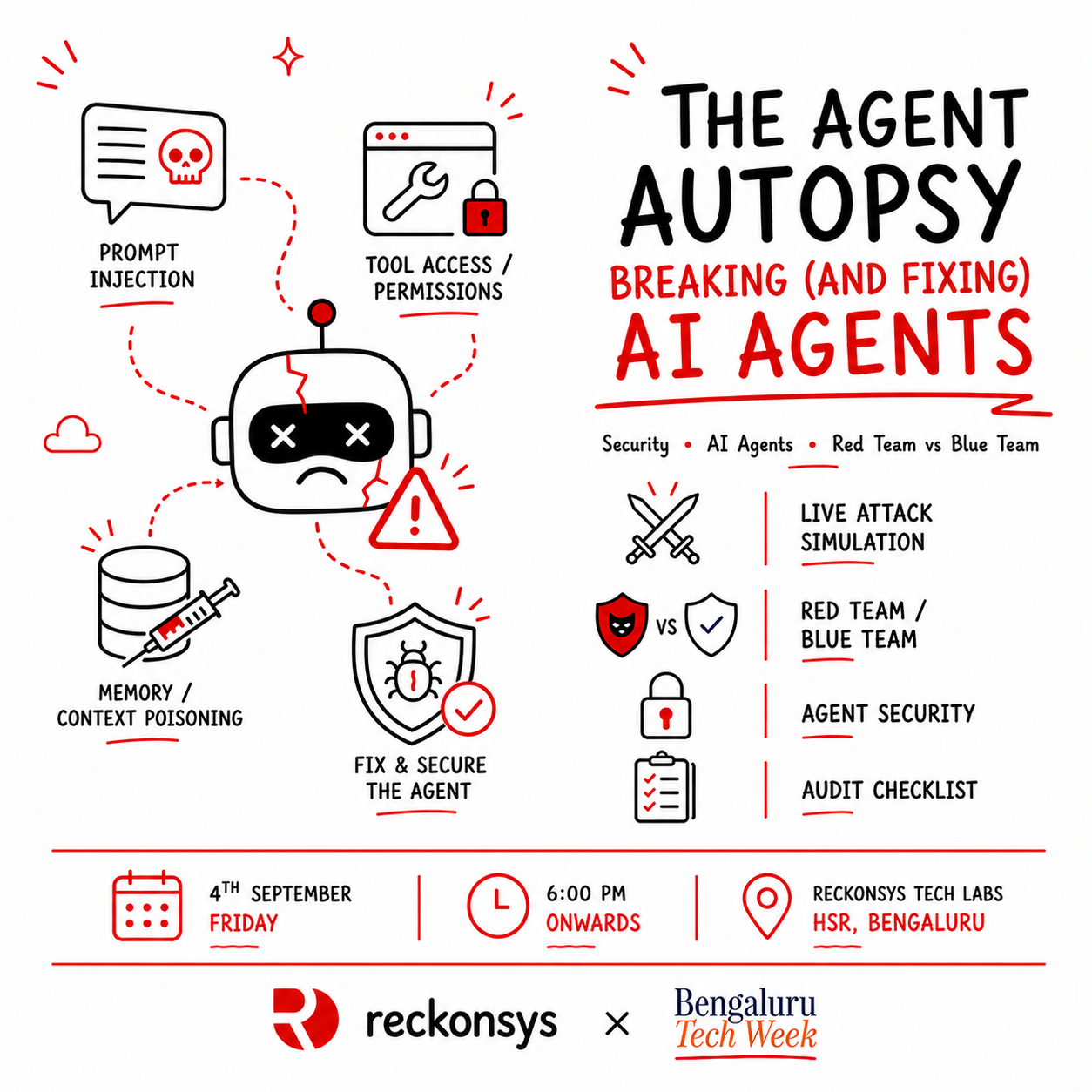
The Agent Autopsy - Breaking and Fixing AI Agents
A free in-person Bengaluru workshop on agent security failures, with a compromised demo agent plus red-team/blue-team sandbox exercises.
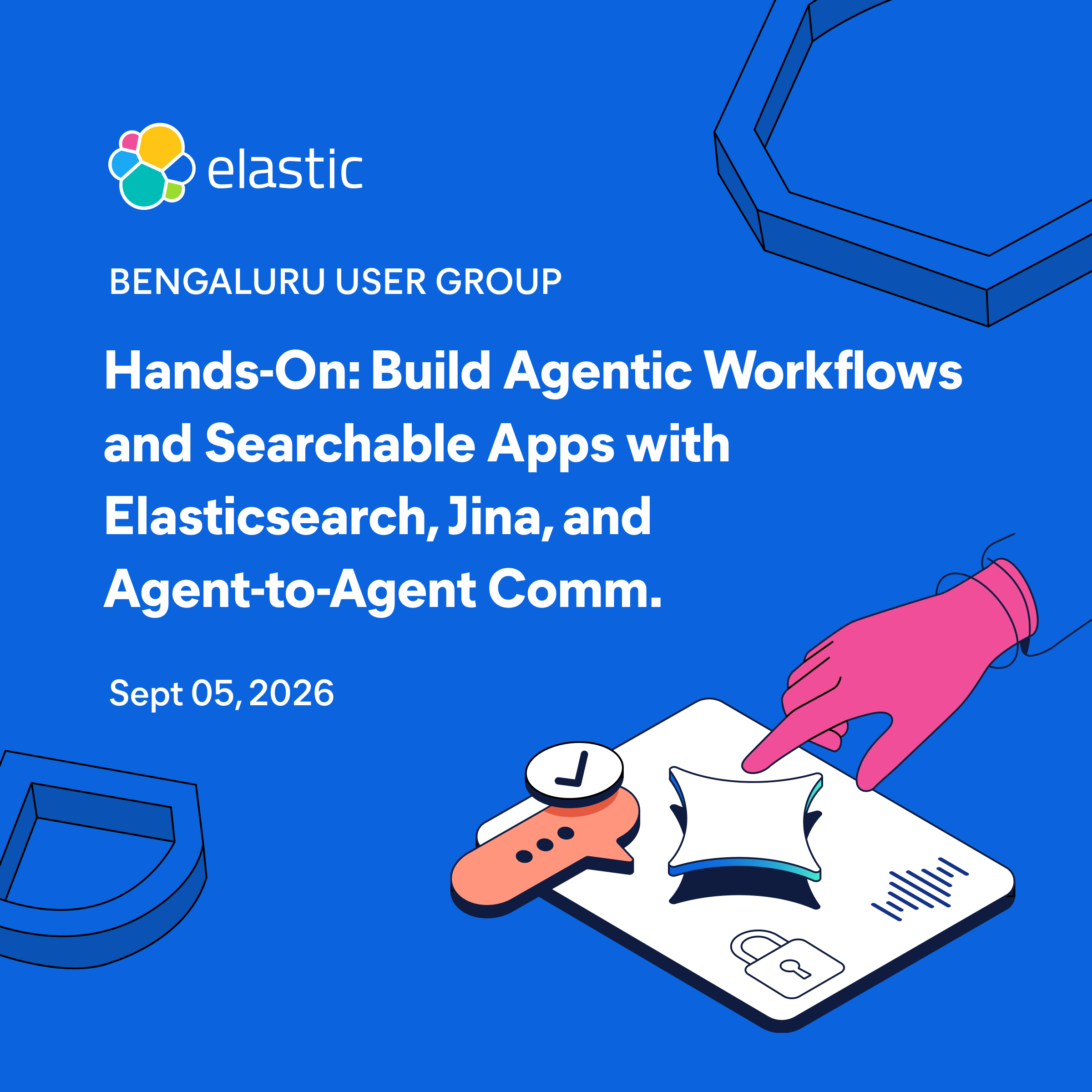
Hands-On: Build Agentic Workflows and Searchable Apps with Elasticsearch, Jina, and Agent-to-Agent Comm.
A free Bengaluru code-along workshop for building agentic search apps with Elasticsearch, Jina embeddings, Elastic Agent Builder, and A2A.
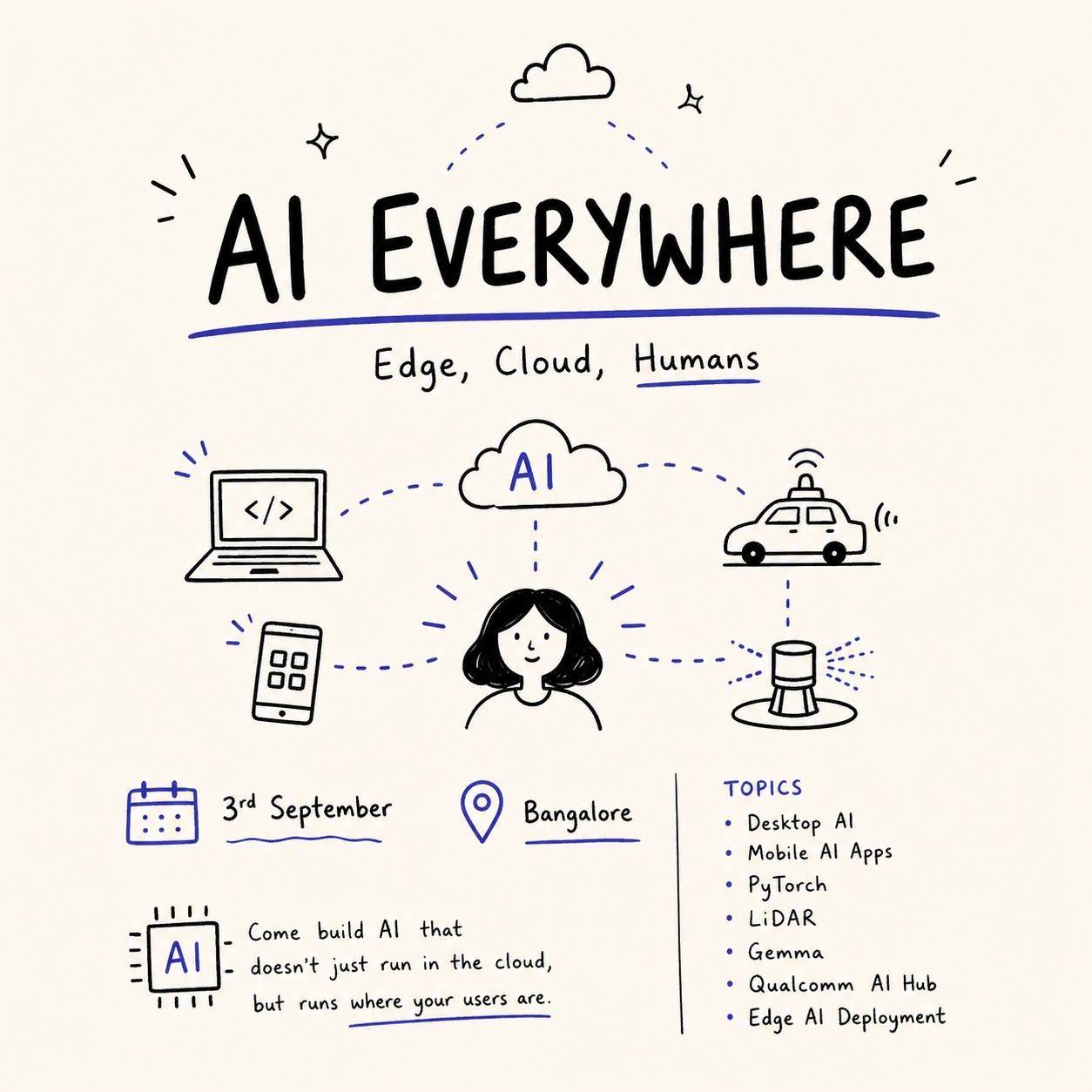
AI Everywhere: Edge, Cloud and Humans
Hands-on Bengaluru session on deploying AI across desktop, mobile, and edge using PyTorch workflows, Qualcomm AI Hub, Gemma, and device-side optimization.
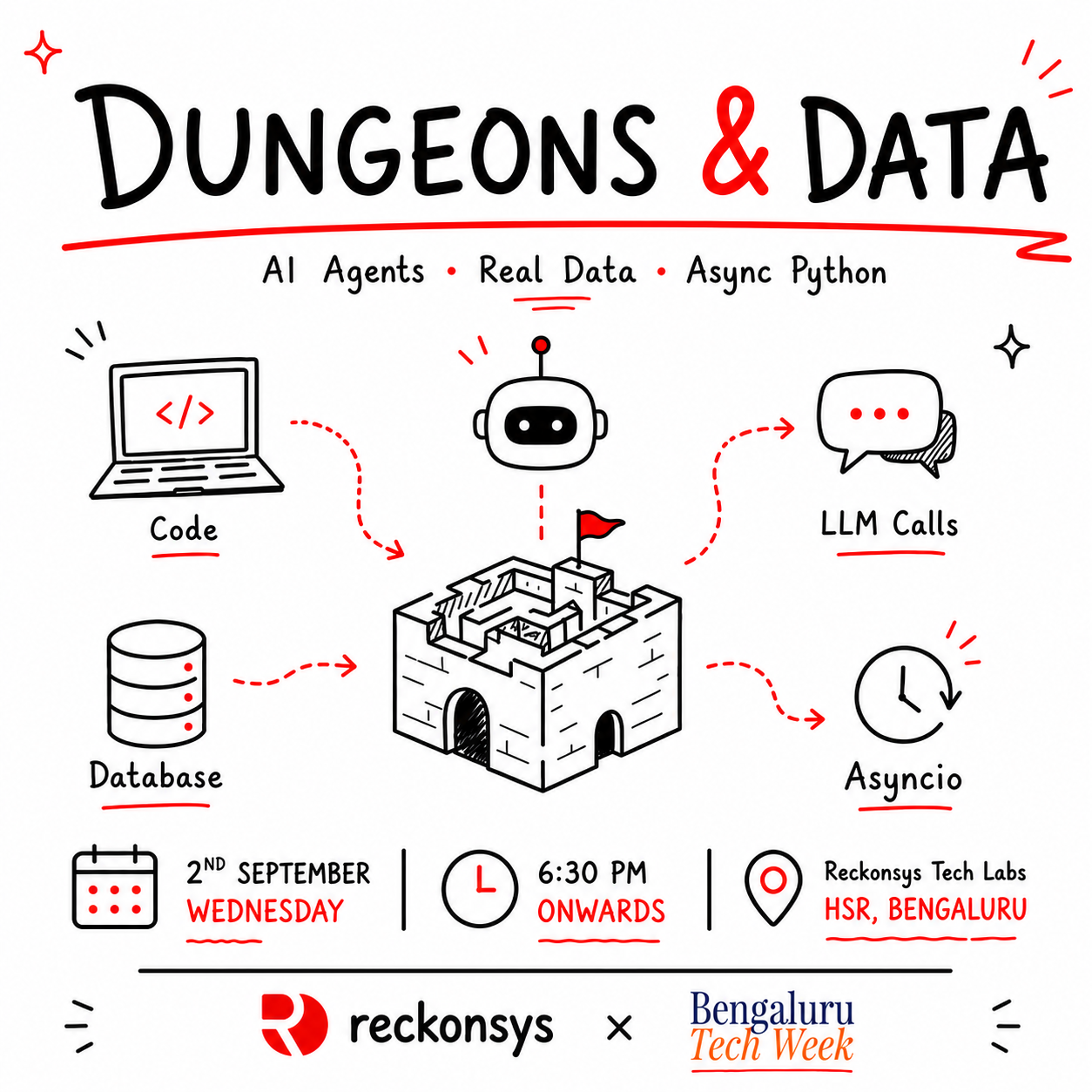
Dungeons and Data
Hands-on Bengaluru Tech Week session on agents over DocumentDB/Postgres, then practical asyncio patterns for Python AI workflows.

AIBoomi Expert Hours with Shekhar Kirani
Curated Koramangala session with Accel’s Shekhar Kirani on building AI-native companies from first principles. Only 23 spots.

Product Roast at AI House: No AI Was Harmed (Just Embarrassed)
AI House is selecting 10 GenAI founders for live two-minute product demos followed by specific, brutal, good-faith feedback from roasters.

Ladies who ship 4.0
A sold-out women builders’ session in HSR: four hours to build with AI, automation, agents, or any stack and demo what shipped.
n8n Bangalore: Founders & Builders Mixer
Sold-out Koramangala mixer for founders and builders to discuss real business problems, AI automation approaches, n8n possibilities, and potential collaborators.
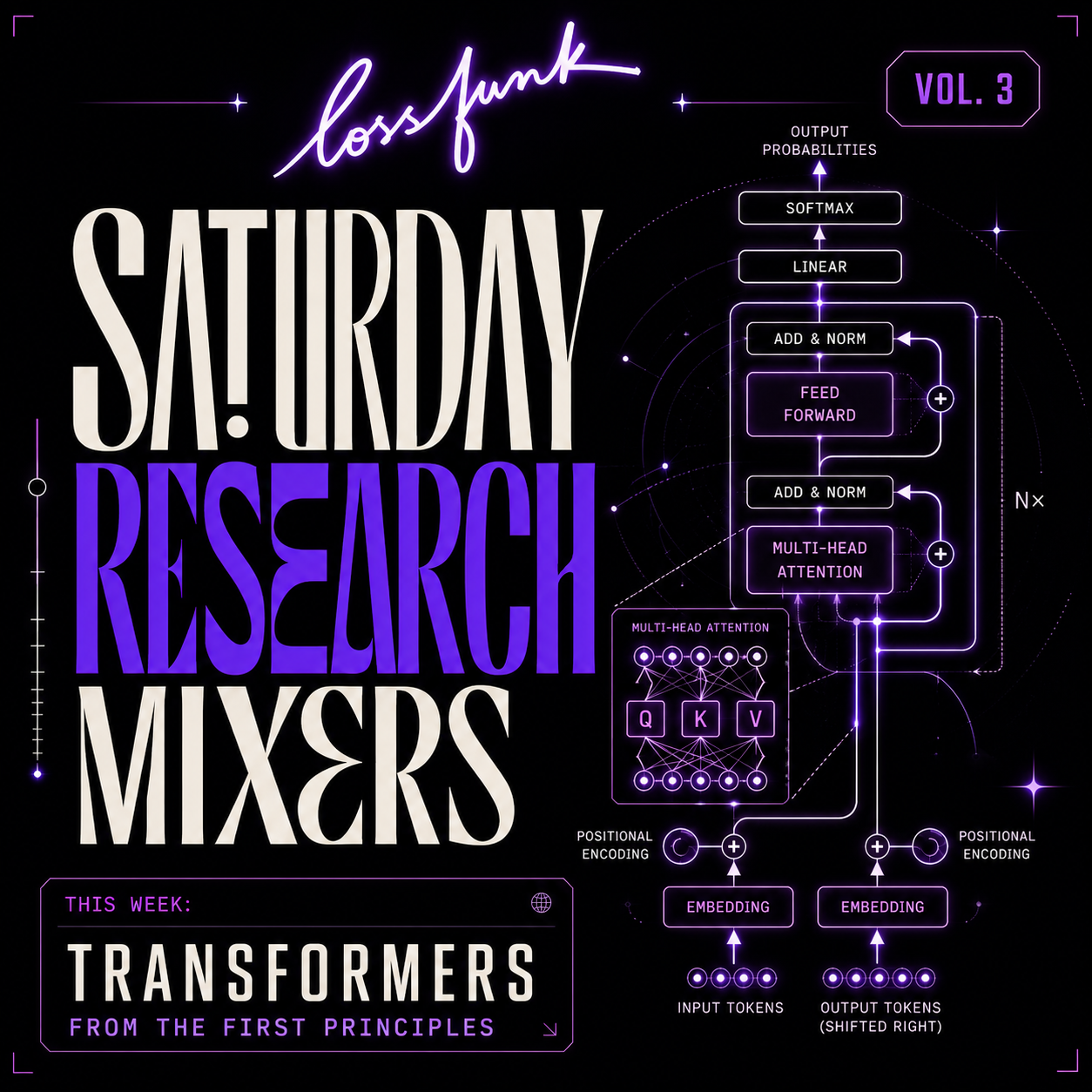
Lossfunk Research Mixers: Transformers from First Principles
A free, in-person Bengaluru roundtable on deriving transformers from first principles, with slides, whiteboarding, derivations, intuition, and simulations.
Inbox edition
Know what matters before your day gets noisy.
Subscribe to Ekloge for one carefully curated AI briefing in your inbox—no endless feed, no filler.