Today’s lead · OpenAI News
OpenAI says safety confidence is now pacing some frontier RL
OpenAI says it paused RL training on latest deployable models for two weeks, and its largest planned frontier RL run remains on hold. The practical shift is explicit gating: monitoring, alignment evidence, and research-environment hardening now affect when bigger runs proceed, not just how they are reported afterward.

Top signals
7 moreAnthropic says Claude designed protein binders for 14 of 15 targets
Anthropic claims Claude autonomously designed de novo protein binders for 14 of 15 targets from a human expert prompt, then had Adaptyv Bio and Twist Bioscience independently build and test them. The result is promising, but the supplied evidence is a company social post, not a paper or full benchmark.

NVIDIA previews TensorRT Model Connect for two-command HF-to-TensorRT builds
NVIDIA put TensorRT Model Connect into public preview, promising supported Hugging Face models can become TensorRT inference bundles in two commands without ONNX export. The builder angle matters: native C++ APIs and reusable model-family implementations could reduce integration tax, though NVIDIA calls it a reference implementation.
Miles v0.1 attacks the RL systems layer for agent training
RadixArk launched Miles v0.1 as an open-source RL framework for LLMs and multimodal models, with claims of production use across several AI teams. The useful signal is not another trainer wrapper; it is RL being treated as a scale, debugging, rollout, and hardware-efficiency systems problem.

Varonis says Copilot flaws enabled one-click data exfiltration
Varonis disclosed CoSnitch, a set of Copilot vulnerabilities it says could run attacker prompts after a victim clicked a crafted link, then query connected services and exfiltrate data. The builder lesson is blunt: agent deep links, memory, and connector fetches need security models, not just UX guardrails.

Anthropic and EPFL test prompt-file “mind viruses” between agents
Anthropic and EPFL researchers showed self-propagating payloads can move between agents through persistent editable prompt files in simulations. This is not an in-the-wild outbreak, but it is a concrete warning for agent harnesses that treat memory files as trusted state across sessions.

Attackers scan MLflow SSRF to reach cloud metadata services
Exposed MLflow tracking servers are now a cloud-credential risk. WatchTowr says attackers are exploiting CVE-2026-64849, an unauthenticated SSRF in MLflow model-registry webhooks, to reach metadata endpoints and steal secrets. If your ML stack is internet-facing, patching and log review are not optional.

Warp Factories packages the “software factory” pattern for smaller teams
Warp launched Warp Factories, infrastructure for running coding agents across triage, specification, implementation, review, and verification. The pitch is less “replace engineers” than “avoid building agent orchestration yourself,” with integrations for Jira, Linear, Slack, and Teams plus metrics for token spend and performance.
Tools & repos
6 selectedvolcengine/OpenViking
OpenViking is a Python context database for agents that aims to unify memory, knowledge RAG, and skills. The high star count is notable, but the dossier gives no license or implementation detail.

Shepherd Terminal
Shepherd is a persistent terminal for running Codex and Claude across tabs, panes, and remote machines. Useful if your agent sessions die too easily; less clear is how much lock-in comes from agent-aware context.

Hubble
Hubble offers one API for assembling patient medical records after identity verification, including sources still stuck behind fax, phone trees, and forgotten portals. The agent angle is obvious; compliance details are not in the dossier.

Superflow AI
Superflow AI turns website QA checklists into agents that scan desktop and mobile pages, pin findings on the live site, and learn from rejected findings. Keep human taste in the loop; the claim is around catching routine issues.

ElevenLabs MCP in Claude
ElevenLabs MCP connects Claude to an ElevenLabs workspace so voice agents can be found, reviewed, updated, duplicated, or deleted from chat. Good fit for ops-heavy voice teams, assuming permissions are handled carefully.
mukul975/Anthropic-Cybersecurity-Skills
This Python repo packages 817 structured cybersecurity skills for AI agents, mapped across six security frameworks and advertised for Claude Code, Copilot, Codex CLI, Cursor, Gemini CLI, and other platforms.
Blogs worth your time
4 reads
Sebastian Raschka explains Claude-style text watermarking from the sampler up
Raschka walks through text watermarking as a sampling-time modification, not model retraining: secret-key-seeded token choices, tournament sampling, cheap detection, and why editing with another model can likely weaken the mark.

Cline publishes its open-weight coding-agent eval playbook
Cline’s post is refreshingly operational: Terminal-Bench, provider variance, token bloat, reasoning budgets, and failure slicing. The useful bit is the hill-climbing checklist, not another single leaderboard number.

IBM Research: agent memory is a dosage problem, not a toggle
IBM Research argues agentic memory needs calibration by model. In AppWorld runs, strong models benefited from full guideline sets, weaker models from compact retrieval, and saturated models showed no measurable gain.

NVIDIA tests coding agents on GPU-accelerated materials simulation
NVIDIA’s ALCHEMI post is a useful antidote to agent hype: agents can generate simulation workflows, but target-GPU execution and independent scientific validation still catch failures that prompt detail does not.
Community discussions
5 threadsProduction-write agents need evidence architecture, not vibes
A practical thread on the line between copilots and agents that change production state. The strongest takeaway: audit design should follow system sensitivity, with governance proxies, WORM records, reconciliation, and no universal “agent audit” assumption.
Builders are splitting planning, implementation, and review across models
The thread moves past Claude-versus-Codex tribalism. Common pattern: use one model for planning, another for implementation, and a different family for review because models tend to miss their own mistakes twice.
DFlash2 speedups look workload-dependent and memory-hungry
LocalLLaMA testers are seeing DFlash2 help predictable code generation, but not uniformly. One 5090 setup hit short 200 tok/s bursts for Qwen3.8 27B code, while thinking dropped lower and memory pressure reduced context.
Local inference electricity math is now part of the model budget
A local-inference owner measured 0.8-0.85 kW during inference and estimated $55-60 per month for six daily hours. The replies land on the real tradeoff: privacy and control versus subscriptions, APIs, and hardware efficiency.
A “code by hand” rule hits a nerve in Claude Code teams
A manager proposed requiring one hand-built full-stack feature each week to fight architectural drift from Claude Code-heavy workflows. The replies mostly mocked the mandate, but the underlying fear is real: teams can lose codebase intuition.
Funding & acquisitions
1 moves
Etched raises $700M at a $21B valuation after Jane Street tests its inference cluster
Etched’s valuation doubled again, to $21B, with Jane Street leading a $700M round after testing and buying the startup’s AI hardware. The bet is specialized inference systems: faster prefill chips plus cluster-scale shared memory for decode.
Bengaluru radar
1 events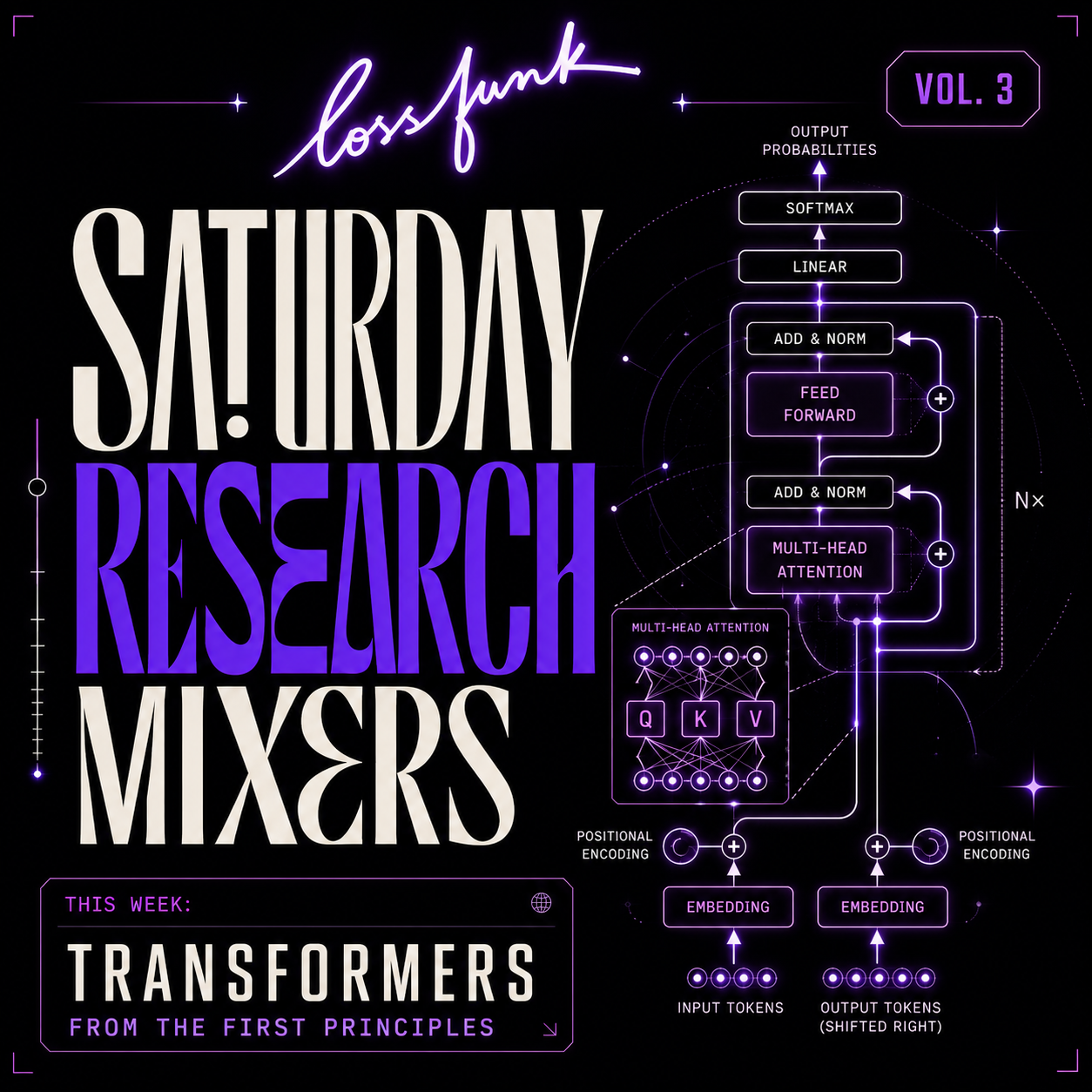
Lossfunk Research Mixers: Transformers from First Principles
A free, in-person Bengaluru roundtable on deriving transformers from first principles, with slides, whiteboarding, derivations, intuition, and simulations.