Today’s lead · TechCrunch
ChatGPT Voice gets real Work-tab tools on mobile
OpenAI is moving voice from chat input toward hands-free agent control. Plus and Pro users can use the Work tab on mobile for docs, emails, Slack summaries, sites, decks and browser tasks. Useful if it works reliably; still tiered, app-bound, and separate from chat workspaces.

Top signals
10 more
Meta turns Muse into an everywhere-agent bet
Meta’s Connect announcements make Muse less like a chatbot and more like an operating layer: app-connected agent, real-time avatar, glasses integration, Mac control, email identity, and a keychain-like Charm. The practical question is whether distribution beats trust and privacy concerns around always-available assistants.

Gemini 3.8 TTS turns voice into a controllable production surface
Google’s new Gemini 3.8 Flash TTS and Flash-Lite TTS are aimed at voice design, not just preset narration. Builders get natural-language voice creation, line-by-line direction, long-form generation, dual-speaker scenes, and replication with consent checks. Note the regional limits and the usual benchmark caveats.

Google adds private cloud memory for personal AI continuity
Google is trying to square a hard product problem: useful assistant memory across devices without making personal data broadly accessible in the cloud. The new Private AI Compute memory layer uses secure enclaves, end-to-end encrypted channels, and device-held keys. The whitepaper, audit, and public software record matter here.

NVIDIA opens NV-Reason-CT for 3D radiology reasoning research
NV-Reason-CT is an open research foundation for volumetric CT, combining a 3D ViT encoder with Qwen3.5-4B to generate structured reports and radiologist-style reasoning. The useful bit is native 3D context and auditability; NVIDIA is explicit that it is not a cleared clinical product.
NVIDIA open-sources Nemotron 3 Diarization for live multi-speaker audio
Nemotron 3 Diarization targets a very practical voice-agent gap: knowing who is speaking, including overlap. NVIDIA says the 100M-parameter model handles up to eight speakers and is on Hugging Face. VoiceArena’s new Diarization Bench reports Nemotron 3 leading 12 systems with 14.72% DER.

Anthropic’s biology lab claim needs validation, but the workflow is the story
Anthropic says Claude helped find a previously unknown enzyme system with CRISPR-like properties in bacteriophage DNA. The scientific significance is unresolved and needs external validation. For builders, the sharper signal is operational: 950 agents, 210M tokens, 21 hours, and human-run BSL-1/2 lab work.
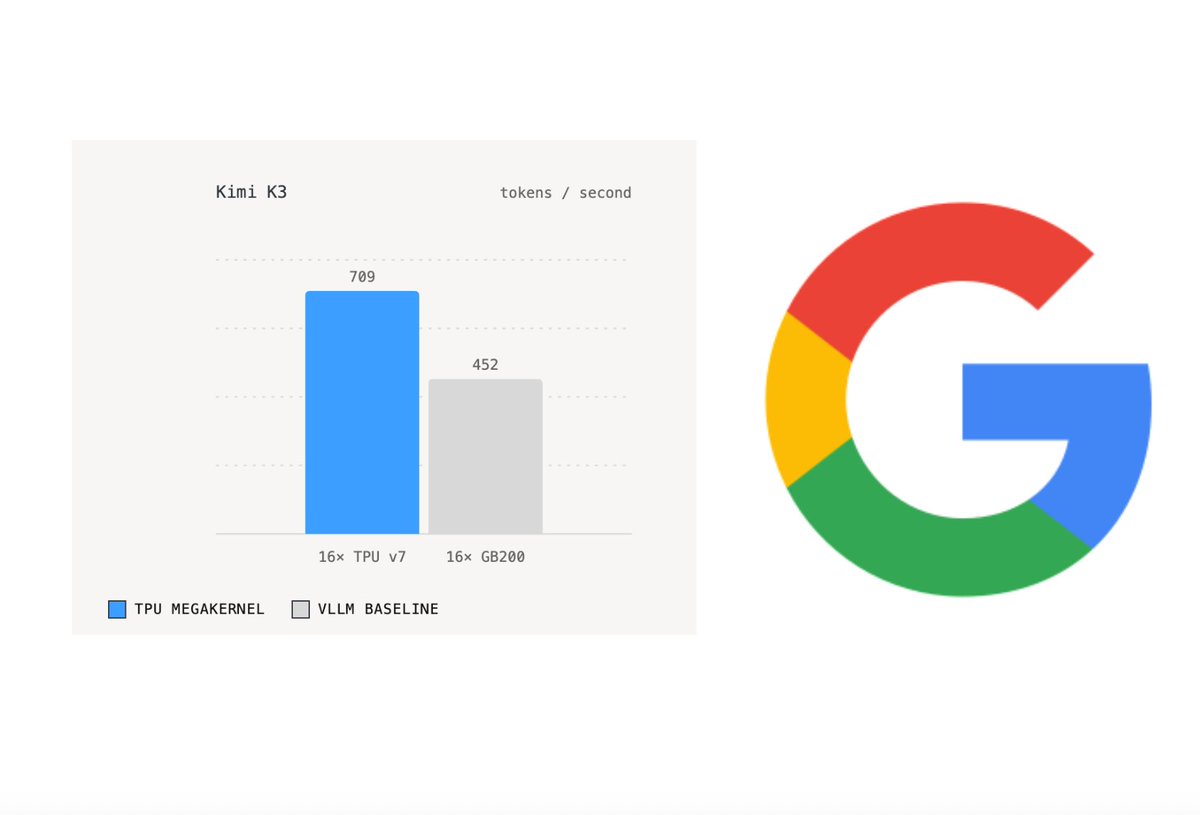
A Kimi K3 TPU megakernel puts inference software back in the spotlight
Inferact says its open Kimi K3 TPU megakernel hits 709 tokens/s on low-concurrency decode versus a 450 tokens/s GB200 baseline, both with DSpark speculative decoding. Treat the comparison as vendor-stack-specific, but the bigger point is real: inference kernels can shift hardware economics.

Qwen launches a mobile-agent suite and opens its benchmarks
Qwen Intelligence packages three mobile agents: planning, app execution, and creative generation. The launch is benchmark-heavy, with claims like 90% end-to-end success and top MobilePA-Bench results. More useful than the scorecard is the opened benchmark suite covering planning, cross-app execution, real-device performance, and safety.
Vercel adds Drives to split agent storage from agent computers
Vercel’s Drives beta is small infrastructure with big agent implications: persistent storage decoupled from Sandbox compute. Agents can keep workspaces, data, models, deps, memories, skills, and repos without booting a full computer. The design also makes parallel reads, auditability, and cost control easier to reason about.
Comfy Router gives media-model builders explicit provider routing
Comfy Router is a pragmatic layer for generative media APIs: one interface for image, video, 3D, and audio models, but with explicit provider routing instead of silent fallback. Async jobs, provider-return metadata, batch handling, and 24-hour retention make it closer to production plumbing than a demo wrapper.
Tools & repos
5 selected
Solid
Solid pitches long-running agents that get their own computers, accounts, and budgets. The ambitious bit is ownership of messy end-to-end work: building apps, automating workflows, paying for services, and fixing blockers.

AgentScore
AgentScore gives production agents a daily quality score across outcome, reliability, cost, speed, and safety. That is the right measurement layer if your agent is already in the wild, not just passing evals.

Alexandria by Firecrawl
Alexandria gives agents one connection to data providers, specialized indexes, and datasets through Firecrawl’s MCP, CLI, and API. The claimed 21% answer-quality lift is worth testing against your own retrieval stack.
obra/superpowers
Superpowers is an agentic skills framework and software-development methodology. Its trend line suggests builders are hungry for repeatable agent workflows, not just bigger coding models.
agent-substrate/substrate
Agent Substrate is described simply as “the core system.” The Go repo is trending hard, but the supplied evidence gives little architectural detail beyond its positioning as agent infrastructure.
Blogs worth your time
6 reads
SWE-Serve tests coding agents where inference bugs actually show up
SWE-Serve is useful because it punishes patches that pass local tests but fail when a real model is served. NVIDIA’s 53-task SGLang benchmark shows live-serving checks cut pass rate from 69.4% to 45.9% on 19 tasks.

Frank Hutter makes the case for tabular foundation models
This MLST interview is a strong primer on TabPFN’s shift from hand-tuned tabular ML to forward-pass foundation models trained on synthetic priors. The practical takeaway: let agents handle data prep, then call specialized tabular models instead of forcing LLMs to reason over giant tables.

Microsoft argues robots should not carry all their inference onboard
Microsoft’s robotics study challenges the default “GPU on the robot” architecture. Offloading inference to edge or cloud GPUs improved success rates, enabled larger models, and extended battery life, but the real work is orchestration under latency, bandwidth, and GPU-availability constraints.

A practical path from MuJoCo to batched GPU simulation
NVIDIA’s walkthrough is valuable if you are scaling robotics learning workloads: start with one MuJoCo scene, validate MJWarp parity, size contact buffers, then batch thousands of worlds on GPU. It is simulation plumbing, not a policy-training tutorial.
OpenRouter draws the line between Kimi K3 open-weight and open-source
OpenRouter’s post is mostly license hygiene, and that matters. Kimi K3 has public weights, but its custom license is not OSI-approved and adds revenue and UI-attribution conditions. If you are shipping with it, do not casually call it open-source.

GitHub’s Copilot app rebuild shows why comments make giant diffs hard
This is a solid UI engineering deep dive: rendering huge diffs is tractable; rendering huge diffs plus mutable review threads is not. GitHub split deterministic code geometry from dynamic comment geometry and built instrumentation to catch scroll and measurement bugs.
Community discussions
5 threadsSWE-Together’s sandbox leak audit is a warning for benchmark builders
SWE-Together found 111 trials where models got blocked content, then reran 67 non-Grok trials in a hardened sandbox. Scores barely moved, but the lesson is bigger: coding-agent evals need network controls outside the container, package-registry guards, and audits of tool calls.
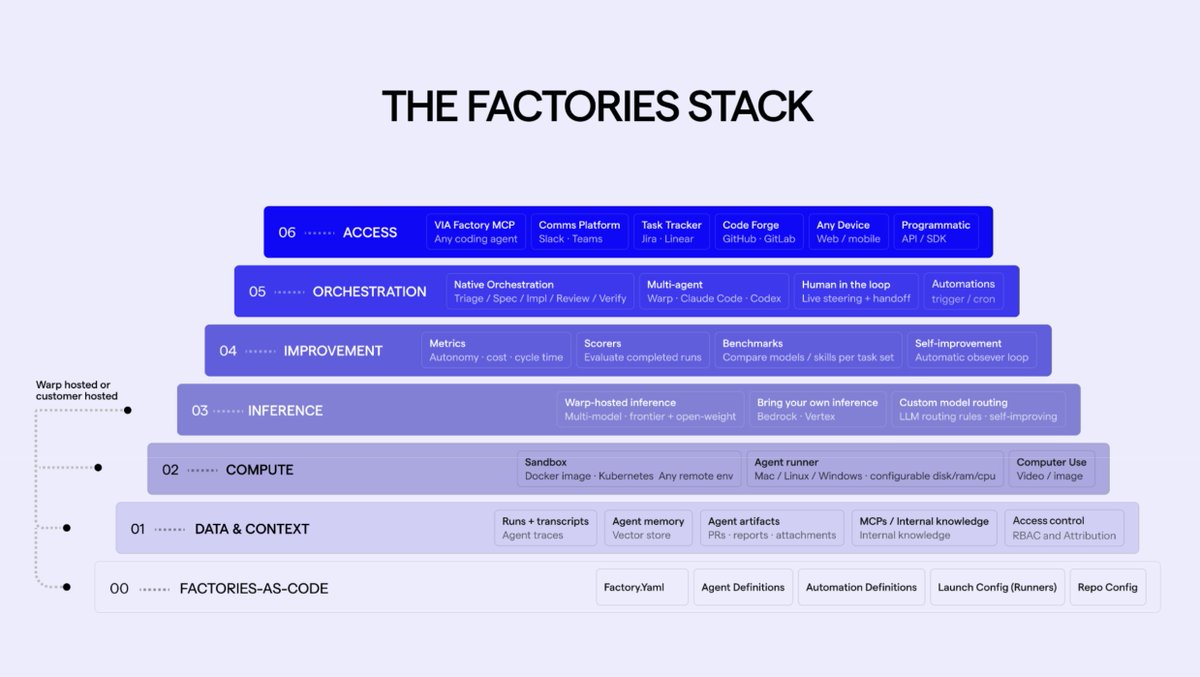
Software factories need infra discipline, not another agent demo
The post frames automated development as an infrastructure stack: factory definitions in code, portable context, resumable compute, model-agnostic inference, measurement loops, orchestration, and access APIs. It is vendor-shaped, but the checklist is a useful antidote to one-off agent runs.

The cheap-agent frontier may be the harness, not the model
This thread summarizes SoL-Pi’s argument: let an AI optimize the coding-agent harness. The reported wins are mundane but meaningful, including tool-call batching, memory compression, output handles, and verified log summaries. Cost cuts without model changes are exactly where production agent work gets interesting.
Local LLM users disagree on TPS because workloads differ
The thread is a reminder that “fast enough” is not one number. Some users call sub-50 tokens/sec unusable, while others run background agents at 8 tok/sec. For coding agents, one commenter values prefill speed more than decode speed.
Cursor users vent about model control and Grok quality
The complaint is less about any one model and more about trust: the poster says Cursor keeps reverting to Grok despite settings. Comments split between dismissiveness and concrete pain, including one builder saying Grok is slow and weak at UI for their product.
Funding & acquisitions
4 moves
Enveda raises $311M to push AI-discovered natural drugs into trials
Enveda’s $311M Series E values the AI biotech at $2B and funds more clinical work. The company is betting that AI can mine plants and microbes for drug candidates, with current patient tests in skin conditions and post-GLP-1 weight maintenance.

Brahma AI raises $150M for enterprise audiovisual AI
Brahma AI raised $150M led by Multiples, with a reported $2B post-money valuation. The company is building an AI-native operating system for enterprise audiovisual content, spanning content intelligence, visual AI, digital humans, voice, and multilingual performance.

Ema raises $77M for multi-agent enterprise automation
Ema’s $77M Series B is aimed at replacing slices of enterprise software and services with coordinated “AI employees.” The company claims 50+ enterprise deals, 1M active enterprise users, and integrations across HR, IT, and finance workflows.

Bessemer raises $5.75B to keep buying into the AI stack
Bessemer raised $5.75B across two funds, with $1.75B for seed and early stage and $4B for growth. The firm says it has invested in 260+ AI-native companies since 2022 across compute, infrastructure, models, dev tools, apps, and agents.
Bengaluru radar
0 eventsThere are no relevant Bengaluru events to highlight today.