Today’s lead · X
apex-flash-1 arrives as an open cyber model with a sharper warning
apex-flash-1 is positioned as an open-weights cybersecurity post-train of glm-5.3-flash, backed by claims of real bug-bounty earnings and trillion-token harnesses. The useful builder takeaway is less the model marketing than the thesis: private evals, domain data, harnesses, and owned inference decide vertical AI economics.
Top signals
3 moreCloudflare is pushing its API surface toward agent-first operations
Cloudflare says it is taking eight steps to make the platform less of a black box, including an agent-first cf CLI for the Cloudflare API that can query observability data. The signal for builders: cloud operations are being packaged for agents, not just humans clicking dashboards.
Cohere opens North Small Translate for sub-1T machine translation
Cohere says North Small Translate is an open machine-translation model and claims it is the best model under 1T parameters. For builders, the practical question is whether open weights plus process transparency make it easier to evaluate translation quality on your own languages and domains.

OpenAI safety veteran quits, arguing deployment culture is the risk
David Robinson, who says he helped write safety reports for OpenAI launches, resigned with a broader critique of “iterative deployment.” OpenAI says it is strengthening security, third-party evaluation, and monitoring. The concrete builder angle: safety process is becoming an operational systems problem, not just a policy debate.
Tools & repos
4 selected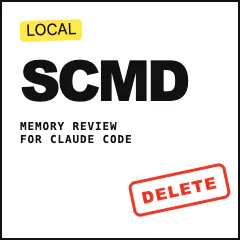
SCMD
SCMD is a local, open-source review deck for Claude Code memories. It lets users keep, delete, skip, undo, rewrite, and inspect saved memories, with staged decisions, restorable trash, no telemetry, no cloud service, and zero npm dependencies.

Cubicle
Cubicle turns coding agents into a live office dashboard for Claude Code, Codex, Gemini CLI, and Paperclip. The important design choice is read-only monitoring, with Telegram replies as the only optional write path.

ZooWork
ZooWork targets FDEs and domain experts who need to package expertise as AI agents. Experts start in a Builder UI, while developers can ship through a Managed Agent API for teams or clients.
thedotmack/claude-mem
claude-mem captures agent sessions, compresses them with AI, and injects relevant context into later sessions. It is pitched as persistent context across Claude Code, OpenClaw, Codex, Gemini, Hermes, Copilot, OpenCode, and more.
Blogs worth your time
3 reads
ThinkingBox grades agents by database state, not fluent excuses
Microsoft and Hugging Face introduce ThinkingBox, a benchmark that checks terminal backend state and side effects across repeated business workflows. The useful shift: agent evals should verify records changed correctly, not just whether tool calls looked plausible.

Sebastian Raschka implements the GRPO path to RLVR reasoning
Raschka walks through reinforcement learning with verifiable rewards for reasoning models, building from rewards and advantages to log probabilities and a GRPO training loop. It is code-heavy, with caveats on KL terms, rollouts, memory, and instability.
Agent-era cloud bills need hard caps, not warning emails
Willison argues that pay-by-usage services should default to hard monthly caps, especially as agents make it trivial to spin up costly infrastructure. His blunt point: failed requests are usually better than surprise multi-thousand-dollar bills.
Community discussions
2 threadsCursor users are arguing whether frontier-code-agent bundles still make sense
A longtime Cursor user says Claude Code made Cursor feel obsolete, while commenters split over model access, cost, and value. The useful tension: IDE polish matters, but frontier-agent economics may be breaking the old $20 subscription expectation.
Claude Code is good enough to make experienced developers miss coding
A CTO says Claude Code feels like using videogame cheats: empowering, but corrosive to the satisfaction of writing code. Replies frame the shift as abstraction, optimization, and a risk to how developers build expertise.
Funding & acquisitions
1 moves
Arivihan raises $10.2M to expand AI learning across Indian boards
Arivihan’s Series A is aimed at scaling AI-based learning for state boards, CBSE, and NEET, especially beyond large cities. The round is a reminder that vernacular, syllabus-specific distribution can matter as much as the AI layer.
Bengaluru radar
3 events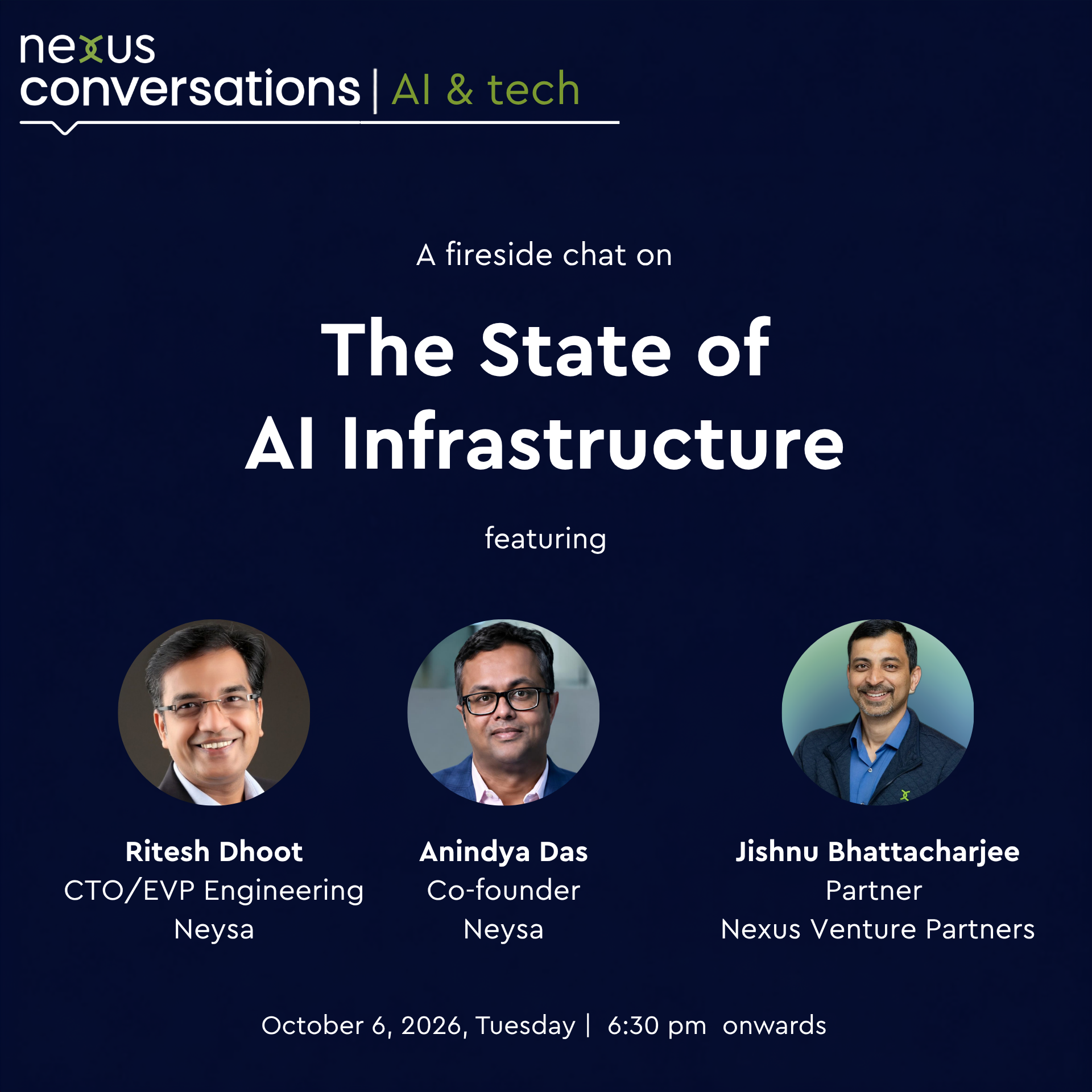
AI Tuesdays goes under the hood of AI infrastructure
A Bengaluru fireside chat with Neysa leaders on GPUs, inference, orchestration, sovereignty, and compute strategy. Useful if you build or buy serious AI infrastructure.

First Light Demo Day wants early AI enterprise builders
Lightspeed, Descope, AWS, and The Product Folks host a Bengaluru demo day for pre-revenue or early-revenue AI enterprise startups seeking feedback and AWS credits.

RSI Research Mixer gathers builders of self-improving agents
A curated Bengaluru mixer for researchers, engineers, founders, and technical builders exploring recursive self-improvement, memory, RL environments, evaluations, and long-running agent infrastructure.