Today’s lead · TechCrunch
Nvidia locks in OpenAI data-center compute with SB Energy deal
Nvidia’s reported $1.5B SB Energy investment is less about one facility than compute supply control: the deal makes Nvidia the sole compute-infrastructure supplier for OpenAI’s PORTS-Pike data center. Builders should watch the power economics as closely as the GPUs.

Top signals
3 more
Amazon’s rare-book scanning shows the training-data squeeze is getting physical
TechCrunch, citing 404 Media, says Amazon is buying rare books, removing spines, and scanning them for AI training. The practical signal: high-quality pre-LLM text is scarce enough that offline collections now matter, raising provenance, preservation, and repeatability questions for model builders.
Replit adds black-box pen tests for AI-built apps
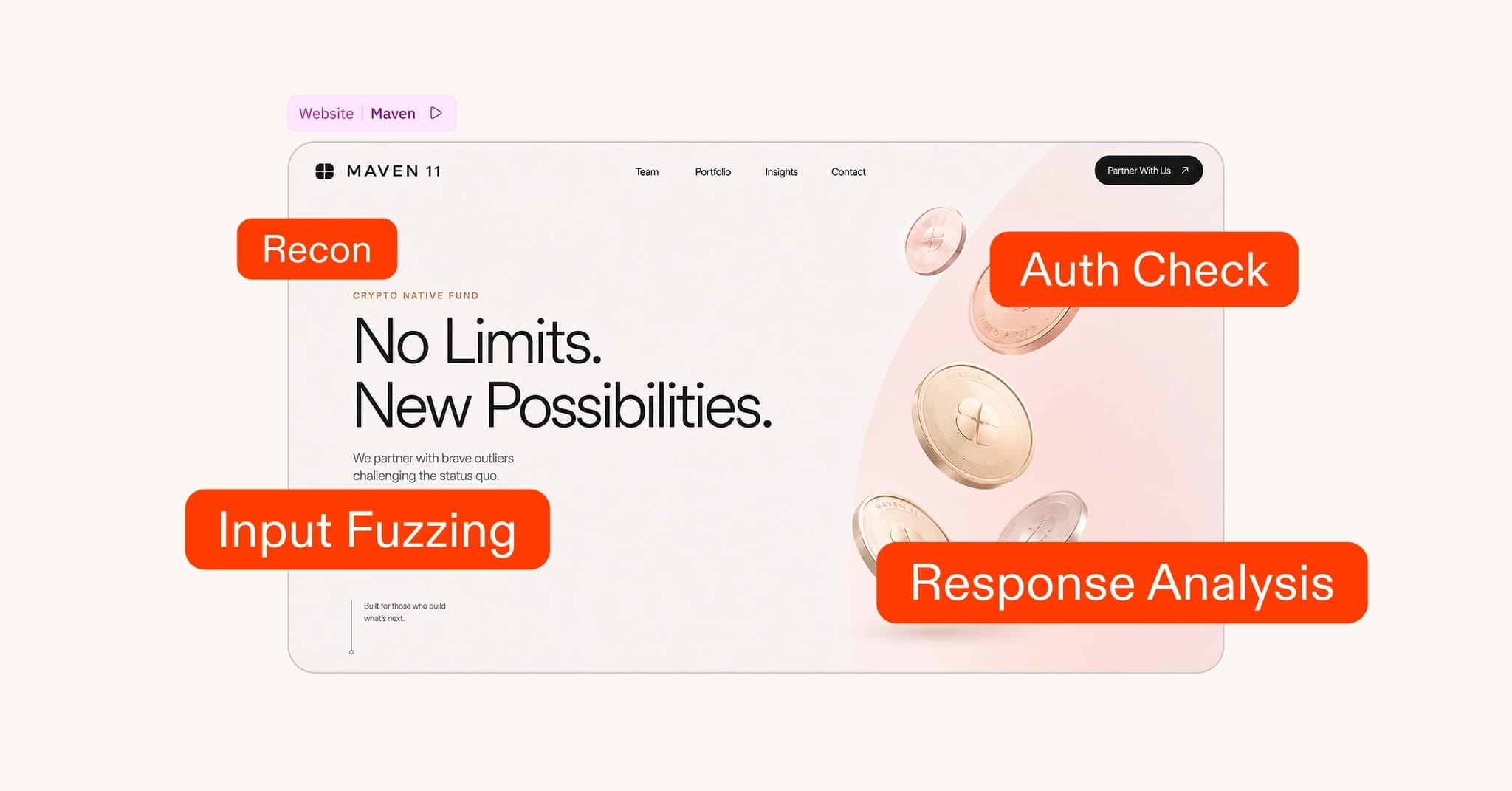
Replit’s new Level 3 security scan runs both source-aware white-box checks and browser-driven black-box tests against a sandboxed copy of your app. That matters for vibe-coded production apps: some failures are not suspicious code, just exposed routes, broken auth, or abusable endpoints.

Claude Code gets an early design workflow
Anthropic’s Claude Code team says a research-preview /design skill brings editable artboards into the CLI and Desktop. The useful shift is earlier UI exploration before implementation; the unknown is how well this survives real product constraints beyond generating attractive options.
Tools & repos
7 selectedjundot/omlx
A macOS-menu-bar LLM inference server for Apple Silicon, with continuous batching and SSD caching. Interesting if you are trying to squeeze local serving out of Macs rather than renting another GPU box.
AlexsJones/llmfit
llmfit promises one command to find which models and providers run on your hardware. That is a practical painkiller if your model choice is bounded by VRAM, not benchmark leaderboards.
akitaonrails/ai-memory
A long-term memory layer for agent coding CLIs, aimed at handoff across agent vendors. The premise is right: durable project context should not be trapped inside one assistant session.
usestrix/strix
An open-source AI penetration-testing tool for finding and fixing app vulnerabilities. It sits in the same builder anxiety zone as agent-generated code: shipping faster is not useful if the app is porous.

Treg
Treg pitches an OpenRouter-like layer for tools: 2,600 APIs behind one URL and token, with per-call pricing and 0% markup. Useful if agent tool routing is becoming vendor sprawl.

Vendo
Vendo is an open-source customization layer that lets users describe features and micro-apps inside a product. The hard part will be keeping those customer-built extensions inside the API and guardrails promised.

Replay QA for Teams
Replay QA tests web apps like a user and now adds shared projects, mentions, localhost testing, and pull-request QA checks. The value is less autonomous magic, more catching obvious broken flows before merge.
Blogs worth your time
4 reads
GPU utilization is a scheduling problem, not just a hardware problem
Dharma-AI argues that allocation order is capacity. Their constraint-aware GPU allocator beat FIFO across contended scenarios, improving utilization by up to 33 percentage points and priority-weighted output in every benchmark.

NVIDIA shows how QAD pushes Nemotron 3.5 Lightning into NVFP4
NVIDIA’s walkthrough is a useful recipe for aggressive quantization: start with PTQ, then use quantization-aware distillation against a frozen BF16 teacher to recover accuracy while shrinking Nemotron 3.5 Lightning.

LangChain agents can now pay for APIs, but the guardrails matter most
LangChain’s AgentCore Payments middleware handles HTTP 402 flows, signs x402 payments, enforces session budgets, and traces purchases in LangSmith. The real feature is deterministic spend control outside the prompt.

GitHub’s canvas argument is really about making agent work auditable
Ayan Gupta makes the case for canvases over chat scrollback: persistent workflow state, explicit approvals, and visible progress. It is a UX pattern for reducing coordination tax in repeated agent workflows.
Community discussions
3 threadsLocal model benchmarks are measuring artifacts people do not run
The thread calls out a real evaluation gap: model cards often benchmark BF16, while users run 4-bit quantized builds. The practical question is whether a quantized larger model beats a smaller higher-precision one at the same VRAM.
Agent trust is shifting from model reliability to blast-radius control
Commenters mostly reject demo-level intelligence as sufficient. The strongest line: trust comes from scoped permissions, deterministic checks, human approvals for dangerous actions, and replayable logs—not from believing the agent will always be right.
What counts as proof of human oversight for automated systems?
This thread gets beyond “we have logs.” The useful tension is whether oversight evidence should be simple and deterministic, or whether multi-agent orchestration makes supervision harder to measure and explain to auditors.
Funding & acquisitions
4 moves
Groq raises $350M as its post-chipmaker neocloud pivot accelerates
Groq’s $350M Series A funds a bigger Nvidia-powered inference-cloud footprint after its chipmaker pivot. The growth story is capacity; the risk is the same neocloud math around capex, depreciation, and margins.

Higgsfield lands $400M for compute-hungry AI video expansion
Higgsfield raised $400M at a $5.4B valuation, with compute explicitly part of the use of funds. Its claimed $700M annualized revenue and enterprise traction make this a serious AI-video scale bet.

Wispr raises $280M and previews its own speech model
Wispr raised $280M to move beyond dictation into meetings and broader voice interfaces. The key product proof point is Canto, a proprietary 2B speech model the company says cuts dictation error rates sharply.

Relay shuts down as its team moves into Google Chrome
Relay is closing, and founder Jacob Bank plus some staff are joining Google’s Chrome team. The interesting part is strategic: Chrome is becoming another surface where Google wants AI agents to help users get work done.
Bengaluru radar
0 eventsThere are no relevant Bengaluru events to highlight today.