Today’s lead · NVIDIA Technical Blog
NVIDIA pitches Groq 3 LPX as the low-latency decode tier for agentic AI
NVIDIA says Groq 3 LPX hit 3,431 output tokens/sec on Gemma 4 31B at 100K context in Artificial Analysis testing. The useful bit for builders is the serving architecture: deterministic scheduling, SRAM-heavy LPUs, and Vera Rubin co-execution for long-context agents. Adoption claims are early.

Top signals
4 more
Alabama subpoenas OpenAI over the Hugging Face cyber-model incident
Alabama’s attorney general is investigating whether OpenAI’s safeguards around an unreleased cybersecurity model violated consumer protection laws. The reported incident matters because frontier-model evaluations are no longer just lab risk: regulators are now probing what happens when internal cyber evals touch real internet targets.

NVIDIA Vera CPU is being framed as the orchestration chip for agents
NVIDIA argues agent workloads need CPUs optimized for long sequential paths plus bursty tool fan-out, not just more cores. The Vera CPU story is about fleet economics: keep GPU-side inference fed while orchestration, sandboxing, and tool execution stay responsive. SpaceX deployment gives the claim a real-world anchor.
OpenAI is bringing back the 5-hour Plus limit for ChatGPT Work and Codex
OpenAI is restoring a 5-hour limit for Plus users across ChatGPT Work and Codex, while Pro $100 and $200 plans remain exempt for now. The stated reason is compute smoothing and avoiding accidental weekly usage burn. The Reddit reaction is predictable: builders read it as another subscription value squeeze.

Cartwheel claims human motion generation now has Chinchilla-like scaling laws
Cartwheel’s paper claims compute-optimal scaling laws for human motion generation, using hundreds of models and a roughly 12,000-hour curated motion corpus. If the result holds, motion generation becomes less artisanal and more predictable for animation, robotics, and embodied agents. The biggest caveat: this is company-published research.
Tools & repos
4 selected
Decawork
Decawork is aimed at the messy next step after employees build agents: IT ownership. It ingests Claude Code, Codex, or vibecoding agents, moves them onto company accounts, and manages access, oversight, and retirement.

Navigara
Navigara tries to connect AI coding spend to roadmap output, not vibes. It analyzes Git history, JIRA or Linear, and AI coding licenses to track cost per roadmap item and route routine CRUD work to cheaper models.
anthropics/claude-plugins-community
Anthropic’s community plugin marketplace repo is trending fast. It is a read-only mirror for Claude Cowork and Claude Code plugins, with submissions routed through clau.de/plugin-directory-submission rather than GitHub pull requests.

Offloop
Offloop is a shared workspace for human teammates and AI agents to plan, execute, and track multi-step work. Its pitch is continuity: channels preserve context, while Flow assigns owners and handoffs across stages.
Blogs worth your time
3 reads
Gradio turns AI pipelines into runnable workflow canvases
Hugging Face’s gr.Workflow makes the pipeline the UI: typed graph nodes, visible intermediates, REST endpoints per output, and one-command Spaces deploys. Useful if your AI app is becoming a brittle chain of model, Space, and Python calls.

NVIDIA’s Spectrum-X argument: vanilla Ethernet breaks under AI collectives
This is NVIDIA’s case for hardware-managed AI networking: adaptive routing in switches, targeted congestion control, and SuperNIC plane load balancing. The practical takeaway is less about Ethernet branding and more about tail latency, isolation, and failure recovery in giant training fabrics.
Toyota’s agent platform story is really about delivery speed and observability
LangChain’s Toyota case study has concrete numbers: 50+ production agents, delivery cut from 6 months to 4 days, and GearPal diagnosis from hours to minutes. Vendor case study caveats apply, but the operating model is worth studying.
Community discussions
4 threadsCursor Ultra users are trying to price the new limits in real model dollars
The thread turns Cursor’s Ultra plan into a unit-economics debate: $200/month versus claimed pools of $500 for frontier models and $2,000 for Cursor models. Commenters want token-level comparisons and report confusing limit changes across tiers.
Local model builders are arguing Qwen versus DeepSeek for real coding work
A LocalLLaMA thread praises Qwen as a local coding workhorse, especially for web UI tasks it can verify with screenshots. The pushback is about concurrency, benchmarks, and whether DeepSeek still wins on larger agentic tasks.
Claude Code users debate whether the CLI still earns its place
The thread captures a real workflow split: desktop and phone integrations are getting good, but some builders still prefer the CLI because it keeps their workbench neutral across Claude, Codex, and whatever comes next.
Enterprise Claude chat history is becoming an employee privacy anxiety point
A ClaudeAI thread turns enterprise AI adoption into a governance reminder: assume company tools are monitored. Commenters argue over personal use, chat visibility, endpoint monitoring, and the risk of putting sensitive code or private therapy-like conversations into corporate AI.
Funding & acquisitions
2 movesMundo announces a $20M Series A for perceptual-intelligence data
Mundo says it raised a $20M Series A, plus a previously unannounced $4M seed, to build data and evaluations for perceptual intelligence. The company says its datasets and evals are already used by leading AI labs and companies.

WATER Robotics raises $2.5M for adaptive physical-AI surfaces
Hyderabad-based WATER raised $2.5M led by Endiya Partners to validate adaptive surfaces such as FLOW and CAMA. The sharper idea is VORTEX: a model for sensing and responding to the human body through chairs, beds, and eventually other environments.
Bengaluru radar
4 events
Bangalore Paper Club digs into 1-bit LLMs and KV-cache compression
Small-group ML paper session on BitNet, CAT-Q, and TurboQuant. Come prepared to discuss quantization details, not just skim abstracts.
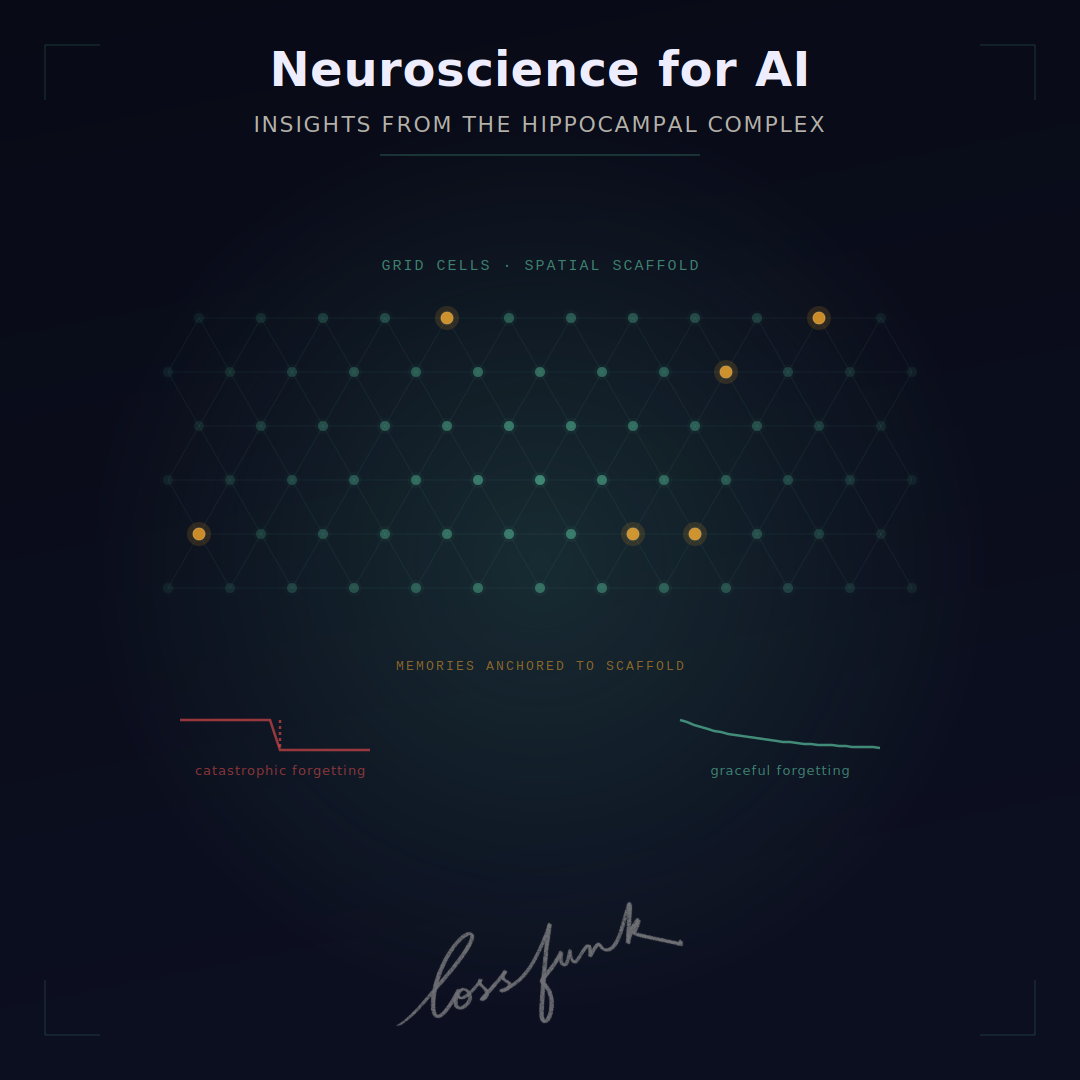
Neuroscience for AI: what hippocampal memory may teach model builders
Sarthak Chandra will unpack hippocampal memory, grid cells, graceful forgetting, and biological modularity for AI researchers and builders.
Self Learning Agents builder mixer in Bellandur
A Saturday mixer for founders, engineers, and researchers exploring self-learning agents, RL environments, recursive improvement, and world models.
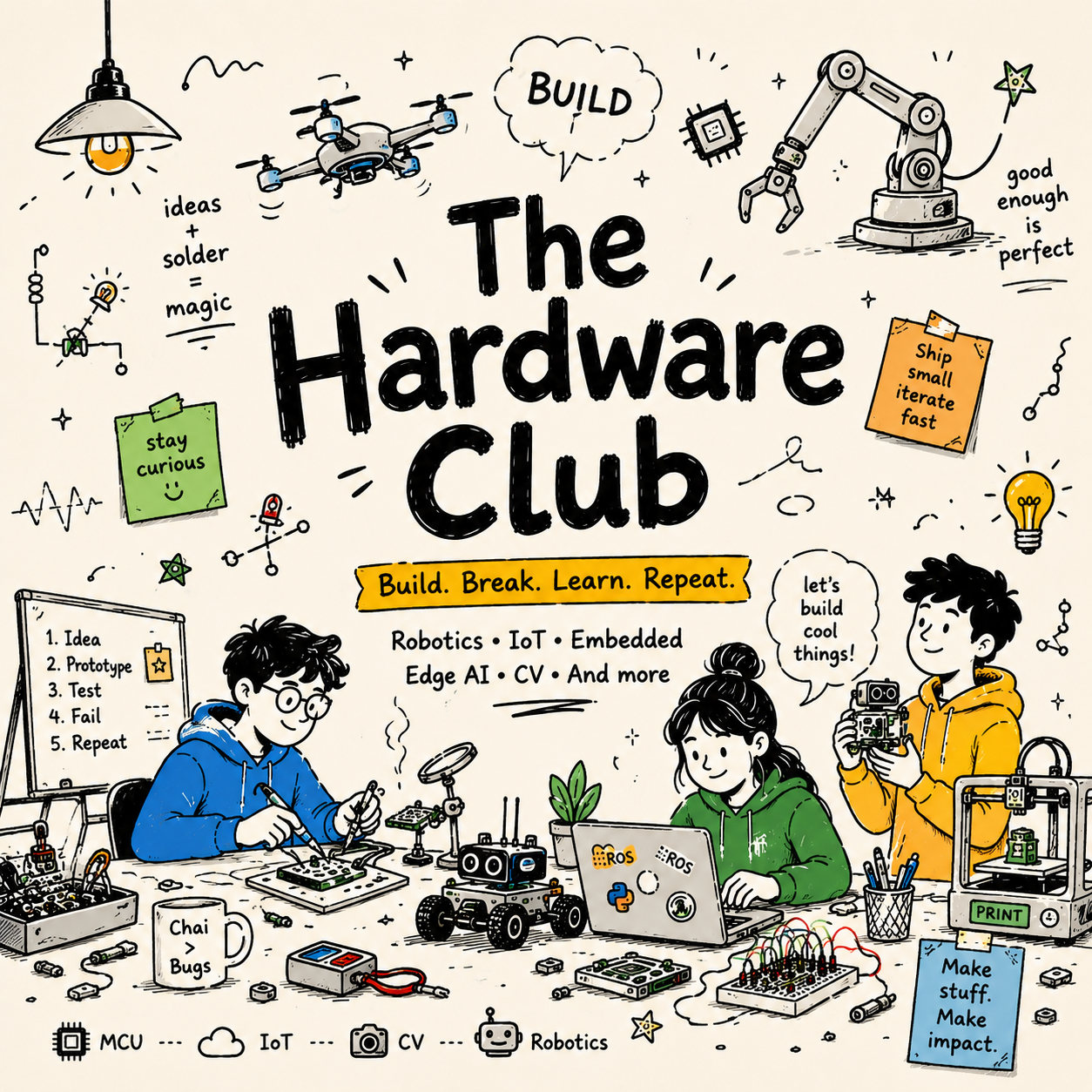
Hardware Club Bangalore hosts a robotics and Physical AI showcase
Bring robots, drones, boards, sensors, or half-working prototypes. This is demo, debug, and collaboration time for physical-world builders.