Today’s lead · TechCrunch
Meta ships Muse Spark Open, an 816B open-weight agentic coding model
Muse Spark Open is positioned as Meta’s big open-weight swing for local and hosted agentic coding: 816B total parameters, 42B active, 1M context, and native multimodality. The practical catch is hardware: local Mac use reportedly needs at least 1TB RAM, while NVIDIA highlights GB300-scale serving paths.

Top signals
8 more
NVIDIA releases Nemotron 3.5 Super VL for multimodal enterprise agents
Nemotron 3.5 Super VL is NVIDIA’s open 120B MoE model for agents that need reasoning, tool use, and visual understanding in one loop. The useful builder angle is deployment flexibility: NVIDIA cites NeMo customization, NIM/Dynamo serving, and CoreWeave already exposing NVFP4 serverless inference with listed token pricing.

Anthropic gives METR employee-like access for independent safety review
Anthropic is moving independent evaluation closer to real oversight by giving six METR researchers company hardware, office space, and internal tool access. The important detail is publication freedom: Anthropic says it cannot veto METR’s assessments, though it can require narrow redactions for categories like customer data and privileged material.

IBM Granite Switch 4.1 combines chat, decisions, and speech behind one endpoint
Granite Switch 4.1 is IBM’s modular play for fewer moving parts: one hosted endpoint can handle natural-language responses, decision tasks, safety checks, and speech transcription. The interesting bit for production is cache-efficient Activated LoRAs, letting adapter decisions reuse KV cache from the base generation instead of standing up separate specialist models.
FLUX 3 Image Klein promises open-weight image generation on a consumer GPU
FLUX 3 Image Klein is presented as a 5.6B-parameter open-weight image model that runs on a single consumer GPU. The post claims frontier-level quality, native 4K output, bounding-box control, and pixel-perfect editing; useful claims, but there is no benchmark or implementation detail in the supplied evidence.

Skywork opens Matrix-Game 4.0 for playable neural-rendered game worlds
Matrix-Game 4.0 separates game logic from neural rendering: an executable engine tracks state and rules while a causal video model renders frames in real time. Skywork says the open-source release runs at 480p/60 FPS on an RTX 5090, making it an early, hackable reference for playable world models.
Perplexity open-sources SPACE, its Firecracker sandbox for agent tasks
Perplexity is open-sourcing SPACE, the sandbox layer behind Perplexity Computer. The architecture choice is builder-relevant: each agent task gets its own Firecracker microVM, while credentials and outbound traffic are controlled from outside the VM. That is the right problem space for safer computer-use agents.

Vercel Drives gives Sandbox agents persistent workspaces across runs
Vercel Drives is now generally available for Vercel Sandbox, giving agents a persistent file layer separate from the compute environment. This is mundane but important plumbing: agents can resume work in a new sandbox, share read-only inputs, or fork a drive to explore parallel approaches without copying workspaces around.
LiveKit Inference adds major realtime voice-agent models behind one cloud key
LiveKit says its Inference layer now covers the three main voice-agent patterns: cascaded STT/LLM/TTS, turn-based speech-to-speech, and full-duplex speech models. Builders can route OpenAI, xAI, and Google DeepMind realtime models through one LiveKit Cloud key and bill, which mainly reduces integration and billing sprawl.
Tools & repos
4 selected
withHuman
withHuman is an open-source approval layer that intercepts AI-agent tool calls, auto-approves or denies routine actions by rules, and routes risky calls to humans across Claude Code, Codex, LangGraph, and Pydantic AI agents.

Navige
Navige targets runaway AI-agent spend: it routes suitable requests to smaller models, caches repeated reads, trims bulky tool results, and adds budgets plus approvals for sensitive actions, while keeping the chosen model when uncertain.
anthropics/claude-plugins-official
Anthropic’s official Claude Code Plugins directory is trending hard, which is a useful signal that plugin distribution and curation around coding agents is becoming its own developer surface rather than just scattered repo links.

OpenMuse
OpenMuse is a self-hostable personal agent with a browser, terminal, files, and persistent work. The pitch is outcome-based delegation with visible action review, while staying compatible with any agent harness.
Blogs worth your time
3 reads
Scaling Indic Pretraining: 2.8 Trillion Tokens and an Open Data Generation Pipeline
NVIDIA and IIT Madras/AI4Bharat describe a 2.8T-token Indic pretraining corpus across 22 Indian languages, plus the GPU-accelerated generation pipeline. The valuable part is provenance and recipe reuse, not just corpus size.

Open weight takes 71.5% of tokens and 23% of spend
Vercel’s September AI Gateway data says open-weight models now process most tokens and nearly a quarter of spend. Treat it as gateway-specific, but the switching and pricing trends matter for model-router builders.

Accelerating the search for antimicrobial peptides with Google Antigravity
DeepMind shows Antigravity as a scientific agent workbench, not just a coding surface: it queries UniProt, reasons over AlphaFold structures, inspects genomic context, and drafts wet-lab plans for antimicrobial peptide candidates.
Community discussions
4 threadsUniversity GPU cluster is holding my research hostage. Can I use my internship company’s GPUs instead? 💀 [D]
A PhD student asks whether to use an internship company’s idle GPUs for academic work. The comment consensus is blunt: ask both manager and PI, or risk IP assignment, logging, and employment trouble.
Harvey tests context graphs for cheaper, better legal agents
Harvey’s context-graph experiment is a useful reminder that agent quality is not only model choice. Pre-structuring entities and relationships improved rubric pass rate and lowered cost in its Legal Agent Bench tests.

The “no shortcuts” case for domain data as AI’s real bottleneck
This post argues that AI capability looks less jagged when ordered by task-relevant data. It is a useful counterweight to blanket automation timelines: coding and math scale faster because data and simulators are abundant; robotics, biology, and olfaction do not get a free pass.
Agent swarms could multiply token demand, if background work really works
Aaron Levie’s argument is that the chatbot phase understates demand: background agents, swarms, workflow triggers, and agent-launched agents could drive 100x–1000x token consumption. The open question is reliability, but the compute-planning implication is real.
Funding & acquisitions
3 moves
Origin raises $20M to build autonomous construction robots
Origin emerged from stealth with $20M for construction robotics. The near-term plan is concrete: deploy OG-1 wall-finishing robots, run larger US and Europe pilots, and reach a 150-robot fleet by end-2027.

Confido Health extends Series A with $12.5M led by Z47
Confido Health added $12.5M to its Series A, taking the round to $22.5M. The company is pushing beyond healthcare voice agents into CareOS, an AI operating platform that automates follow-up, scheduling, referrals, refills, and payments.

Shamrock AI raises $5M seed for enterprise agent assurance
Shamrock AI raised a $5M seed round for an “agentic assurance” platform. Its wedge is practical enterprise pain: continuously testing and validating business processes so AI agents can operate across ERP migrations and other critical workflows.
Bengaluru radar
2 events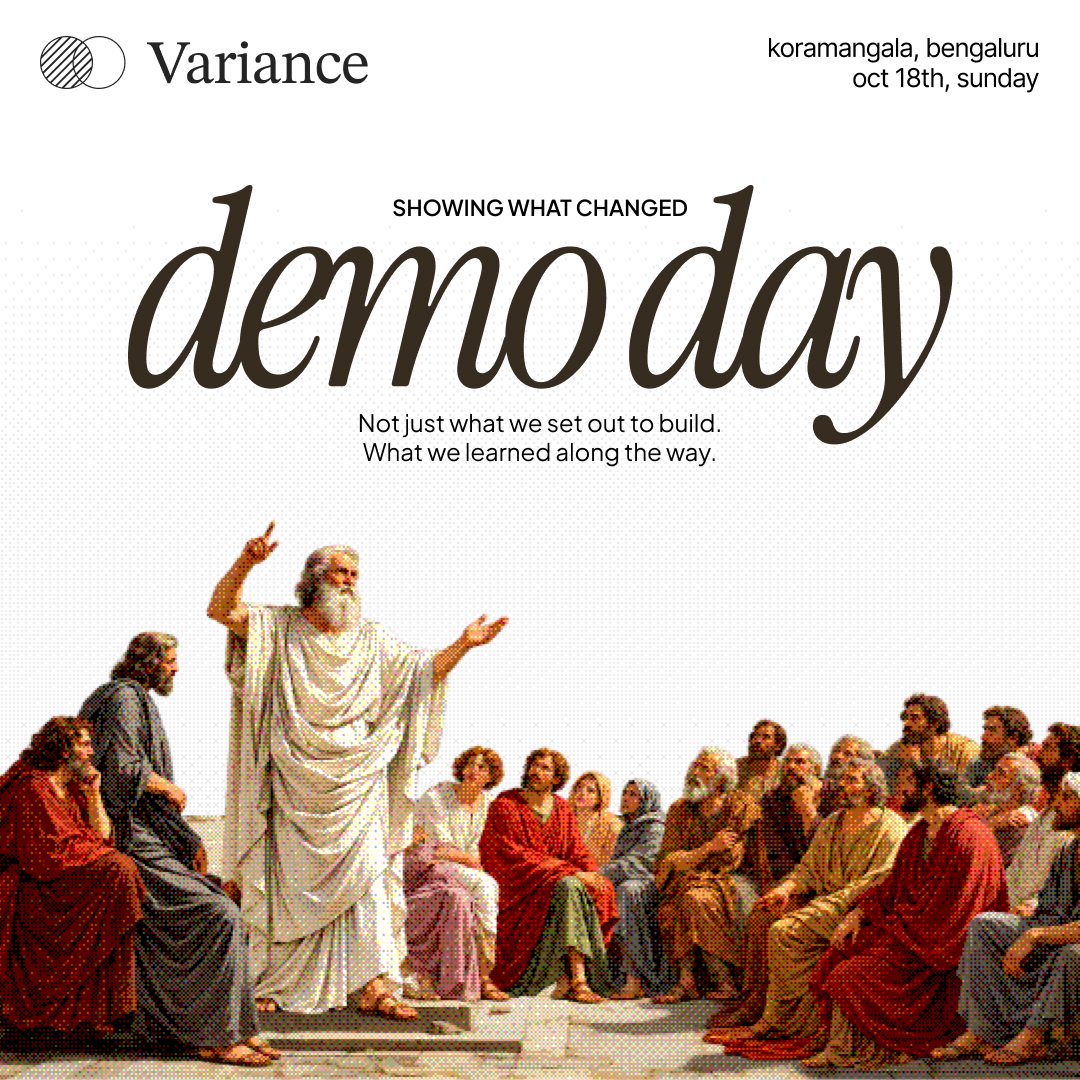
Variance: Demo Day
A small, free demo day for 14 deep-tech founders building across AI, robotics, aerospace, biotech, water, and autonomy. Request an invite; capacity is 50–70 people.
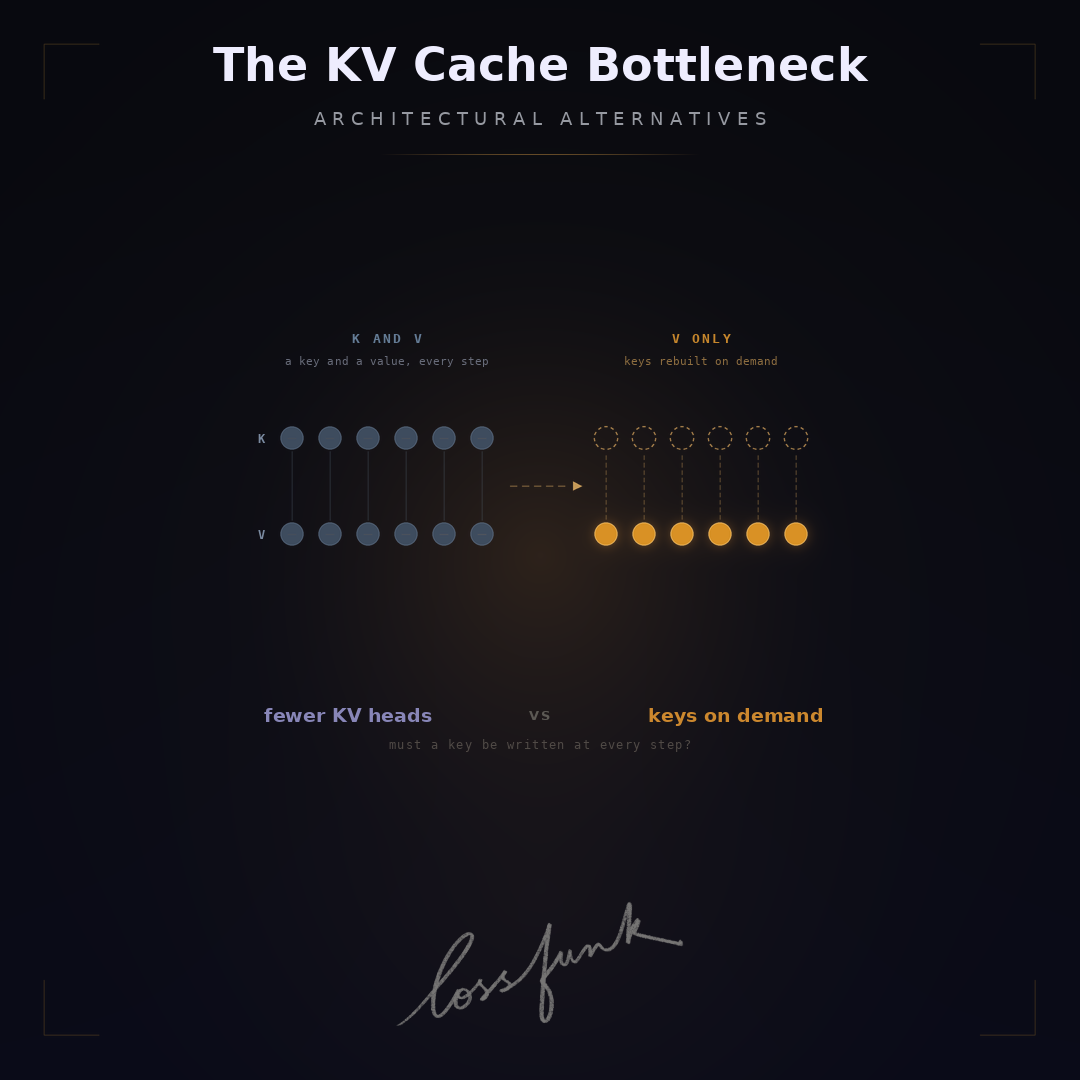
The KV Cache Bottleneck: Architectural Alternatives
A free Bengaluru talk by FrontiersMind co-founder Abhay Kumar on KV-cache alternatives, including GQA, cross-layer sharing, sliding-window attention, MLA, and grouped value attention.