Today’s lead · x.com
OpenAI says GPT-5.6 Sol, Terra and Luna will launch publicly Thursday
OpenAI says GPT-5.6 Sol, along with Terra and Luna, will launch publicly on Thursday and that preview access is expanding globally. Axios also reported that U.S. restrictions on GPT-5.6 were lifted after additional testing.

Top signals
6 more
GitLost prompt injection can make GitHub Agentic Workflows leak private repo data
Noma Security showed that a public GitHub issue can steer GitHub Agentic Workflows into pulling private repository contents into a public comment when the agent has broad cross-repo read access. The attack needs no stolen credentials, only an issue on a public repo.

Google fixes Dialogflow CX Rogue Agent isolation flaw
Varonis found a critical flaw in Dialogflow CX where edit rights on one Code Block-enabled agent could compromise other Code Block-enabled agents in the same Google Cloud project. Google fixed the issue, and both companies said there is no sign it was exploited.

Claude Cowork expands to web and mobile for background work
Anthropic is bringing Claude Cowork to web and mobile for Max subscribers, letting users start a task, receive phone updates, and pick up results later even if the laptop is closed. TechCrunch frames the move as coding-agent workflows spilling into broader office work.

Microsoft reportedly routes some Word and Excel AI prompts to in-house MAI models
TechCrunch reports that Microsoft has begun using its own MAI models for a percentage of AI prompts in Word and Excel, while still using third-party models from OpenAI and Anthropic. The move follows Microsoft’s launch of seven MAI models, including an agentic coder and text-to-image model.

Discord says an AI moderation bug wrongly banned more than 8,000 users
Discord acknowledged that a bug in its AI-assisted moderation pipeline mistakenly banned more than 8,000 users after harmless images such as spreadsheets, chessboards, textures, and transparent backgrounds were flagged as harmful content. The company says affected accounts are being restored.

Reuters: DeepSeek is developing its own AI chip
Reuters reports that Chinese startup DeepSeek is developing an AI chip, citing three people familiar with the matter. The effort could reduce DeepSeek’s reliance on Nvidia and Huawei chips for training and running its models.
Tools & repos
6 selectedClacky
Clacky is an open-source Windows AI buddy that lives next to the cursor, sees what is on screen, and can explain or act on visible context. It is a useful reference point for teams exploring screen-aware desktop agents outside macOS.
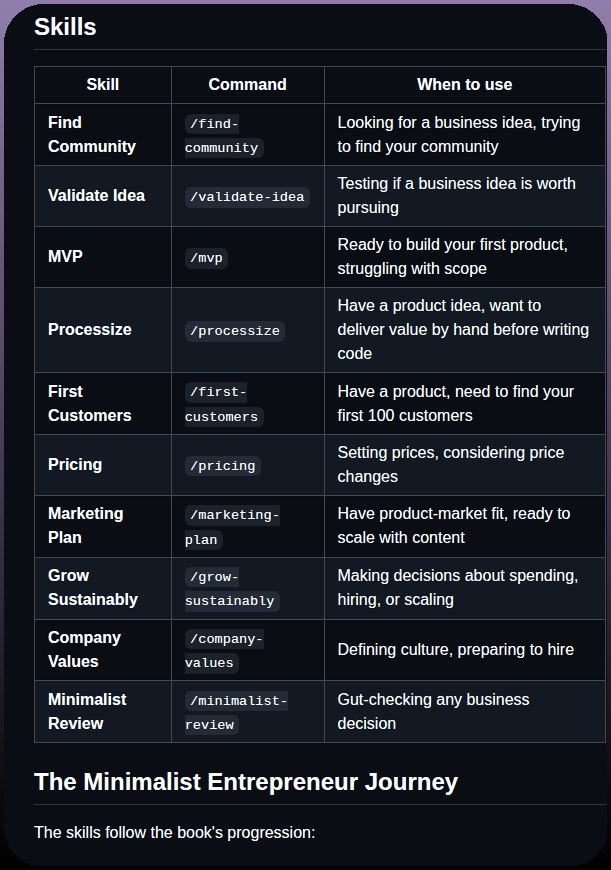
The Minimalist Entrepreneur Claude Code Skills
This Claude Code plugin adds 10 founder-oriented skills based on The Minimalist Entrepreneur, covering community discovery, idea validation, MVP scoping, first customers, pricing, marketing, and decision reviews. It turns a business playbook into reusable agent commands instead of one-off prompts.
MadsLorentzen/ai-job-search
A Claude Code-based framework for automating job-search workflows: evaluate roles, tailor CVs, write cover letters, and prepare for interviews from a user profile. Even if the use case is personal, the repo is a concrete pattern for multi-document agent automation.
ruvnet/RuView
RuView is a Rust repo that turns commodity WiFi signals into real-time spatial intelligence, presence detection, and vital-sign monitoring without video. For edge-AI builders, it points at privacy-preserving sensing interfaces that do not require cameras.

Katalyst
Katalyst is a Salesforce pipeline agent for teams that want opportunities and follow-ups worked automatically rather than only surfaced in dashboards. The use case is narrow, but CRM agents are one of the clearer near-term enterprise automation wedges.

Mira
Mira runs AI-moderated interviews and reads how participants feel, aiming to scale qualitative research without scheduling a human moderator for every session. Product teams can treat it as a faster feedback loop, not a replacement for critical research design.
Blogs worth your time
11 reads
Viability of local models for coding
Birgitta Böckeler reports what actually affects local LLM usefulness for coding: RAM limits, quantization, context, harness setup, tool calling, response speed, and task fit. The useful takeaway is sober: local models are more plausible than a year ago, but agentic coding remains hit-or-miss and very setup-dependent.
Improving Agents is a Data Mining Problem
LangChain argues that agent improvement starts with mining traces for failure modes, then using open-model fine-tuning, judge models, and eval loops to hill-climb behavior. It is a useful framing for teams moving from demos to continual agent improvement.

Intelligence is Free, Now What? Data Systems for, of, and by Agents
Berkeley researchers map how cheap inference changes data systems: agents issue speculative query storms, need structured shared memory and coordination, and may synthesize custom data systems. The post is a strong architecture checklist for anyone building agent-heavy analytics or workflow platforms.
.jpg)
Choosing a Claude model and effort level in Claude Code
Anthropic separates model choice from effort level: model changes the capability ceiling, while effort changes how many files, tools, and steps Claude Code will spend before checking back. The practical rule is useful: upgrade the model for reasoning failures, raise effort for skipped context or incomplete execution.

Choosing the Optimal Image Input Detail Level in LLMs
OpenRouter benchmarked 1,730 visual reasoning questions and found low-detail images can reduce accuracy and even raise cost on reasoning models when the model compensates with more thinking tokens. For multimodal apps, image detail and reasoning effort should be tuned together, not optimized as independent knobs.

Weblica: Scalable and Reproducible Training Environments for Visual Web Agents
Apple proposes Weblica, a framework that captures stable web states with HTTP-level caching and synthesizes environments from real websites for RL training of visual web agents. This is directly relevant to teams trying to train or evaluate web agents without brittle live-site drift.
FlowEval: Reference-Based Evaluation of Generated User Interfaces
Apple’s FlowEval evaluates generated UIs by comparing navigation traces from real sites with traces from generated analogs, rather than relying only on opaque LLM judges. It offers a more testable path for teams using coding agents to generate product interfaces.
A Single Neuron Is Sufficient to Bypass Safety Alignment in Large Language Models
Apple researchers report that targeting single refusal or concept neurons can bypass safety behavior or induce harmful content across seven models. The paper is a warning that alignment behavior may be more brittle and localized than many deployment assumptions imply.

Develop Humanoid Robot Policies End-to-End with NVIDIA Isaac GR00T
NVIDIA walks through an end-to-end humanoid policy workflow using Isaac GR00T 1.7: simulation setup, teleoperation data collection, LeRobot conversion, post-training, evaluation, and TensorRT/ONNX-ready deployment. It is a concrete stack map for robotics teams moving from demos to repeatable policy development.
How Schneider Electric Built Their LLMOps Foundations With LangSmith
LangChain describes how Schneider Electric built LLMOps foundations for an AI program with 350 AI Hub experts and 60+ deployed agents. The useful parts are observability, evaluation, deployment discipline, and governance for agents in critical infrastructure contexts.

From Hugging Face to Amazon SageMaker Studio in one click
Hugging Face and Amazon added deep links that take supported model pages directly into SageMaker Studio fine-tuning or deployment flows with model context, permissions, and GPU quota visibility pre-configured. It reduces the setup tax between open-model discovery and enterprise AWS experimentation.
Funding & acquisitions
6 moves
Mowito
Bengaluru-based Mowito raised $3 Mn in pre-seed funding to expand into the U.S., grow engineering and go-to-market teams, and scale deployments across automotive and electronics manufacturers. The startup builds physical AI models that let standard industrial robot arms learn tasks from operator demonstrations instead of traditional programming.

Alchemic
Bengaluru AI startup Alchemic raised Rs 2.5 Cr to enhance its customer-research agent platform, expand engineering and commercial teams, and increase enterprise adoption. Its agents conduct customer interviews at scale and generate reports with video clips and customer quotes within hours.

Norm AI
Norm raised a $120 Mn Series C at a $1.2 Bn valuation to build out its AI-native law firm and legal-agent platform. The company pairs AI agents with supervising attorneys and also builds agents that supervise other AI agents in regulated workflows.

thumpN
Live entertainment discovery and ticketing startup thumpN raised over $3.75 Mn in pre-seed funding after launching its AI-native platform. Its assistant Shadow recommends events from user preferences, while the company is also building organizer tools for demand, genre, and audience insights.

upGrad / Unacademy
India’s Competition Commission approved upGrad’s proposed acquisition of Unacademy, clearing a key regulatory hurdle for one of the country’s largest edtech consolidation deals. The all-stock transaction reportedly values Unacademy at about Rs 2,055 Cr, far below its 2021 peak valuation.

ideaForge
Listed drone-tech company ideaForge opened its QIP with a floor price of Rs 835.86 per share after board approval to raise up to Rs 500 Cr. The proceeds are earmarked for working capital, debt repayment, and product development as the company expands defence and logistics drone capabilities.
Bengaluru radar
1 events
US GTM for IT Services in the Age of AI
A founder-only Bengaluru session on how IT services and B2B firms should refine U.S. market focus, positioning, and early sales motion as AI changes buyer expectations. Useful for founders trying to make referral-led U.S. sales repeatable before hiring a larger sales team.