Today’s lead · Simon Willison
Moonshot launches Kimi K3, a 2.8T multimodal model
Moonshot AI released Kimi K3 as its most capable model to date, with 2.8T parameters, website and API access, native text-and-image input, and a promised open-weight release by July 27, 2026. For builders, the launch matters because K3 pushes open-weight-scale frontier competition into agentic, retrieval-heavy and coding use cases, but at much higher pricing than prior Chinese open models.

Top signals
8 more
OpenAI shows ChatGPT completing tasks across browsers and desktop apps
OpenAI’s video demonstrates a new ChatGPT app that can use an in-app browser, a Chrome extension, and Computer Use to operate websites and desktop apps. The key builder signal is that ChatGPT is moving from answering to acting inside existing work tools, including long data-entry workflows and desktop app control on Windows and macOS.

NVIDIA releases Nemotron 3 Embed for agentic retrieval
NVIDIA released Nemotron 3 Embed, a collection of open and commercially available embedding models for production RAG, agentic retrieval, code retrieval, and agent memory. Builders get open weights, fine-tuning and distillation recipes, 32k context, multilingual and code retrieval, and deployment paths across Hugging Face, NVIDIA NIM, vLLM and inference partners.

Agent data injection attacks target trusted fields in AI agent workflows
Researchers described agent data injection, an attack class that corrupts the facts an AI agent trusts rather than issuing obvious malicious instructions. For builders shipping browser, coding, or review agents, the takeaway is that prompt-injection defenses are not enough when agents rely on structured-but-model-interpreted fields such as sender names, button IDs, comments, or tool history.
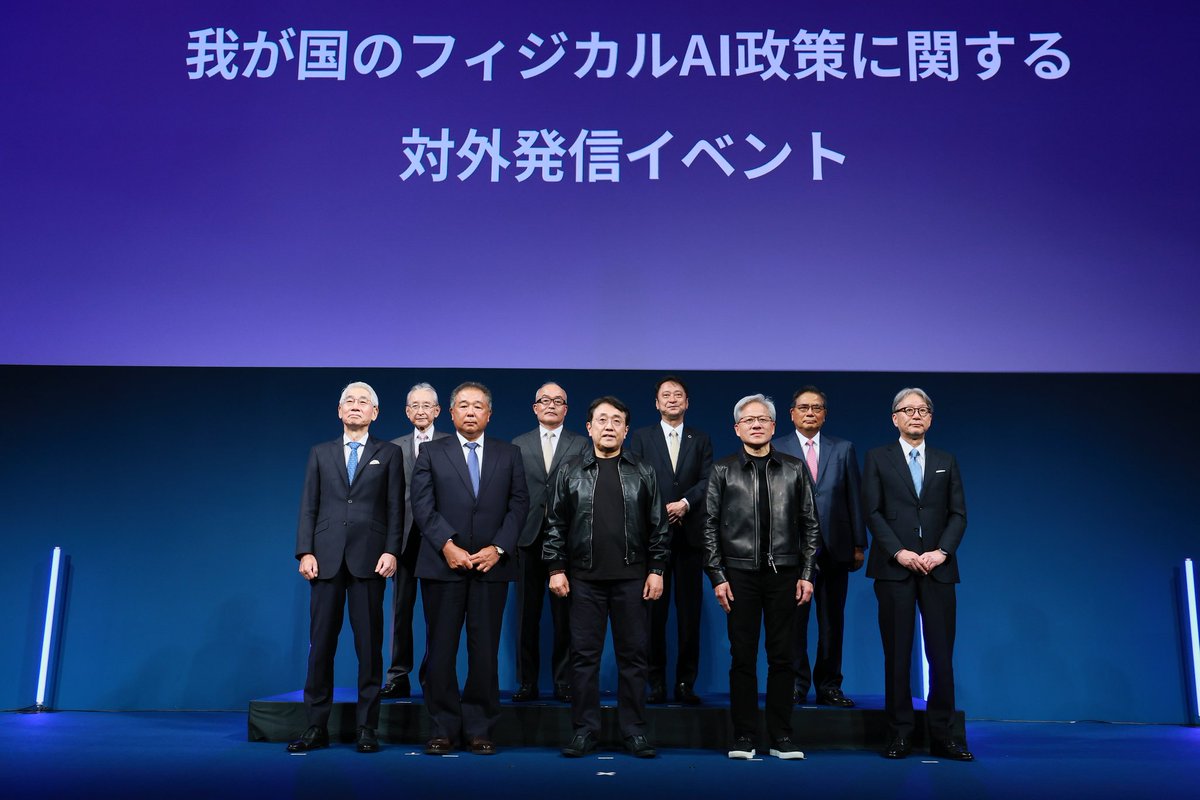
NVIDIA and Noetra plan Japan national AI infrastructure for physical AI
NVIDIA and Noetra, supported by Japan’s METI, announced plans for what NVIDIA calls the world’s first national AI infrastructure for physical AI. The reported Vera Rubin AI factory scale, including tens of thousands of Rubin GPUs, signals continued national-level buildout of specialized AI compute for robotics, industrial and physical-world workloads.

NVIDIA details BlueField infrastructure for agentic AI factories
NVIDIA outlined how BlueField-4 DPUs, Vera BlueField-4 STX storage processors, and DOCA software offload networking, storage, security, telemetry, and context management for agentic AI factories. The infrastructure focus is practical for builders because long-context agents turn KV cache, policy checks, tool calls and storage movement into part of the inference path.

Google AI Mode adds app integrations for task completion
Google is letting users link and interact with select apps inside AI Mode, its conversational search experience. The move pushes AI Mode from answer generation toward cross-app task completion, with Instacart, Canva, and YouTube supported at launch in the U.S.

DoorDash opens limited beta for an agent-friendly CLI
DoorDash introduced a limited beta of dd-cli, a command-line tool that lets developers and AI agents search stores, find deals, build carts, and check out. It is a small but concrete sign of agentic commerce moving toward software interfaces built for automation rather than only human app navigation.

Roblox adds AI game creation to its mobile app
Roblox announced Build, a mobile feature that turns a text prompt into a basic game. The launch lowers the barrier to creating interactive experiences, while Roblox says discovery will still rank AI-generated games by player retention to avoid surfacing low-quality output.
Tools & repos
5 selectedapache/ossie
Apache Ossie is an industry specification effort to standardize semantic metadata exchange across analytics, AI, and BI platforms, aiming to provide a vendor-neutral source of truth for semantic data.
PostHog/posthog
PostHog is a developer platform for building self-driving products, combining AI observability, analytics, session replay, feature flags, experiments, error tracking, logs, and MCP access.
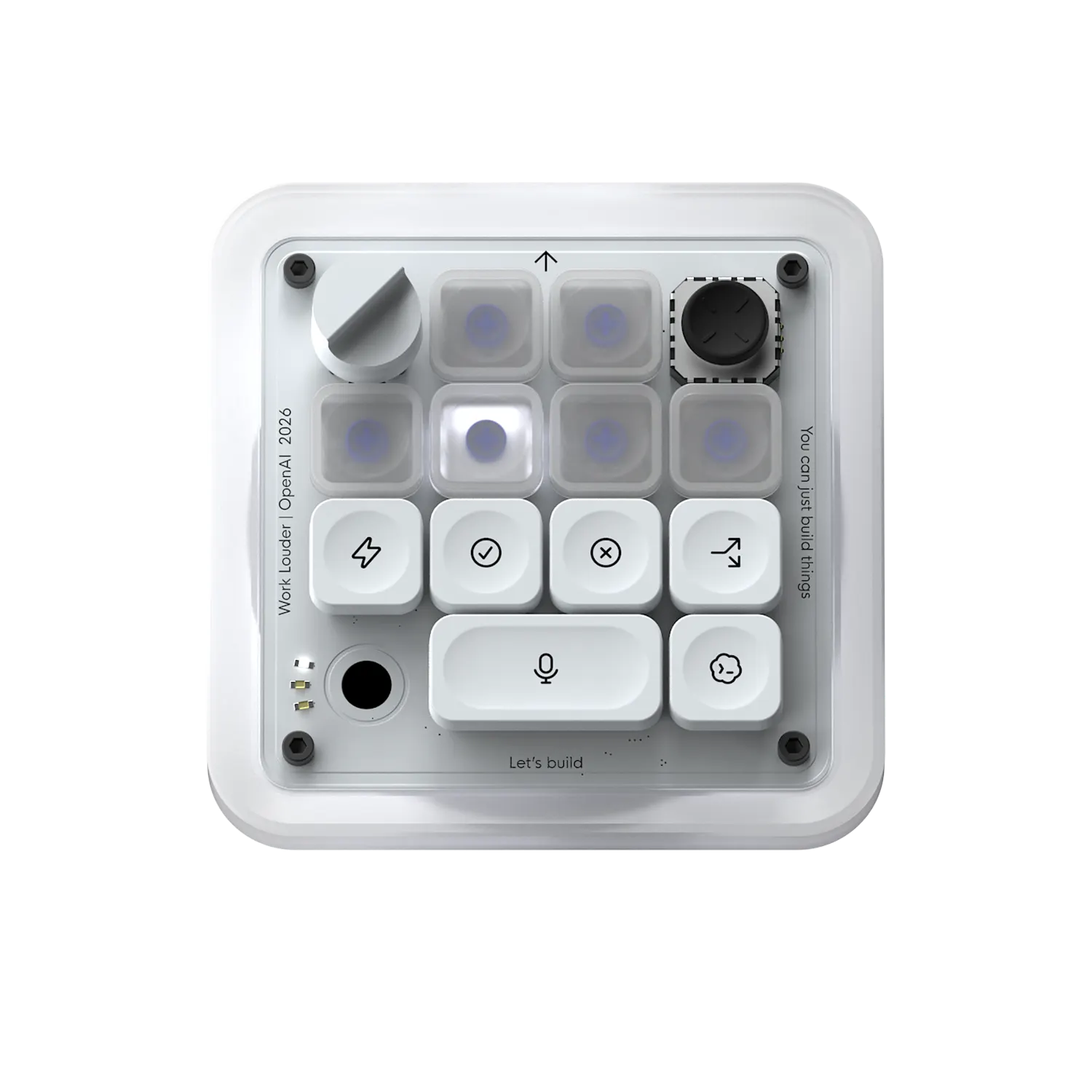
Codex Micro
Codex Micro is a compact keyboard built with Work Louder for controlling Codex agents through tactile keys, a reasoning-level dial, and RGB status lights.

Albato AI
Albato AI lets users build AI-driven workflows across 1,000+ apps, using Albato Copilot, AI Agents, Canvas mode, step testing, and automation sharing.
openinterpreter/openinterpreter
Open Interpreter is described as a coding agent for open models such as Kimi K3.
Blogs worth your time
5 reads
Cline breaks down the real economics of self-hosting LLMs
Cline’s long technical guide uses Kimi K2.6, B200 nodes, and Cline production traffic to explain when self-hosting open-weight LLMs beats API inference. The useful takeaway for builders is not a universal formula, but a way to pressure-test provider quotes with real traffic, batching, KV cache, TTFT, MBU/MFU, and utilization math.

Two Minute Papers reviews evidence that AI coding can weaken debugging skill
The video discusses a study of 52 junior software engineers split into AI and non-AI coding groups. The transcript’s grounded takeaway is measured: AI may speed up familiar work, but over-reliance can reduce understanding, especially debugging performance.
Replit describes its shift toward a self-driving company
Replit reports broad internal agent adoption across engineering, support, sales, marketing, and data workflows. The post is useful for builders because it shows what agent infrastructure looks like inside a real company: access policies, token proxies, audit logging, ZeroTrust networking, tool integrations, and human escalation paths.

NVIDIA shows how to connect video AI agents to enterprise workflows
NVIDIA explains how NemoClaw, Video Search and Summarization, and a RAG Blueprint can turn video analysis into structured reports and downstream actions such as Jira tickets. It is a practical pattern for builders composing perception, enterprise knowledge retrieval, human-in-the-loop prompts, and workflow automation.

Dharma AI argues specialization still beats newer OCR models in Portuguese
Dharma AI compares its Brazilian Portuguese-focused DharmaOCR with newer OCR systems and argues that domain specialization plus DPO improves both extraction quality and stability. The builder lesson is that narrow training can still outperform broader multilingual models when production accuracy depends on language-specific names, morphology, document types, and degeneration resistance.
Community discussions
4 threadsLocalLLaMA debates whether giant open-weight models are still local
The thread pushes back on hype for massive open-weight drops such as GLM-5.2, arguing that 700B+ MoE models are effectively unusable on normal home rigs. The tension is between openness as weight availability and local AI as practical self-hosting, privacy, and hardware accessibility.
Claude users debate unattended coding agents and parallel PR workflows
The discussion centers on how far engineers should let Claude run autonomously. Some commenters describe parallel worktrees, multiple PRs, and automated review loops; others warn that unattended runs still create messy refactors, hallucinated objects, unused artifacts, and full-revert situations.
OpenAI subreddit weighs an AI-assisted convex optimization proof claim
A UC Berkeley teaching professor says GPT-5.6 Sol produced a proof for a derivative-free convex optimization lower bound in one 148-minute session, later formally verified in Lean. The debate is less about casual prompting and more about whether frontier models plus expert prompt design and formal verification can become a serious research workflow before peer review catches up.
AI agents community debates MCP servers versus product-owned agents
The thread asks why software companies build standalone agents for customers instead of MCP servers that customers’ existing agents can call. The clearest tension is product control and in-app UX versus user fatigue from yet another chatbot that lacks broader app context.
Funding & acquisitions
5 moves
Elorian raised $55M seed funding at a $300M valuation
Former Google DeepMind researcher Andrew Dai’s visual AI startup Elorian raised $55M at a $300M valuation. TechCrunch’s interview frames visual understanding and visual reasoning as the company’s frontier AI focus.
Sable raised $45M for Aidan, a real-time computer-using sales AI
Sable announced $45M in funding to build Aidan, an AI employee for real-time sales conversations that can see screens, speak naturally, and operate interfaces.

Aina raised $5.5M for AI-native hardware interfaces
Aina emerged from stealth with a $5.5M seed round to build context-aware AI hardware interfaces. The Bengaluru- and San Francisco-based startup is targeting a post-smartphone interaction layer where hardware captures human intent and reduces app-navigation overhead.
Bunkerhill raised $55M for healthcare AI agents
Bunkerhill announced $55M to help health systems build AI agents for clinical and operational workflows. The company says more than a dozen health systems have partnered with it and one customer is running 20+ agents live across the enterprise.

logcat.ai raised $2.5M for Android and Linux engineering automation
logcat.ai raised a $2.5M pre-seed round to build an AI platform for Android and embedded Linux device engineering. Its Delta product analyzes system traces, identifies root causes, and recommends code-level fixes for hardware manufacturers and connected-device teams.
Bengaluru radar
1 events
Signals & Agents: DE 2026 AI Summit at Hinge Health
A Bengaluru AI summit at Hinge Health focused on signals and agents for incident response and data analytics. The sessions cover autonomous incident response, AI-grounded data quality, AI-assisted query optimization, and using institutional knowledge as agent context.