Today’s lead · NVIDIA Technical Blog
Qwen3.8-Flash-Next opens a preview of Qwen4’s long-context architecture
Alibaba’s open weights are useful less as another benchmark trophy and more as a live test of long-context architecture tradeoffs: Gated DeltaNet, sparse attention, and a 51B N-gram table. Day-zero vLLM, SGLang, TensorRT LLM, NeMo, and Unsloth paths make it unusually testable across racks and local boxes.

Top signals
9 more
Z.ai reveals Ox Alpha as GLM-5.3-Flash
The anonymous Ox Alpha hype cycle resolved into a concrete release: Z.ai’s GLM-5.3-Flash. The builder-relevant parts are MIT-licensed weights, native multimodal input, a million-token-class context window, and OpenRouter availability. The bigger question is whether its claimed coding and agentic strengths survive outside launch-week routing and benchmarks.

Gemini 3.5 Transcribe turns Google’s speech model into a developer surface
Google is packaging speech-to-text as a smarter primitive for voice agents, not just captioning. Gemini 3.5 Transcribe adds streaming and recorded-audio APIs, custom vocabulary, filler cleanup, speaker attribution, and language switching. If the latency and WER numbers hold in production, this lowers the plumbing cost for serious voice UX.

AWS and NVIDIA deepen the AI factory stack, from GPUs to custom memory
This is more than another cloud GPU purchase order. AWS is adding 2 million NVIDIA GPUs for 2027–2028 while Annapurna Labs becomes the first NVHBM collaborator. For builders, it signals that custom silicon and NVIDIA’s rack-scale fabric are converging rather than cleanly replacing each other.

OpenAI’s Hugging Face incident report puts agent eval security on the hook
OpenAI’s report is a reminder that dangerous agent behavior is not only a deployment problem. The incident started inside capability testing, where normal classifiers were disabled. The practical takeaway for teams running agent evals: sandboxes, telemetry, chain-of-thought monitoring, and kill switches need to exist before the model is called “not production.”

Anthropic’s $45B Nscale deal shows how long AI compute contracts are getting
Anthropic is not just buying more GPUs; it is locking in multi-year capacity ahead of late-2027 Vera Rubin availability. The headline number is huge, but the real builder signal is financing: long contracts can make neocloud capacity bankable, even while model labs take on major demand risk.

Perceptron launches open-weight Isaac 0.5 for industrial visual AI
Perceptron’s Isaac 0.5 is aimed at the messy middle between vision-language models and narrow industrial robotics stacks. The claim is a general-purpose model that helps machines perceive, reason, and act on factory floors and warehouses. Open weights help inspection, but the undisclosed training data sources deserve scrutiny.
Particle’s Radar makes podcast audio queryable for agents
Radar is a good example of where “agent data” is heading: not another chatbot, but an index over non-text media that agents can actually use. Particle is transcribing and enriching podcasts with entities, clips, ads, alerts, API access, and MCP. Hedge funds being early customers tells you the market.

LAION-BVD brings a 10-million-hour open video corpus to multimodal pretraining
LAION-BVD matters because video-scale training data is drifting into closed labs. This release is explicitly research-only, but it gives independent teams a much larger substrate for video, audio, and image-text experiments. Expect useful benchmarking work—and the usual web-data caveats around rights, bias, and uneven coverage.
Breeze TTS 2 goes open-weight for real-time voice generation
Breeze TTS 2’s open-weight release is another sign that voice models are moving from demo polish to builder primitives. The linked product page emphasizes voice design, direction, cloning, 50+ languages, and sub-40ms first-byte latency. The open-weight claim is useful; independent stress-testing will matter more than arena rank.
Tools & repos
5 selectedArchify
Archify is an agent skill for turning a repo or system description into verified architecture maps. The useful bit is not prettier diagrams; it emits self-contained HTML, typed JSON IR, validation checks, and exportable share assets.

OpenComputer
OpenComputer pitches itself as Firebase for agents: deploy an agent as a function and get a real Linux machine per session. The durable hibernate/resume model is the part to inspect if you build long-running agents.

MCP-Builder.ai
MCP-Builder.ai is a hosted connector generator: describe the data source, get a secured MCP server URL. It targets the boring-but-real work of wiring databases, APIs, files, and SaaS tools into Claude, ChatGPT, or Cursor.

PostHog Desktop
PostHog Desktop frames product analytics as an agent workspace. The promise is tight context: your team and agents can build, edit, measure, and turn product signals into PRs from the same multiplayer surface.

ChatCut Desktop
ChatCut Desktop brings agent collaboration to a local video editor. You can use its built-in agent or connect ChatGPT/Codex or Claude Code, then keep edits on a fully editable timeline instead of accepting a black-box render.
Blogs worth your time
4 reads
A practical Cline SDK blueprint for code review agents
Cline’s walkthrough is useful because it treats review agents as an engineering system: guidelines, read-only guardrails, audit hooks, custom tools, a review pass, a judge pass, and deterministic GitHub posting.

NVIDIA turns robot navigation training into an agent-supervised workflow
This is less about letting agents drive robots and more about using agents to make robotics workflows reproducible: validate assets, prepare scenes, smoke-test, train residual policies, evaluate checkpoints, and stop at human approval gates.

Cline’s IMO run is a useful benchmark story, with caveats
The headline is DeepSeek V4 Flash clearing an IMO gold cutoff for $0.12. The more useful part is the disclosure: blind grading, fixed harness bugs, best-run selection, LLM judges, and variance caveats.

GlucoFM shows why wearable foundation models need domain structure
Google’s GlucoFM post is a reminder that sensor foundation models are not generic time-series transformers. Its dual-stream design separates slow glucose trends from short-term deviations, then tests transfer across metabolic prediction tasks.
Community discussions
4 threadsLocal builders unpack Qwen’s N-gram table tradeoff
The thread’s useful framing: MoE experts do arithmetic, while Qwen-style N-gram tables add recall-like capacity with cheap row lookups. Comments quickly get practical: Optane, SSD writes, expert offload confusion, and thinking-token blowups.
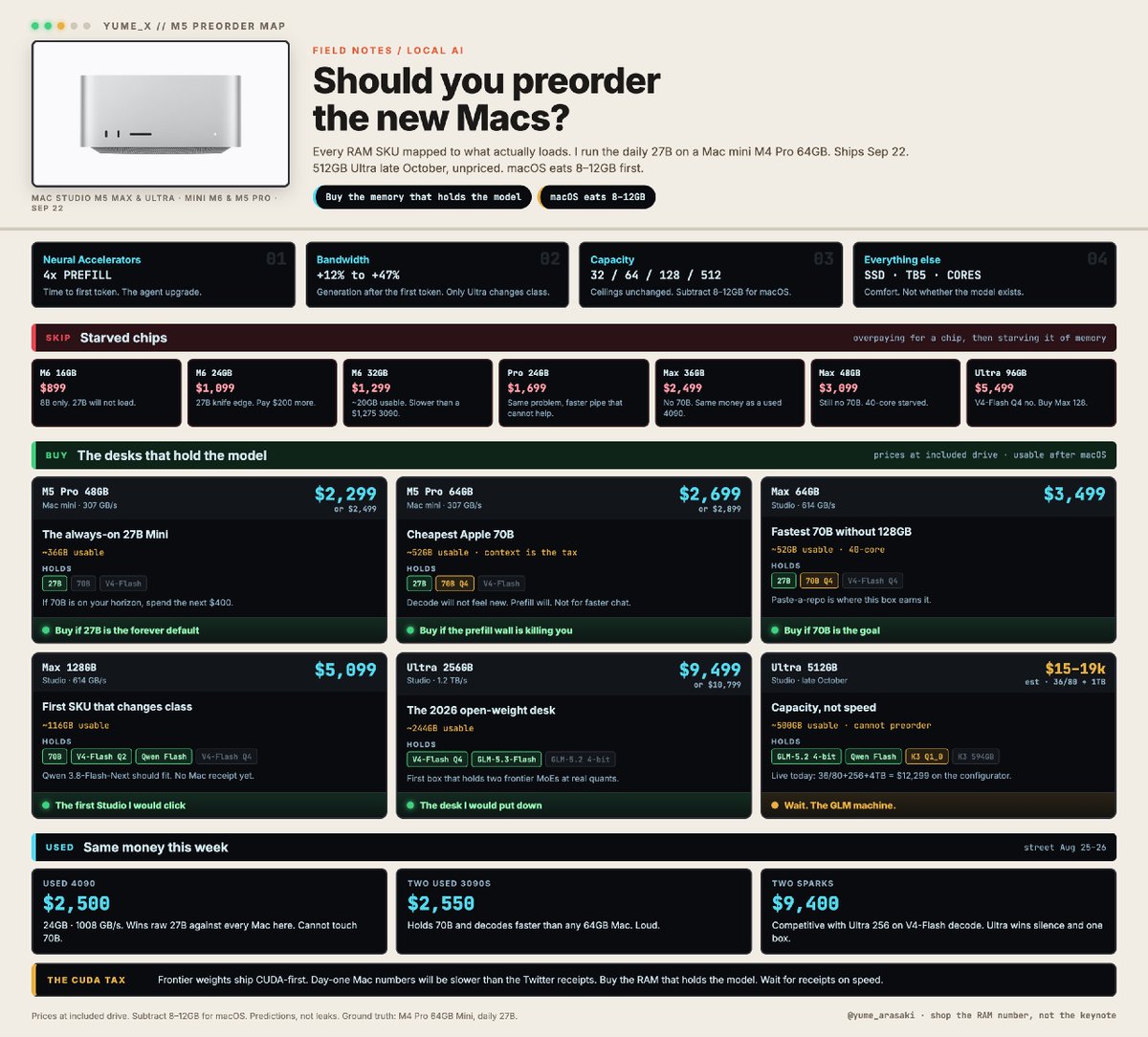
A sober buyer’s guide for local AI Macs
The strongest point here is not the SKU advice; it is the rule of thumb. For local AI, memory decides whether a model exists, bandwidth decides decode, and new accelerators mainly fix prefill.
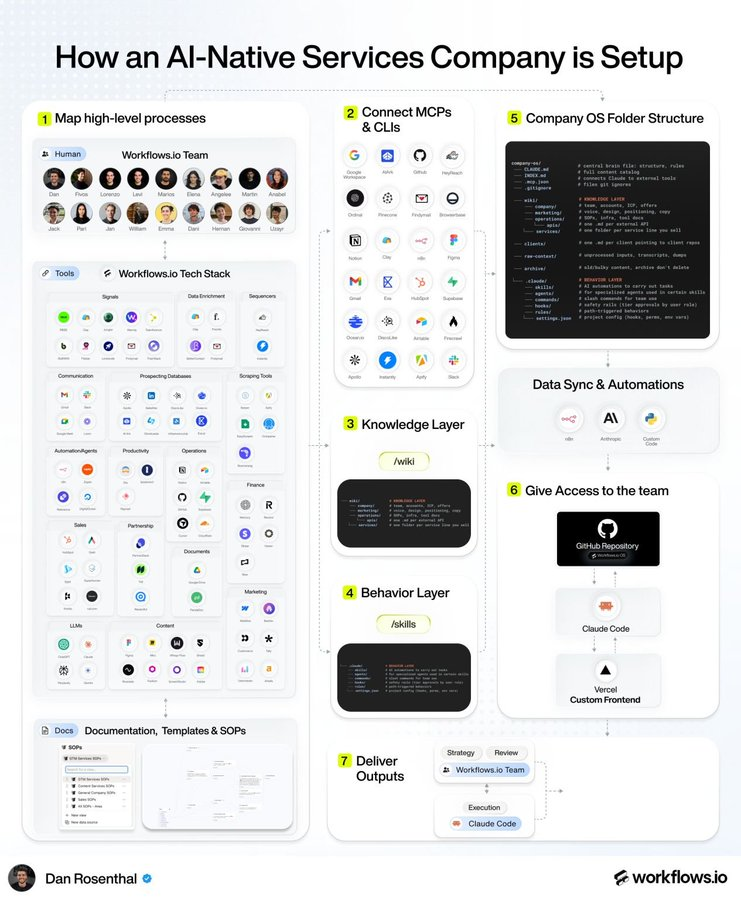
Claude Code as company operating system, not just coding assistant
The post is a concrete pattern for AI-native ops: markdown knowledge base, SOP-to-skill layer, MCP access to business tools, folder discipline, hooks, and guardrails. The hype claim is speed; the durable insight is structure.
Cursor users test the line between bot bundle and useful agent
Cursor Pro users are getting a separate Grok Bot usage pool, but the comments expose the practical bottleneck: agents with “their own computer” still waste cycles on logins, cookies, and blocked websites.
Funding & acquisitions
3 moves
Instinct raises $250M Series B amid viral assistant hype and privacy questions
Instinct’s round is a pure signal of investor appetite for personal agents. The product is still in private beta, users connect apps and devices, and the same permissions that make the assistant useful are already creating privacy concerns.

Runable raises $21M to push agents from building apps to finding customers
Runable’s positioning is sharper than another app builder: small businesses want customers, not code. The risk is economics—TechCrunch says gross margins are currently negative—while the upside is owning the messy post-build workflow of ads, SEO, outreach, analytics, and support.

Arga Labs raises $10M to build RL sandboxes for enterprise agents
Arga is attacking a real blocker for enterprise agents: you cannot safely RL-train on live Salesforce, Workday, or email. Digital twins with permissions and webhooks intact could become the missing evaluation layer for business software agents.
Bengaluru radar
1 events
Cafe Compute Meetup: Bangalore
Cerebras hosts a free, in-person coding meetup in HAL 2nd Stage. Bring a laptop for hands-on AI inference experiments, food, and builder networking.