Today’s lead · OpenAI News
OpenAI shows Jalapeño inference-chip benchmarks, but volume is still a 2027 story
OpenAI’s first Jalapeño numbers point to a real full-stack inference push: better tokens per user and throughput per kilowatt on SemiAnalysis’ benchmark. Builders should care about latency and power, but temper expectations: deployment is projected in tiny volumes at end-2026, with broader rollout in 2027.

Top signals
9 more
IBM’s Granite 4.2 puts Apache-licensed reasoning models on an agentic RL diet
Granite 4.2 is IBM’s dense, decoder-only reasoning family in 3B, 8B, and 30B sizes, all Apache 2.0. The useful bit is the disclosed training recipe: long-context pretraining, thinking modes, native tool calls, and agentic RL for the 8B and 30B models in real environments.
Skild AI claims S1 can learn robot tasks from one video prompt
Skild AI introduced S1 as a robotics foundation model that learns manipulation tasks from a single video prompt, without fine-tuning. The claim is builder-relevant if it holds up: less task-specific data and retraining. For now, the evidence here is launch posts and cited internal benchmarks, not independent evaluation.

Perplexity’s Portable Computer moves the whole agent runtime onto DGX Spark
Perplexity launched Portable Computer for NVIDIA DGX Spark: orchestrator model, subagents, and harness all running locally. That is the right direction for private, long-running agent work, though the performance claims are still Perplexity’s own: 82.6% with an on-device 27B model and 85.4% with PPLX 27B.
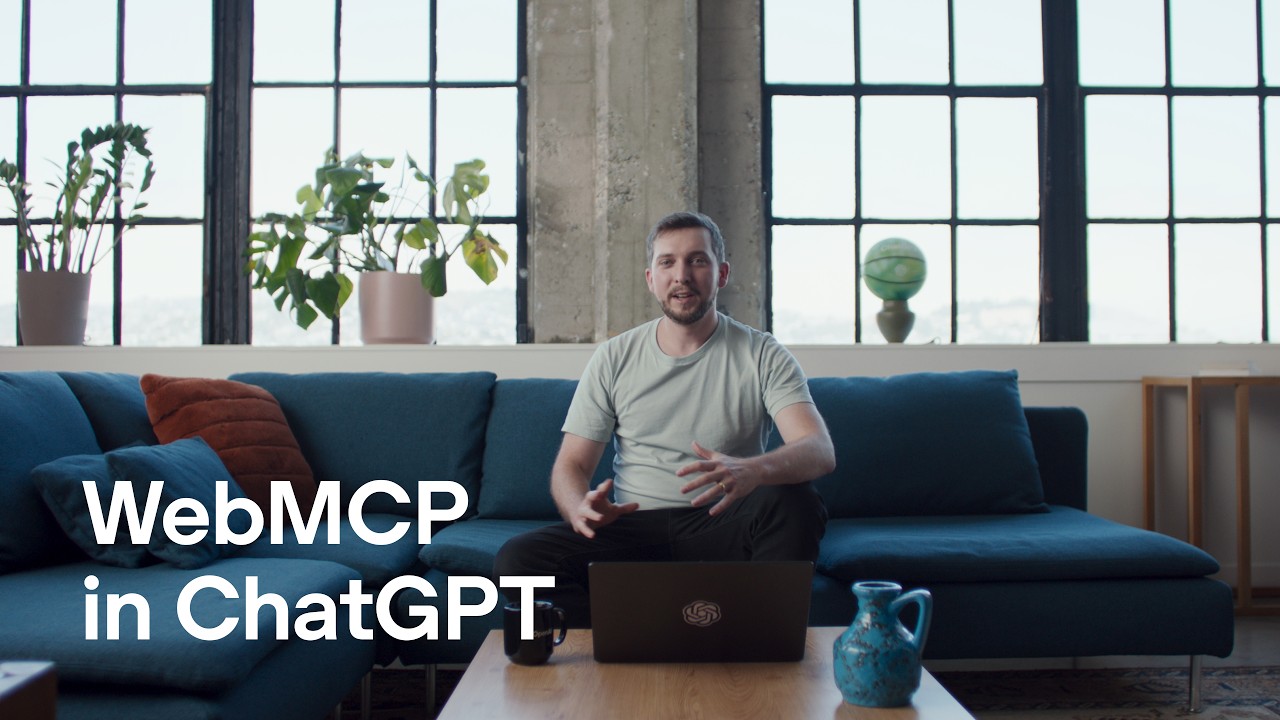
OpenAI adds WebMCP so Codex can use tools embedded inside websites
OpenAI is giving Codex WebMCP support, letting websites expose tools that the agent can discover and call instead of slowly clicking around. The practical design shift: your site’s “user” may be a model, so tool descriptions, feedback hooks, and narrow capabilities matter as much as human UI.
ChatGPT Work can now sign into websites without seeing your password
ChatGPT Work’s browser can now sign into websites on web and mobile without ChatGPT seeing the username or password, according to OpenAI’s posts. If reliable, this expands agents from research into messy authenticated workflows; the risk surface also moves closer to real money, records, and accounts.

CUDA Python 1.0 makes Python a first-class CUDA surface
CUDA Python 1.0 is less flashy than a model drop but useful for serious GPU builders: NVIDIA is committing stable, maintained Python APIs across cuda.core, cuda.compute, cuda.bindings, nvmath-python, and discovery tooling. The payoff is fewer private binding layers and cleaner interop between Python GPU libraries.

NemoClaw’s local-agent stack shows why localhost AI is not automatically safe
Oasis Security disclosed a NemoClaw weakness where a malicious webpage could reach a local Ollama server and poison the model’s chat template. The lesson for local-agent builders is blunt: sandboxing the endpoint is not enough if the agent backend binds broadly and lacks authentication.
QUASAR ships a fully NVFP4 Qwen3.8-27B checkpoint for Blackwell
A LocalLLaMA post announced a fully NVFP4 Qwen3.8-27B checkpoint trained with QUASAR quantization-aware distillation. The interesting claim is near-BF16 performance at 19.7GB, with every linear layer quantized to W4A4. The catch: this target is explicitly vLLM on NVIDIA Blackwell GPUs.

Claude now shares memory between chat and Cowork
Anthropic is merging Claude chat and Claude Cowork memory, so work context can carry from planning into action. This is the right product direction for agents, but the control surface matters: users can read, edit, or delete memories, and sensitive categories have separate handling.
Tools & repos
5 selected
Agnost AI
Agnost AI mines production agent conversations for silent failures, drift, hallucinations, frustration, feature requests, and churn signals. The useful angle is turning recurring failure patterns into evals and fixes, not just another dashboard.
AgriciDaniel/claude-obsidian
A Claude Code plus Obsidian project for turning dropped sources into a self-organizing Markdown knowledge graph. It is explicitly pitched as owned plain-text PKM and an open-source Notion alternative based on Karpathy’s LLM Wiki pattern.

Purchase API by Agentcard
Agentcard exposes purchasing as one API call: find product, run checkout, and pay with a single-use card. It claims support for DoorDash, Amazon, and most Shopify and Stripe stores.

Diet Claude
Diet Claude is a Chrome extension for Claude usage limits: live session meter, time left, reset timing, prompt tightening, context trimming, model suggestions, and handoff to another LLM when limits run out.

coolplugz
coolplugz wraps Claude Code with orchestration: it pulls context from Jira, GitHub, Notion, and Slack, writes prompts, and verifies task completion. The pitch is less supervision for coding-agent workflows.
Blogs worth your time
2 reads
NVIDIA Dynamo’s shadow engines cut LLM failover from minutes to seconds
NVIDIA explains Dynamo shadow engine recovery: keep a preinitialized standby engine on the same GPU, share weights through GPU Memory Service, and promote it after process failure instead of cold-reloading.
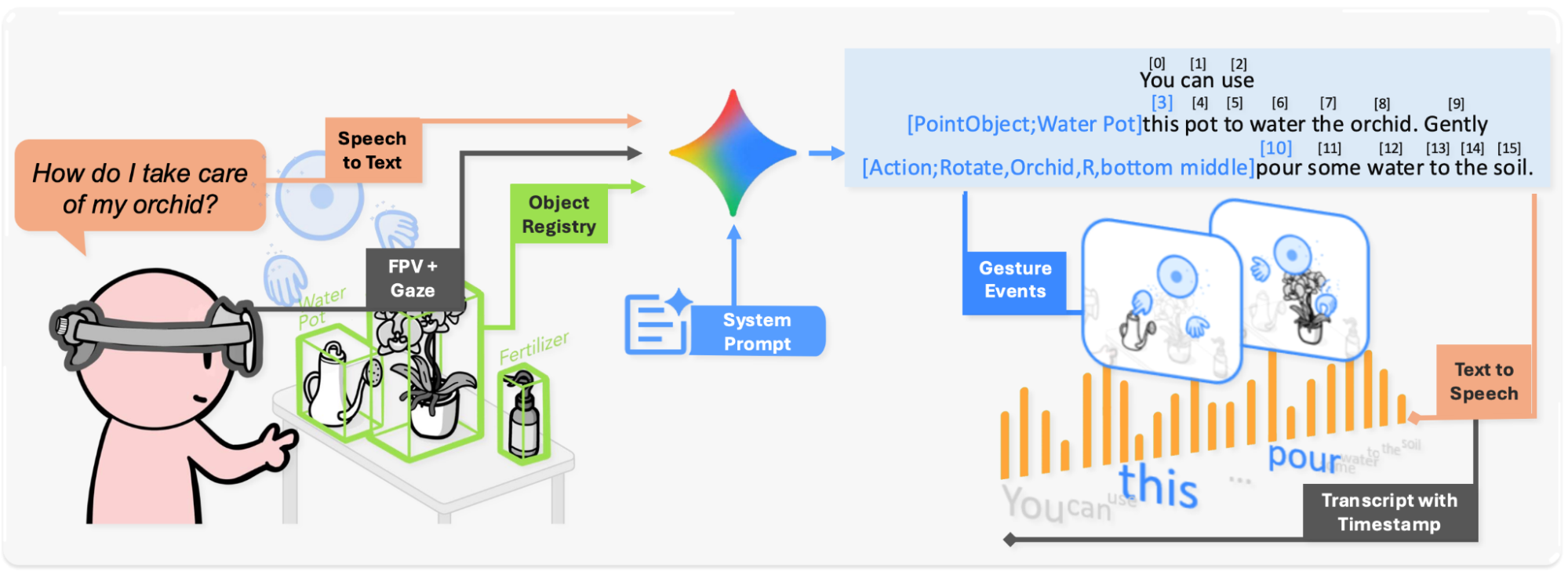
Google AgentHands tests co-speech hand gestures for XR agents
Google’s AgentHands prototype turns LLM responses into synchronized XR hand gestures, aiming to make spatial instructions easier to follow than speech or flat overlays alone.
Community discussions
4 threadsClaude Code spend blow-up turns into a hook-semantics lesson
The post starts with an autonomous SWE burning $1,000 in credits, but the useful thread is about guardrails: Claude Code hooks only block tool calls with exit 2; exit 1 means the hook broke and execution proceeds.
Local LLM buyers debate bandwidth versus RAM before a rumored bigger Qwen
A practical hardware tradeoff thread: pay for more GPU cores and bandwidth, or keep 128GB unified memory for future 100B-class local models. The unresolved fear is that 96GB may be a dead zone.
Builders draw the agent boundary at uncertainty, not vibes
The thread’s best answer is conservative: use agents when the system must interpret messy context or choose tools under uncertainty; keep known steps, risky actions, validation, and state changes deterministic.
Claude Code users push back on session URLs in PR attribution
The complaint is blunt, but the product issue is real: default PR attribution that includes session URLs makes developers ask what leaks, who can access it, and where human review belongs.
Funding & acquisitions
5 moves
Generalist reportedly reaches $3B valuation after nearly $200M extension
Generalist’s reported $200 million extension shows robotics foundation-model funding is still running hot. The practical question remains whether video-demonstration learning can become reliable customer workflows, not just a valuation race.

Keenable exits stealth with $26M to build search infrastructure for agents
Keenable is betting agentic search needs infrastructure built for machines, not human SERPs. The hard part is economics: the company says web-scale indexing is painfully expensive.

Stability AI raises $76M with entertainment companies in the cap table
Stability AI’s Series B is strategic as much as financial, with music and gaming companies participating. That suggests distribution and licensed creative workflows are now central to its recovery plan.

Gatik raises $200M to scale driverless middle-mile trucks
Gatik’s raise is tied to a concrete autonomous trucking niche: commercial driverless box trucks for middle-mile delivery. The PepsiCo deal gives the funding more substance than a generic autonomy story.

Ringg adds $10M from Peak XV for enterprise voice agents in India
Ringg’s new money backs a familiar but real India opportunity: high-volume business calls moving to AI agents. Its shift from low-complexity outbound calls toward workflow outcomes is the key test.
Bengaluru radar
1 events
Agent Arena: AI debates, live quiz, and networking in HSR
Maximem AI is hosting a sold-out Bengaluru Tech Week side event with AI debates, a live agent-run quiz, networking, food, and non-alcoholic drinks.