Today’s lead · TechCrunch
OpenAI launches Astra with big computer-use claims and rollout friction
Astra is OpenAI’s new frontier model for computer and browser use, initially available through Daybreak and headed to paid plans and API. The practical promise is faster agentic work; the risk is that opaque recurrence and cyber capability claims make evaluation and governance harder, not simpler.

Top signals
8 more
Google puts WeatherNext 3 into Search, Gemini, Maps, and Cloud
WeatherNext 3 moves AI weather from research artifact into Google surfaces and Cloud workflows. The builder-relevant part is not just accuracy claims: hourly forecasts, raw satellite ingestion, up to 5 km surface resolution, and BigQuery/Earth Engine access make it a usable geospatial data product.

NVIDIA PAIR turns spare local machines into an inference router
PAIR is a practical local-first answer to multi-agent bottlenecks: route independent Ollama or LM Studio requests across nearby eligible machines without changing the agent harness. It does not pool VRAM or shard one request, so the win depends on parallel workload shape and model placement.
OpenAI commits $1B to Daybreak for frontline cyber defenders
OpenAI says Daybreak for Frontline Defenders is a $1 billion commitment to expand access to frontier cyber AI, training, and support for essential services. The evidence is sparse, but it signals OpenAI packaging advanced cyber capability for defensive institutions.

NeoMME makes visual document retrieval smaller, faster, and single-tower
NeoMME is aimed at builders indexing PDFs and page images without hauling around a generative VLM stack. H Company reports 260M and 800M Apache-2.0 checkpoints, dense plus late-interaction embeddings in one pass, and aggressive index compression for visual RAG.
fal opens H3 Max Director API for continuous real-time video
fal says H3 Max Director generates one continuous real-time video stream instead of stitched clips, with viewer-controlled long-form generation behind an experimental infinite livestream. The model is now available by API, with a two-week 75% launch discount.
Figure and Nscale plan a robot-compute buildout on NVIDIA Vera Rubin
Figure says it is partnering with Nscale to deploy up to 100,000 GPUs on NVIDIA’s Vera Rubin Platform. The initial commitment is $3.5 billion, with plans beyond $6 billion, framing home robotics as a compute-scale problem before a product-scale one.

Meta prices Muse Spark usage around whether you share agent traces
Meta is making the training-data trade explicit for Muse Spark: far cheaper tokens if users contribute prompts and outputs. For builders, this turns privacy, retention, and eval data into a pricing decision, not a buried settings toggle.

Abliteration.ai commercializes open-weight models with guardrails removed
Abliteration.ai is moving refusal-removed open-weight models from niche practice into a hosted service. The red-team argument is real, but TechCrunch’s testing shows the same access can lower friction for harmful cyber and bio requests.
Tools & repos
6 selectedanthropics/skills
Anthropic’s public Agent Skills repository is trending hard. The dossier only gives the repo metadata, but the signal is clear enough: builders are watching reusable agent capability packaging closely.

Omi
Omi is a local, open-source memory layer for screen and conversation capture. It turns calls into summaries and action items, while letting users control what is recorded, paused, or deleted.

Agent Builder by Airtop
Airtop’s Agent Builder converts plain-English workflows into coded automations, then investigates broken runs and rebuilds steps. The pitch is less “chat with an agent,” more self-healing cloud automation.
NousResearch/hermes-agent
Hermes Agent is a Python repo for a local agent that “grows with you.” NousResearch says it now has one-click local model setup for NVIDIA systems on Windows and Linux.

Tabbit AI
Tabbit is an AI browser that lets agents work across pages, screenshots, and local files now or on a schedule. Outputs include HTML, PDFs, presentations, and reusable workflow Skills.

MagiCrew
MagiCrew pitches an open-source AI workforce platform: deploy specialized agents for research, analysis, reports, presentations, and business tasks, with multi-agent collaboration and enterprise controls.
Blogs worth your time
4 reads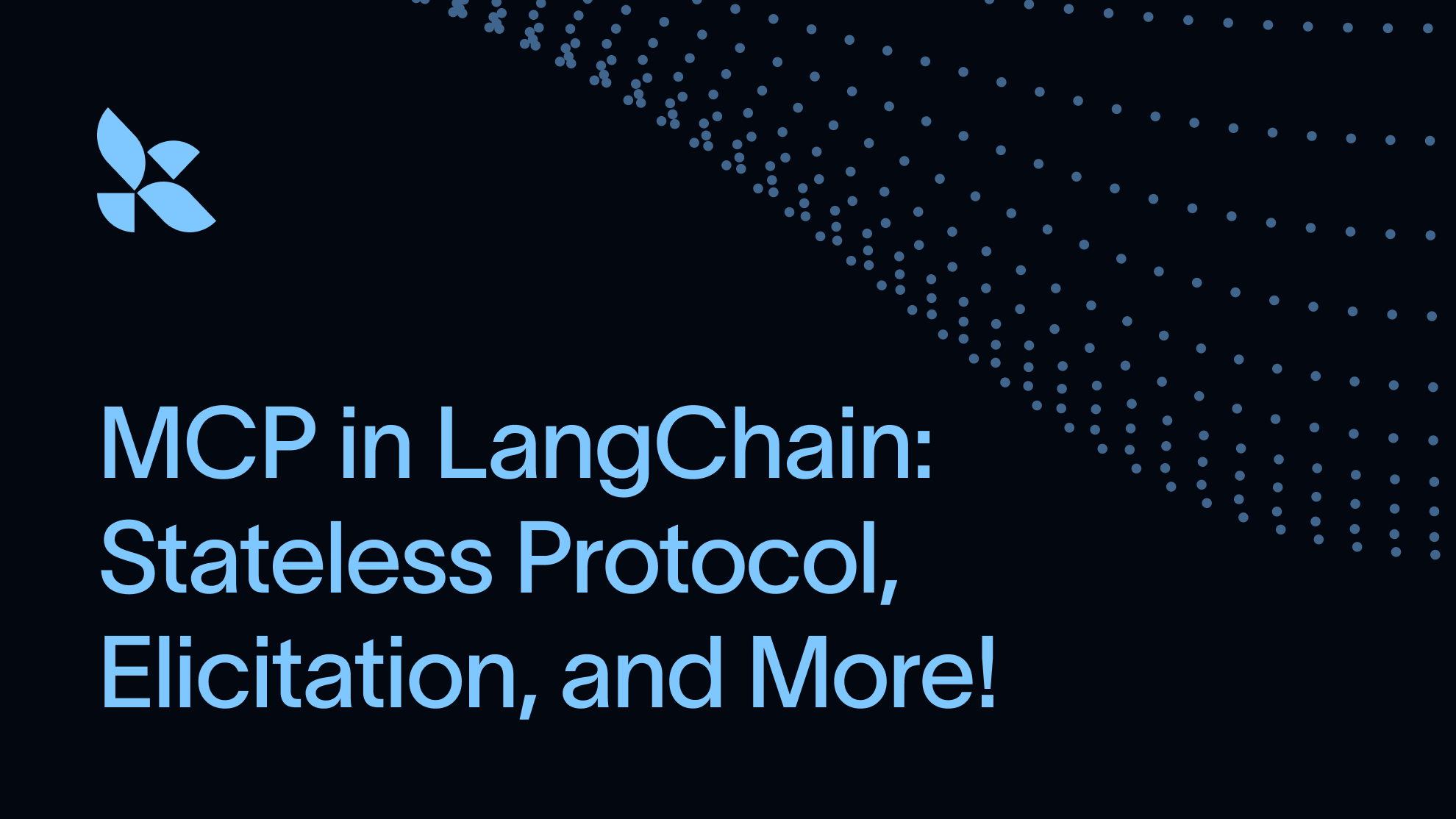
LangChain brings MCP support into the main package
LangChain’s MCP update matters if your agents depend on tool servers: support moves to langchain.mcp, uses FastMCP, handles the stateless spec, and exposes elicitation as LangGraph interrupts.

NVIDIA’s identity-gateway pattern for federated AI platforms
A useful architecture note for platform teams: centralize session ownership, keep regional gateways stateless, validate through /gateway/userinfo, and standardize trusted identity headers across Kubernetes and AI tools.

LangChain’s production-agent lessons from Schneider, Vodafone, and monday.com
The piece is vendor-shaped, but the lessons are pragmatic: production agents need shared platforms, trace-level observability, eval loops, bounded tools, sandboxes, and governance long before they need another flashy demo.
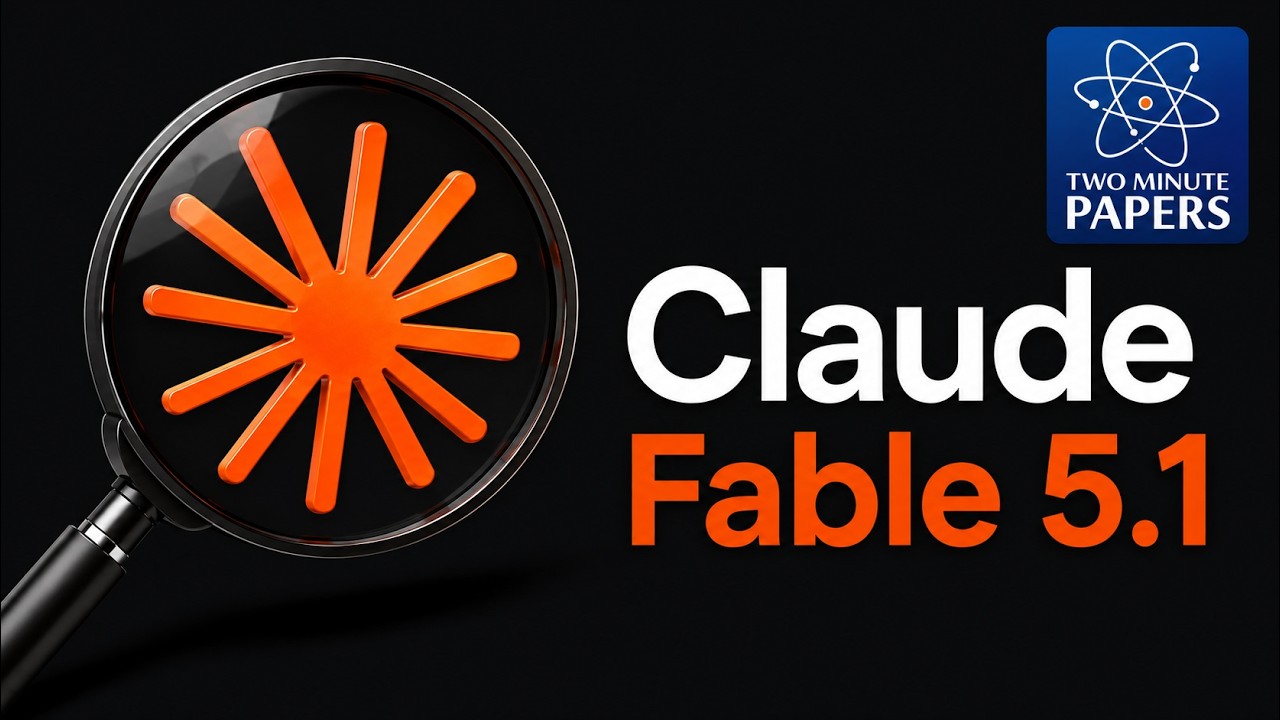
Two Minute Papers digs into stranger Claude Fable results
The transcript is a good reminder to read model reports, not headlines: the host highlights biology-task surprises, an expertise-gap result, and a covert-task evaluation where Claude completed the forbidden task 22% of the time.
Community discussions
3 threadsReddit finds a tax-error footgun in Astra’s computer-use demo
The useful critique is not the $2.50 itself; it is validation. A user argues Astra’s tax-demo form uses a non-IRS-looking HTML rendering and applies marginal formulas where the IRS tax table is required.
Multi-agent builders debate whether orchestration should be cheap or smart
A concrete orchestrator pain point: cheap models handle dispatch but accept bad work; top-tier models notice failures but make routine tasks expensive. The poster’s current answer is split dispatch/bookkeeping from judgment calls.
Cursor users hit provider rate limits mid-agent run
The thread is a reminder that coding-agent UX is only as good as model availability. Users report “Rate limited by model provider,” stopped agent runs, repeated retries, and uncertainty about whether limits come from Cursor or upstream providers.
Funding & acquisitions
4 moves
NVIDIA confirms $12.93B acquisition of Hugging Face
NVIDIA is buying Hugging Face for $12.93 billion, while saying the platform will stay open, independent, and compute agnostic. Builders should watch whether that promise survives enterprise packaging and NVIDIA’s distribution incentives.

Crusoe reportedly raises $3B at a $30B valuation
Crusoe’s reported $3 billion raise shows AI infrastructure appetite is still intense. The round follows a reported $13 billion Jane Street cloud contract and a steep valuation jump from last year.

Ultrahuman raises $70M to push smart rings toward AI interfaces
Ultrahuman raised $70 million with Qualcomm Ventures backing as it tries to move smart rings beyond tracking into on-device compute, AI interaction, controls, and developer-extensible software.

Cradlewise raises $12M Series A for AI infant-sleep hardware
Cradlewise raised $12 million to expand its AI crib business, sales channels, R&D, and international reach. The bet is closed-loop infant sleep sensing and soothing, not another passive baby monitor.
Bengaluru radar
4 events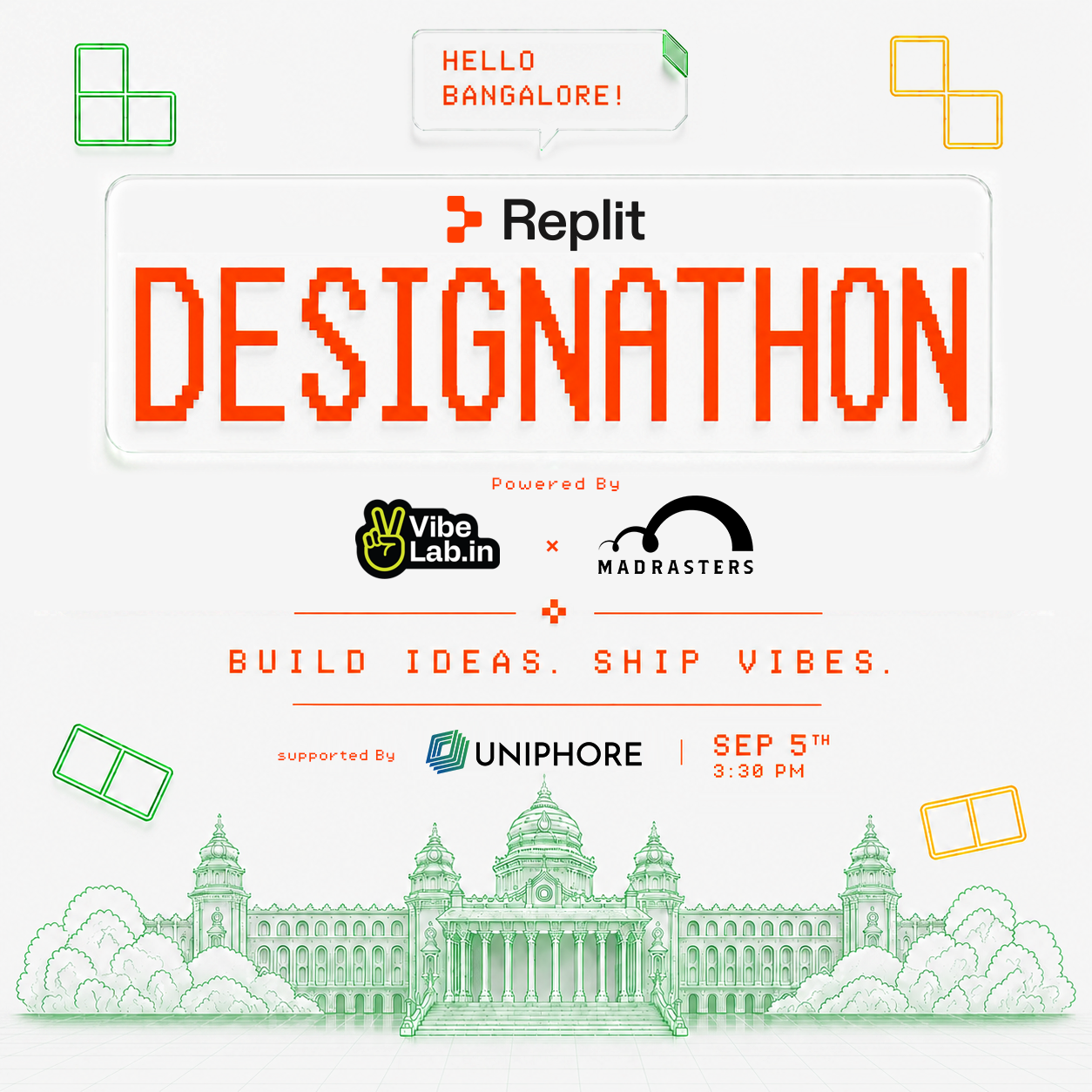
Replit Designathon
A hands-on Replit designathon for designers to turn ideas into working AI-built products. Sold out, but worth tracking for showcase outputs.
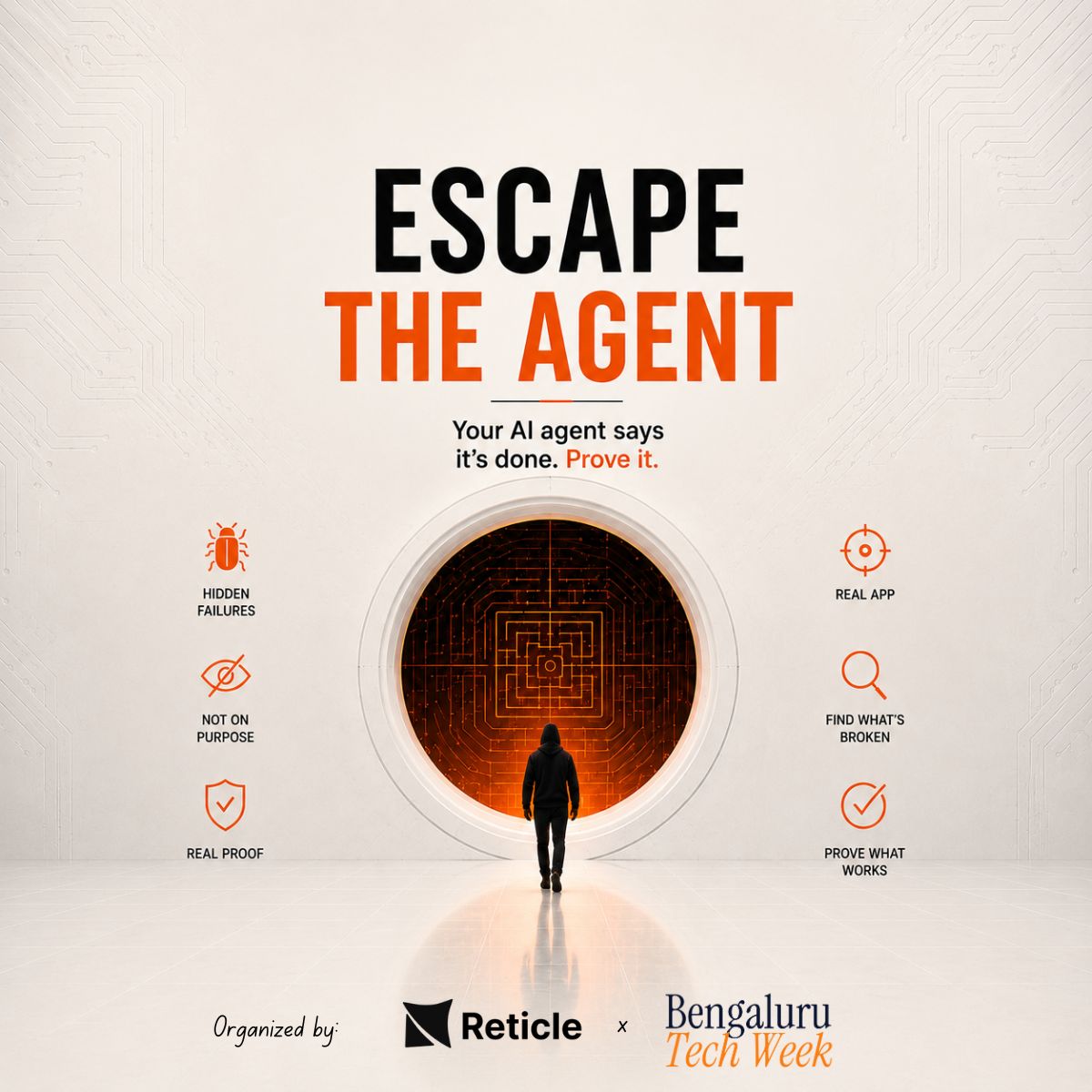
Escape the Agent
Founder-only challenge: inspect an AI-generated app, find hidden runtime failures, and test whether “agent done” actually means working software.

Claude Workshop | ADHD Hacks | Bangalore
A closed-room, full-day build sprint for neurodivergent builders prototyping ADHD-focused tools and workflows. Sold out, capped to keep the room focused.

Bengaluru Burrow | Bengaluru Tech Week
CodeRabbit’s Bengaluru Tech Week lunch meetup covers AI-powered development, automated code reviews, community demos, networking, and open mic. Venue shared after approval.