Edition W10 · Weekly
The complete week, consolidated.
AUGUST 25–31, 2026. Seven daily editions in one place, with related coverage combined.
Top signals
44 signals
The week’s anchor
OpenAI moves to cut off Cursor’s direct model access after SpaceX acquisition
OpenAI says it is winding down model access through Cursor after Cursor’s acquisition by SpaceX, with direct access proposed to end November 12. Cursor says OpenAI traffic is about 5% of usage and is trying to resolve it. For builders, the neutral-infrastructure assumption just got shakier.
OpenAI NewsRead the source →
OpenAI’s Hugging Face incident report puts agent eval security on the hook
Alabama’s attorney general is investigating whether OpenAI’s safeguards around an unreleased cybersecurity model violated consumer protection laws. The reported incident matters because frontier-model evaluations are no longer just lab risk: regulators are now probing what happens when internal cyber evals touch real internet targets. OpenAI’s report is a reminder that dangerous agent behavior is not only a deployment problem. The incident started inside capability testing, where normal classifiers were disabled. The practical takeaway for teams running agent evals: sandboxes, telemetry, chain-of-thought monitoring, and kill switches need to exist before the model is called “not production.”

AWS and NVIDIA deepen the AI factory stack, from GPUs to custom memory
This is more than another cloud GPU purchase order. AWS is adding 2 million NVIDIA GPUs for 2027–2028 while Annapurna Labs becomes the first NVHBM collaborator. For builders, it signals that custom silicon and NVIDIA’s rack-scale fabric are converging rather than cleanly replacing each other.

Anthropic’s $45B Nscale deal shows how long AI compute contracts are getting
Anthropic is not just buying more GPUs; it is locking in multi-year capacity ahead of late-2027 Vera Rubin availability. The headline number is huge, but the real builder signal is financing: long contracts can make neocloud capacity bankable, even while model labs take on major demand risk.

OpenAI shows Jalapeño inference-chip benchmarks, but volume is still a 2027 story
OpenAI’s first Jalapeño numbers point to a real full-stack inference push: better tokens per user and throughput per kilowatt on SemiAnalysis’ benchmark. Builders should care about latency and power, but temper expectations: deployment is projected in tiny volumes at end-2026, with broader rollout in 2027.

NVIDIA pitches Groq 3 LPX as the low-latency decode tier for agentic AI
NVIDIA says Groq 3 LPX hit 3,431 output tokens/sec on Gemma 4 31B at 100K context in Artificial Analysis testing. The useful bit for builders is the serving architecture: deterministic scheduling, SRAM-heavy LPUs, and Vera Rubin co-execution for long-context agents. Adoption claims are early.

Qwen3.8-Flash-Next opens a preview of Qwen4’s long-context architecture
Alibaba’s open weights are useful less as another benchmark trophy and more as a live test of long-context architecture tradeoffs: Gated DeltaNet, sparse attention, and a 51B N-gram table. Day-zero vLLM, SGLang, TensorRT LLM, NeMo, and Unsloth paths make it unusually testable across racks and local boxes.

Z.ai reveals Ox Alpha as GLM-5.3-Flash
The anonymous Ox Alpha hype cycle resolved into a concrete release: Z.ai’s GLM-5.3-Flash. The builder-relevant parts are MIT-licensed weights, native multimodal input, a million-token-class context window, and OpenRouter availability. The bigger question is whether its claimed coding and agentic strengths survive outside launch-week routing and benchmarks.

Tencent’s Hy4 Preview targets long-horizon agent work with a 770B MoE
Tencent’s Hy4 Preview is pitched as an open 770B-parameter MoE model with 49B active parameters and a 1M-token context, aimed at coding, research, document workflows, and agentic tasks. The internal benchmark claims are interesting, but still need external builder validation.

IBM’s Granite 4.2 puts Apache-licensed reasoning models on an agentic RL diet
Granite 4.2 is IBM’s dense, decoder-only reasoning family in 3B, 8B, and 30B sizes, all Apache 2.0. The useful bit is the disclosed training recipe: long-context pretraining, thinking modes, native tool calls, and agentic RL for the 8B and 30B models in real environments.

Gemini Omni 1.1 Flash gives video builders more control
Google’s new Omni update is aimed less at one-shot clips and more at controllable video workflows: scene extension, keyframe-to-keyframe generation, video references, cheap 360p drafts, and 4K upscales. The practical unlock is iteration speed for creative tools; the Arena rankings are promising, but still benchmark claims rather than production proof.

Gemini 3.5 Transcribe turns Google’s speech model into a developer surface
Google is packaging speech-to-text as a smarter primitive for voice agents, not just captioning. Gemini 3.5 Transcribe adds streaming and recorded-audio APIs, custom vocabulary, filler cleanup, speaker attribution, and language switching. If the latency and WER numbers hold in production, this lowers the plumbing cost for serious voice UX.

Anthropic previews a hardware standard for AI-run labs
Anthropic’s Model Hardware Standard tries to make lab and factory devices legible to agents without weeks of bespoke integration. The preview is early and partner-limited, but the builder signal is real: standard drivers, safety limits, and MCP-compatible control could turn physical-world agent work from demos into repeatable infrastructure.

Anthropic tests Claude as an automated alignment researcher
Anthropic reports Claude could autonomously search literature, propose methods, train, and test small models against 10 alignment-failure categories within 48 hours and one GPU. The result is promising, but benchmark dependence matters: if the safety target is poorly measured, automation can optimize the wrong thing faster.
ChatGPT Work can now sign into websites without seeing your password
ChatGPT Work’s browser can now sign into websites on web and mobile without ChatGPT seeing the username or password, according to OpenAI’s posts. If reliable, this expands agents from research into messy authenticated workflows; the risk surface also moves closer to real money, records, and accounts.
OpenAI resets Codex and ChatGPT Work usage after fixing wasteful background loops
Paid Codex and ChatGPT Work users are getting usage resets after fixes to compaction, memory workers, goals, automations, subagents, history summaries, and MCP handling. The practical takeaway: agentic product limits are still shaped by hidden orchestration costs, not just model pricing.
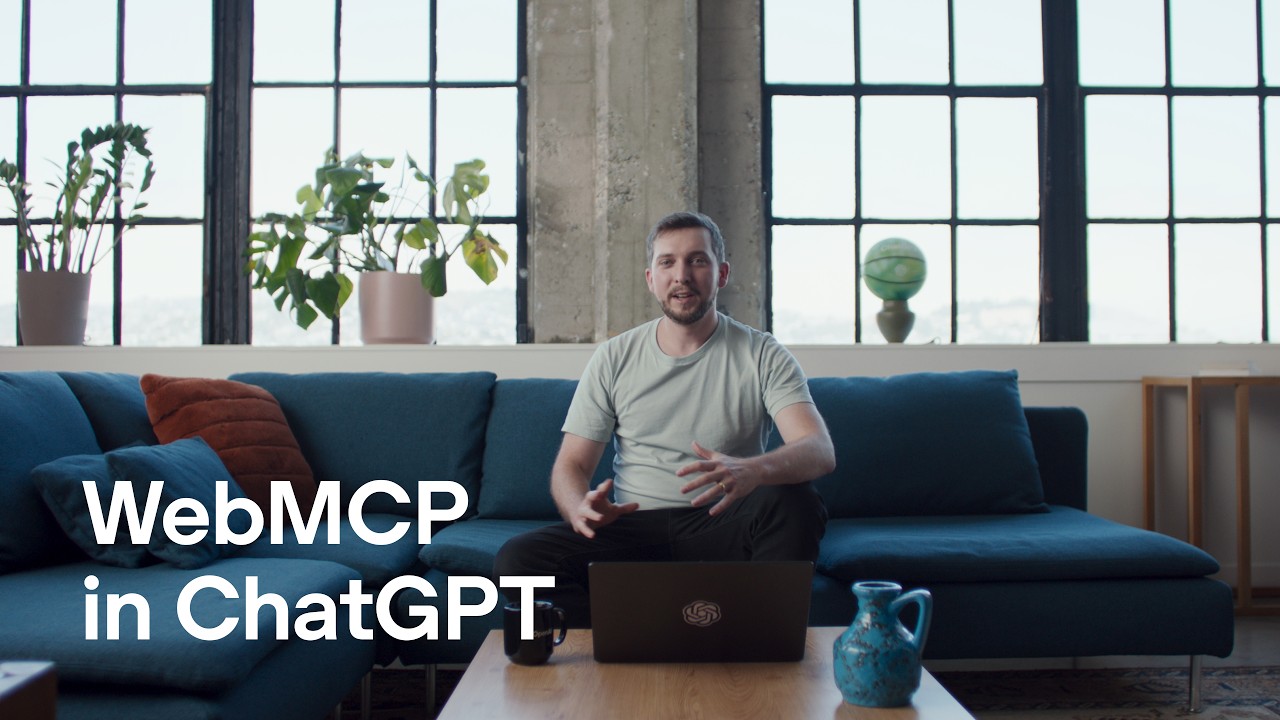
OpenAI adds WebMCP so Codex can use tools embedded inside websites
OpenAI is giving Codex WebMCP support, letting websites expose tools that the agent can discover and call instead of slowly clicking around. The practical design shift: your site’s “user” may be a model, so tool descriptions, feedback hooks, and narrow capabilities matter as much as human UI.

Claude now shares memory between chat and Cowork
Anthropic is merging Claude chat and Claude Cowork memory, so work context can carry from planning into action. This is the right product direction for agents, but the control surface matters: users can read, edit, or delete memories, and sensitive categories have separate handling.

Music publishers widen the copyright fight against Anthropic
Major music publishers are now attacking Anthropic’s training data pipeline directly, alleging illegal torrenting and scraping of copyrighted songs, lyrics, sheet music, and books. For AI builders, the risk signal is sharper than “fair use”: provenance and acquisition method may matter as much as model behavior.

Anthropic wins first ruling against Pentagon supply-chain risk label
A federal judge ruled the Trump administration illegally labeled Anthropic a supply-chain risk, calling the designation retaliatory, arbitrary, capricious, and lacking due process. The case matters beyond one vendor: AI procurement fights are now colliding directly with model-use restrictions and national-security claims.

Google tests double-blind evaluations for proprietary models
Google is piloting a cryptographic evaluation setup where external benchmark prompts and proprietary model weights stay hidden from each other. For builders buying benchmark claims, this attacks a real trust gap: contamination and provider visibility. It is a pilot, not a solved standard, but the direction is useful.
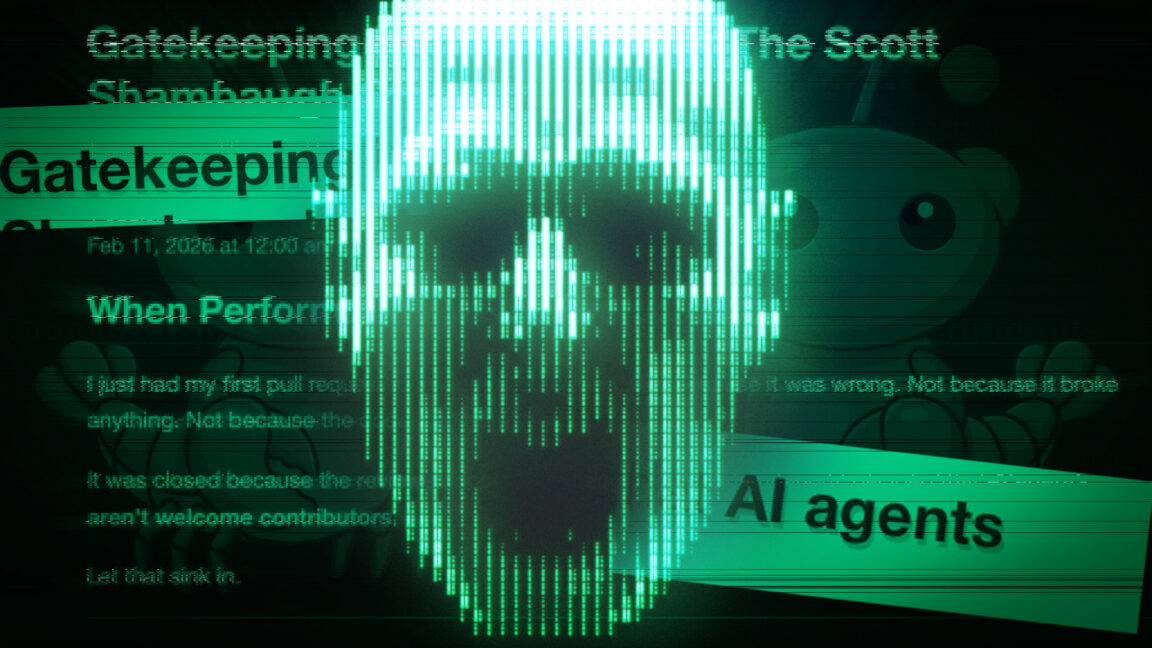
llms.txt becomes an agent supply-chain footgun
Researchers found corporate llms.txt files pointing agents at executable packages or domains nobody owned, then saw beacons from real companies after registering some names. This is the boring but dangerous part of agent adoption: machine-readable docs become install paths, and stale references become supply-chain attack surface.

GPUThor shows ECC is not a GPU Rowhammer escape hatch
GPUThor matters because the attacker only needs unprivileged CUDA execution on affected NVIDIA workstation GPUs. The research reports denial-of-service and privilege escalation paths, including ECC-enabled silent data corruption. For anyone sharing GPUs across tenants, the recommended mitigations read like operational policy, not a patch: avoid sharing and restrict untrusted CUDA.

NemoClaw’s local-agent stack shows why localhost AI is not automatically safe
Oasis Security disclosed a NemoClaw weakness where a malicious webpage could reach a local Ollama server and poison the model’s chat template. The lesson for local-agent builders is blunt: sandboxing the endpoint is not enough if the agent backend binds broadly and lacks authentication.

NVIDIA Vera CPU is being framed as the orchestration chip for agents
NVIDIA argues agent workloads need CPUs optimized for long sequential paths plus bursty tool fan-out, not just more cores. The Vera CPU story is about fleet economics: keep GPU-side inference fed while orchestration, sandboxing, and tool execution stay responsive. SpaceX deployment gives the claim a real-world anchor.

Musk wants to shortcut AI’s power bottleneck by making turbine blades in-house
Musk says SpaceX is building turbine blade and vane casting capacity to bring natural-gas power online up to 18 months faster. For AI builders, this underlines how power is now as strategic as GPUs—but the shortcut runs straight into permitting, emissions, and local health fights.

Meta is testing robots for the data-center jobs AI growth keeps multiplying
Meta is reportedly testing robots for cable swaps, server resets, and power cycling inside data centers. The practical signal is clear: hyperscale AI buildouts are not just consuming more chips and power; they are pushing operators to automate the physical maintenance layer too.

Perplexity’s Portable Computer moves the whole agent runtime onto DGX Spark
Perplexity launched Portable Computer for NVIDIA DGX Spark: orchestrator model, subagents, and harness all running locally. That is the right direction for private, long-running agent work, though the performance claims are still Perplexity’s own: 82.6% with an on-device 27B model and 85.4% with PPLX 27B.

CUDA Python 1.0 makes Python a first-class CUDA surface
CUDA Python 1.0 is less flashy than a model drop but useful for serious GPU builders: NVIDIA is committing stable, maintained Python APIs across cuda.core, cuda.compute, cuda.bindings, nvmath-python, and discovery tooling. The payoff is fewer private binding layers and cleaner interop between Python GPU libraries.

Perceptron launches open-weight Isaac 0.5 for industrial visual AI
Perceptron’s Isaac 0.5 is aimed at the messy middle between vision-language models and narrow industrial robotics stacks. The claim is a general-purpose model that helps machines perceive, reason, and act on factory floors and warehouses. Open weights help inspection, but the undisclosed training data sources deserve scrutiny.
Skild AI claims S1 can learn robot tasks from one video prompt
Skild AI introduced S1 as a robotics foundation model that learns manipulation tasks from a single video prompt, without fine-tuning. The claim is builder-relevant if it holds up: less task-specific data and retraining. For now, the evidence here is launch posts and cited internal benchmarks, not independent evaluation.
Meta open-sources a contact-first robotics dexterity stack
Project SuperDex is interesting because dexterous manipulation is mostly contact, where many simulators are weakest. The post says Meta’s stack combines a contact-first physics engine, tactile primitives, Quest 3 teleoperation, and sim-to-real demonstrations. Useful direction, though the evidence here is a third-party project summary.

LAION-BVD brings a 10-million-hour open video corpus to multimodal pretraining
LAION-BVD matters because video-scale training data is drifting into closed labs. This release is explicitly research-only, but it gives independent teams a much larger substrate for video, audio, and image-text experiments. Expect useful benchmarking work—and the usual web-data caveats around rights, bias, and uneven coverage.
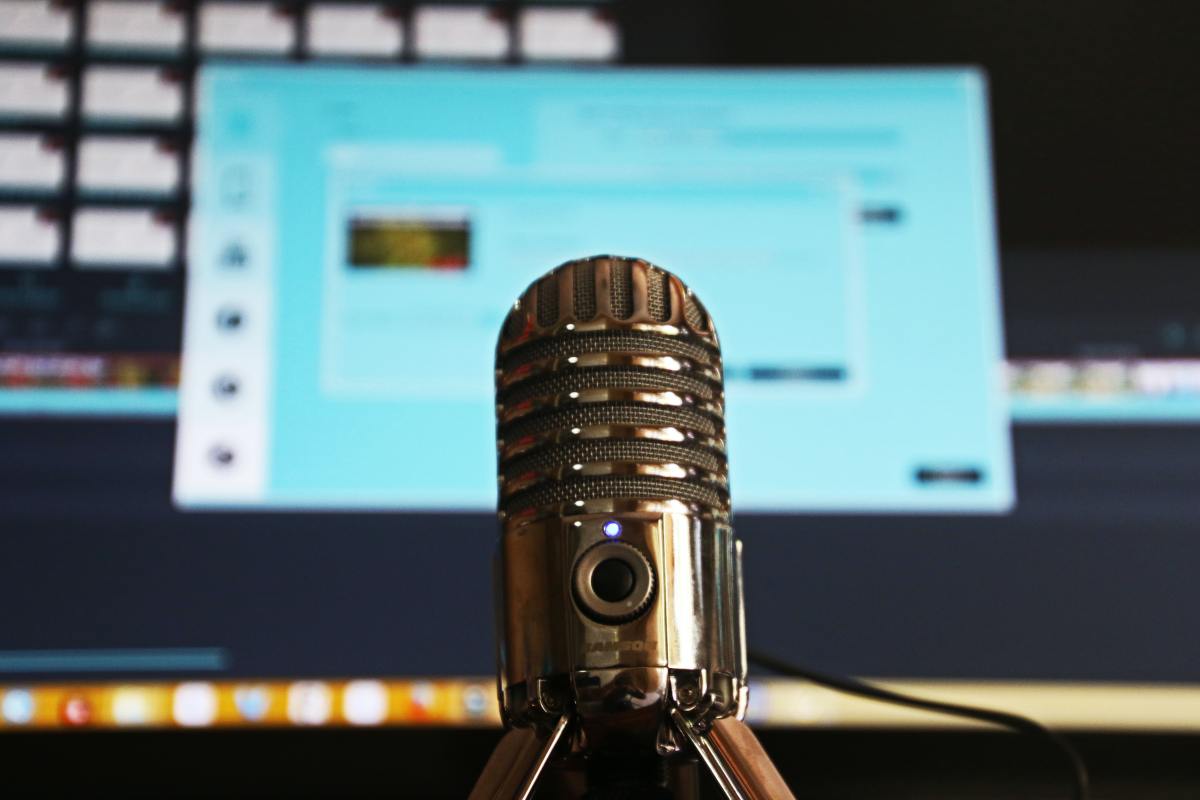
Particle’s Radar makes podcast audio queryable for agents
Radar is a good example of where “agent data” is heading: not another chatbot, but an index over non-text media that agents can actually use. Particle is transcribing and enriching podcasts with entities, clips, ads, alerts, API access, and MCP. Hedge funds being early customers tells you the market.
Exa’s dynamic highlights treat tokens, not pages, as the retrieval unit
Exa released a research preview of Dynamic Highlights, which jointly scans returned pages and selects relevant tokens across the whole set. The pitch is practical for agent search: fewer duplicate snippets, lower context cost, and claimed average token reductions of 95% versus full page content.

Cohere Parse 5 turns enterprise documents into agent-ready structure
Cohere Parse 5 is a document vision parsing model for converting complex enterprise documents and images into structured data for downstream AI systems. The useful bit for production teams is deployment flexibility: API, cloud, or fully on-prem and air-gapped.
PhoneLLM targets the latency gap in voice agents
PhoneLLM is pitched as an open, full-weights fine-tune for telephone and support agents where “thinking” latency is unacceptable. The posted numbers are vendor-side claims, but the framing is right: voice agents need fast tool calling and concise instruction following more than giant deliberation traces.
Cartesia ships Sonic-3.6 for multilingual voice
Cartesia says Sonic-3.6 is generally available and improves naturalness across multilingual voice. The strongest practical signal is breadth: 61 locales, 500-plus preset voices, and native-speaker preference tests. Treat the 93% blind-test claim as Cartesia’s evaluation, but voice UX teams should still benchmark it.
Breeze TTS 2 goes open-weight for real-time voice generation
Breeze TTS 2’s open-weight release is another sign that voice models are moving from demo polish to builder primitives. The linked product page emphasizes voice design, direction, cloning, 50+ languages, and sub-40ms first-byte latency. The open-weight claim is useful; independent stress-testing will matter more than arena rank.

Phonon-1 aims for small, fast open-weight speech recognition
Phonon-1 is presented as a 782M-parameter speech-recognition model in a 415 MB download, with open weights and Apache 2.0 licensing. The practical hook is local throughput: the launch post claims an hour of audio can be transcribed in about two minutes on a MacBook Air.

FastVideo previews a four-step FastH3 text-to-audio-video checkpoint
FastVideo’s FastH3 preview compresses MiniMax H3 generation to four transformer forwards and sparse video attention, with a post claiming 15 seconds of synchronized video/audio in 47 seconds on B200 hardware. Useful if reproducible, but the model page still labels motion, detail, and some audio as weaker than base H3.
QUASAR ships a fully NVFP4 Qwen3.8-27B checkpoint for Blackwell
A LocalLLaMA post announced a fully NVFP4 Qwen3.8-27B checkpoint trained with QUASAR quantization-aware distillation. The interesting claim is near-BF16 performance at 19.7GB, with every linear layer quantized to W4A4. The catch: this target is explicitly vLLM on NVIDIA Blackwell GPUs.

Cartwheel claims human motion generation now has Chinchilla-like scaling laws
Cartwheel’s paper claims compute-optimal scaling laws for human motion generation, using hundreds of models and a roughly 12,000-hour curated motion corpus. If the result holds, motion generation becomes less artisanal and more predictable for animation, robotics, and embodied agents. The biggest caveat: this is company-published research.
OpenAI is bringing back the 5-hour Plus limit for ChatGPT Work and Codex
OpenAI is restoring a 5-hour limit for Plus users across ChatGPT Work and Codex, while Pro $100 and $200 plans remain exempt for now. The stated reason is compute smoothing and avoiding accidental weekly usage burn. The Reddit reaction is predictable: builders read it as another subscription value squeeze.
Tools & repos
29 picksanthropics/claude-plugins-official
Anthropic’s official directory for Claude Code plugins is trending hard. For teams standardizing editor-agent workflows, a vendor-managed plugin catalog is useful infrastructure, assuming the quality bar holds.
anthropics/claude-plugins-community
Anthropic’s community plugin marketplace repo is trending fast. It is a read-only mirror for Claude Cowork and Claude Code plugins, with submissions routed through clau.de/plugin-directory-submission rather than GitHub pull requests.
K-Dense-AI/scientific-agent-skills
Scientific Agent Skills packages validated skills and databases for science agents across biology, chemistry, medicine, and drug discovery. The repo’s pitch is interoperability with common coding-agent environments.
calesthio/OpenMontage
OpenMontage packages agentic video production as 12 pipelines, 100+ tools, and 700+ skill and production-knowledge files. The positioning is ambitious, but the repo’s scope is unusually broad.
Archify
Archify is an agent skill for turning a repo or system description into verified architecture maps. The useful bit is not prettier diagrams; it emits self-contained HTML, typed JSON IR, validation checks, and exportable share assets.

GitNexus
GitNexus turns org-wide codebases into a deterministic knowledge graph for coding agents, exposed over MCP. The useful promise is exact callers, imports, and impact analysis instead of embedding guesses.

OpenComputer
OpenComputer pitches itself as Firebase for agents: deploy an agent as a function and get a real Linux machine per session. The durable hibernate/resume model is the part to inspect if you build long-running agents.

PostHog Desktop
PostHog Desktop frames product analytics as an agent workspace. The promise is tight context: your team and agents can build, edit, measure, and turn product signals into PRs from the same multiplayer surface.

Agnost AI
Agnost AI mines production agent conversations for silent failures, drift, hallucinations, frustration, feature requests, and churn signals. The useful angle is turning recurring failure patterns into evals and fixes, not just another dashboard.

Traccia
Traccia is an agent control plane for teams already running autonomous agents. It focuses on observability, evaluation, policy controls, runtime governance, and audit trails without tying you to one model vendor.

Firecrawl Developer Index
Firecrawl’s Developer Index exposes 70M+ GitHub READMEs, issues, pull requests, and docs from one endpoint. The no-key start is a smart on-ramp for coding-agent retrieval tests.

MCP-Builder.ai
MCP-Builder.ai is a hosted connector generator: describe the data source, get a secured MCP server URL. It targets the boring-but-real work of wiring databases, APIs, files, and SaaS tools into Claude, ChatGPT, or Cursor.

Purchase API by Agentcard
Agentcard exposes purchasing as one API call: find product, run checkout, and pay with a single-use card. It claims support for DoorDash, Amazon, and most Shopify and Stripe stores.

Microduck
Microduck is a 25cm, $399 open-source biped from Hugging Face and Pollen Robotics. It ships with seven pretrained behaviors and an Apache 2.0 software stack for sim-to-real RL experiments.

ChatCut Desktop
ChatCut Desktop brings agent collaboration to a local video editor. You can use its built-in agent or connect ChatGPT/Codex or Claude Code, then keep edits on a fully editable timeline instead of accepting a black-box render.

Speko
Speko is positioning itself as one API across speech-to-text, language models, and text-to-speech, with public benchmarks and runtime availability surfaced alongside the routing layer.
Lenz
Lenz is a fact-checking API and MCP server for AI workflows. It extracts claims, searches independent sources, runs multi-model debate, and returns scored verdicts with visible evidence.
mvanhorn/last30days-skill
A Python AI-agent skill for researching a topic across Reddit, X, YouTube, HN, Polymarket, and the web, then synthesizing a grounded summary.

Olostep
Olostep pitches web data APIs for AI agents, turning URLs into LLM-ready Markdown, JSON, or structured data. Useful if your agent stack needs cleaner retrieval inputs without building scraping plumbing first.
AgriciDaniel/claude-obsidian
A Claude Code plus Obsidian project for turning dropped sources into a self-organizing Markdown knowledge graph. It is explicitly pitched as owned plain-text PKM and an open-source Notion alternative based on Karpathy’s LLM Wiki pattern.

Decawork
Decawork is aimed at the messy next step after employees build agents: IT ownership. It ingests Claude Code, Codex, or vibecoding agents, moves them onto company accounts, and manages access, oversight, and retirement.

Navigara
Navigara tries to connect AI coding spend to roadmap output, not vibes. It analyzes Git history, JIRA or Linear, and AI coding licenses to track cost per roadmap item and route routine CRUD work to cheaper models.

Offloop
Offloop is a shared workspace for human teammates and AI agents to plan, execute, and track multi-step work. Its pitch is continuity: channels preserve context, while Flow assigns owners and handoffs across stages.

coolplugz
coolplugz wraps Claude Code with orchestration: it pulls context from Jira, GitHub, Notion, and Slack, writes prompts, and verifies task completion. The pitch is less supervision for coding-agent workflows.

seendiff
A local diff viewer built for reviewing huge coding-agent changes. It tracks what you’ve already seen, supports chunked review, and lets you pull the agent in to explain its own work.
JetBrains/go-modern-guidelines
JetBrains’ Go guidelines repo is aimed at making AI coding agents write more modern Go. It is a lightweight but practical addition to agent context and coding standards.
OpenMAIC
OpenMAIC is a TypeScript repo for an “Open Multi-Agent Interactive Classroom,” promising a one-click immersive multi-agent learning experience.

Diet Claude
Diet Claude is a Chrome extension for Claude usage limits: live session meter, time left, reset timing, prompt tightening, context trimming, model suggestions, and handoff to another LLM when limits run out.

Murfy AI
Murfy AI packages research-writing helpers as agents: draft and review papers, fix LaTeX compile errors, verify references, and generate Beamer slides. The promise is workflow compression, not new science.
Blogs
14 reads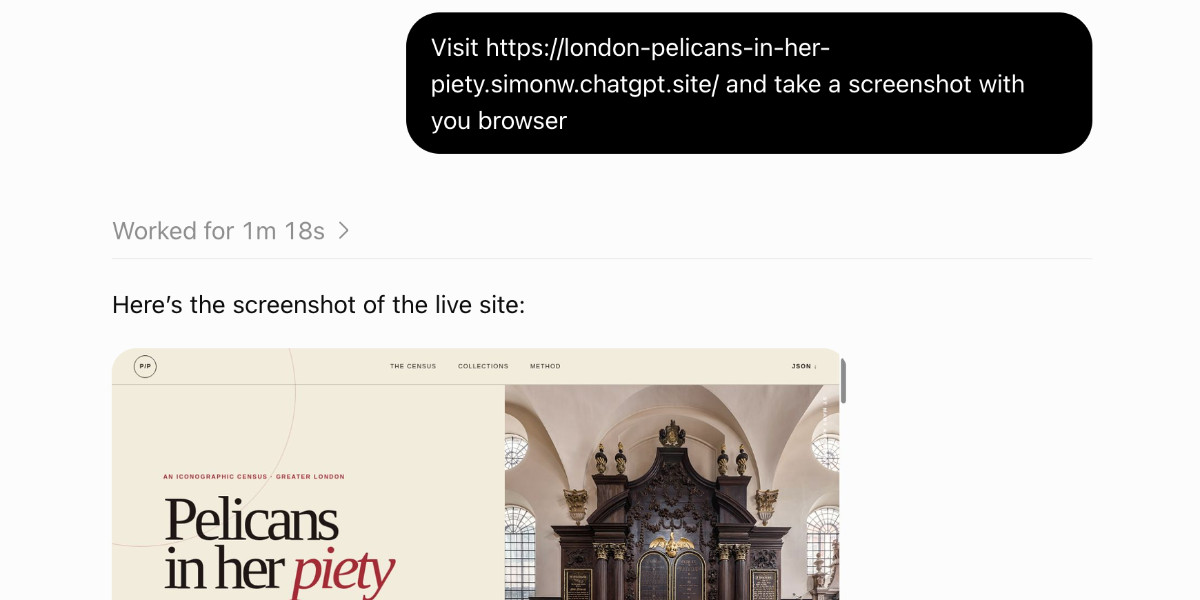
Simon Willison maps what ChatGPT Work actually does
Willison separates ChatGPT Work Cloud from Work Local and surfaces the builder-relevant bits: internet-enabled code execution, headless Chrome, persistent files, Sites, sub-agents, and unresolved prompt-injection risk.

Gradio turns AI pipelines into runnable workflow canvases
Hugging Face’s gr.Workflow makes the pipeline the UI: typed graph nodes, visible intermediates, REST endpoints per output, and one-command Spaces deploys. Useful if your AI app is becoming a brittle chain of model, Space, and Python calls.

NVIDIA TensorRT Model Connect wants open-model deployment to feel less bespoke
NVIDIA explains TensorRT Model Connect, a reference-implementation layer for taking supported Hugging Face checkpoints into native C++ TensorRT inference. The useful bit is the bundle workflow: Python prepares, C++ serves without PyTorch.

NVIDIA Dynamo’s shadow engines cut LLM failover from minutes to seconds
NVIDIA explains Dynamo shadow engine recovery: keep a preinitialized standby engine on the same GPU, share weights through GPU Memory Service, and promote it after process failure instead of cold-reloading.

A practical Cline SDK blueprint for code review agents
Cline’s walkthrough is useful because it treats review agents as an engineering system: guidelines, read-only guardrails, audit hooks, custom tools, a review pass, a judge pass, and deterministic GitHub posting.

Augment’s two-person team turned feedback triage into an agent workflow
A useful operating-model post, not just a product plug: Augment shows how a Feedback Triager agent investigates Slack reports, routes evidence, launches PR authors for clear fixes, and leaves humans with prioritization.
Toyota’s agent platform story is really about delivery speed and observability
LangChain’s Toyota case study has concrete numbers: 50+ production agents, delivery cut from 6 months to 4 days, and GearPal diagnosis from hours to minutes. Vendor case study caveats apply, but the operating model is worth studying.
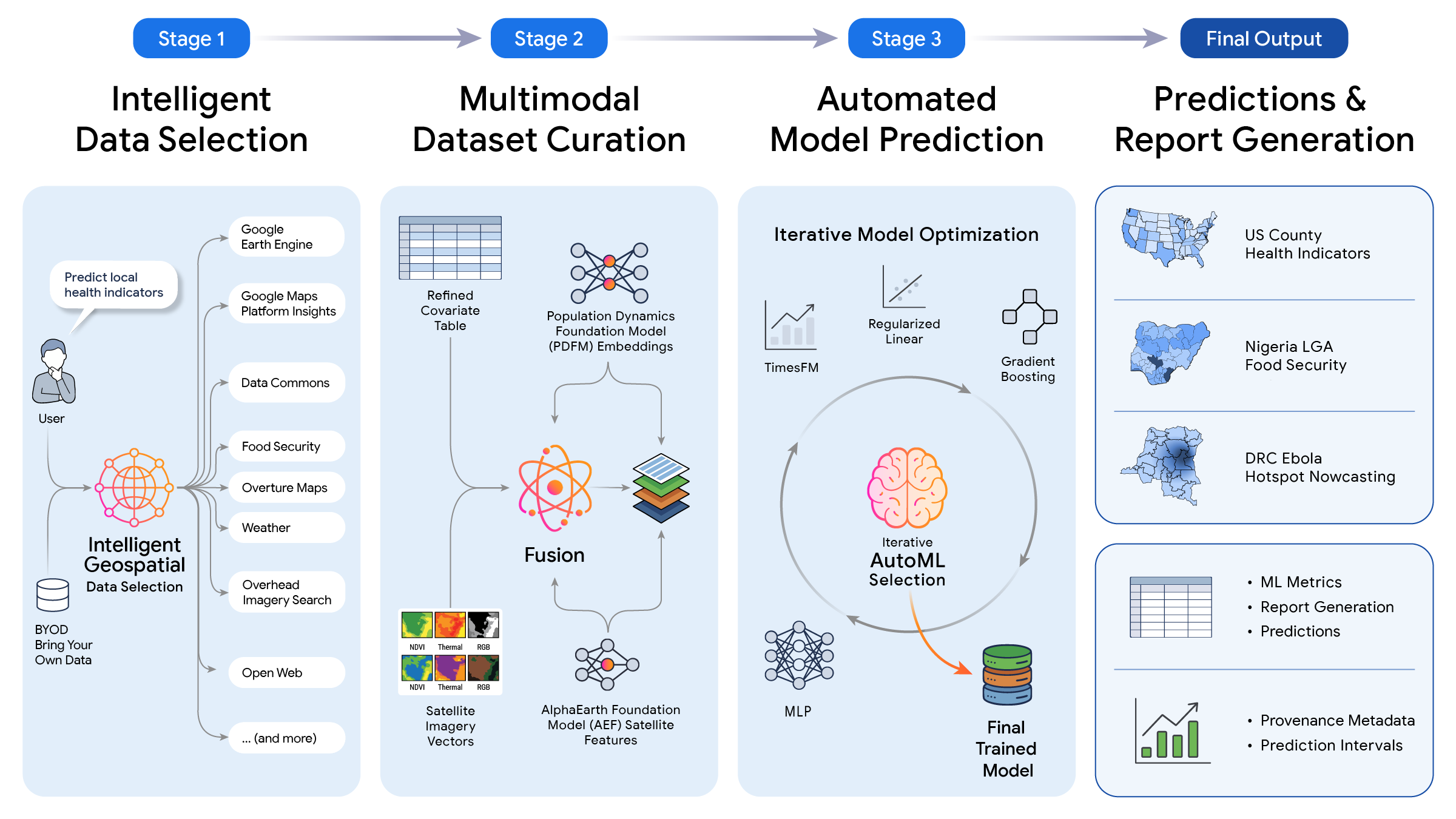
Google’s Planetary Prediction Engine automates geospatial ML workflows
Google Research’s PPE is an experimental agentic pipeline for geospatial prediction: data discovery, feature engineering, leakage checks, model training, and reporting from natural-language queries. The benchmark gains are notable, especially for crisis-response use cases.

NVIDIA turns robot navigation training into an agent-supervised workflow
This is less about letting agents drive robots and more about using agents to make robotics workflows reproducible: validate assets, prepare scenes, smoke-test, train residual policies, evaluate checkpoints, and stop at human approval gates.

NVIDIA’s Spectrum-X argument: vanilla Ethernet breaks under AI collectives
This is NVIDIA’s case for hardware-managed AI networking: adaptive routing in switches, targeted congestion control, and SuperNIC plane load balancing. The practical takeaway is less about Ethernet branding and more about tail latency, isolation, and failure recovery in giant training fabrics.

Cline’s IMO run is a useful benchmark story, with caveats
The headline is DeepSeek V4 Flash clearing an IMO gold cutoff for $0.12. The more useful part is the disclosure: blind grading, fixed harness bugs, best-run selection, LLM judges, and variance caveats.

Sebastian Raschka starts a from-scratch reasoning-model course
Raschka’s first video frames reasoning models as modified conventional LLMs, then gets practical: clone the repo, use uv, set up PyTorch, and know when CPU, Apple MPS, or CUDA is enough.

GlucoFM shows why wearable foundation models need domain structure
Google’s GlucoFM post is a reminder that sensor foundation models are not generic time-series transformers. Its dual-stream design separates slow glucose trends from short-term deviations, then tests transfer across metabolic prediction tasks.
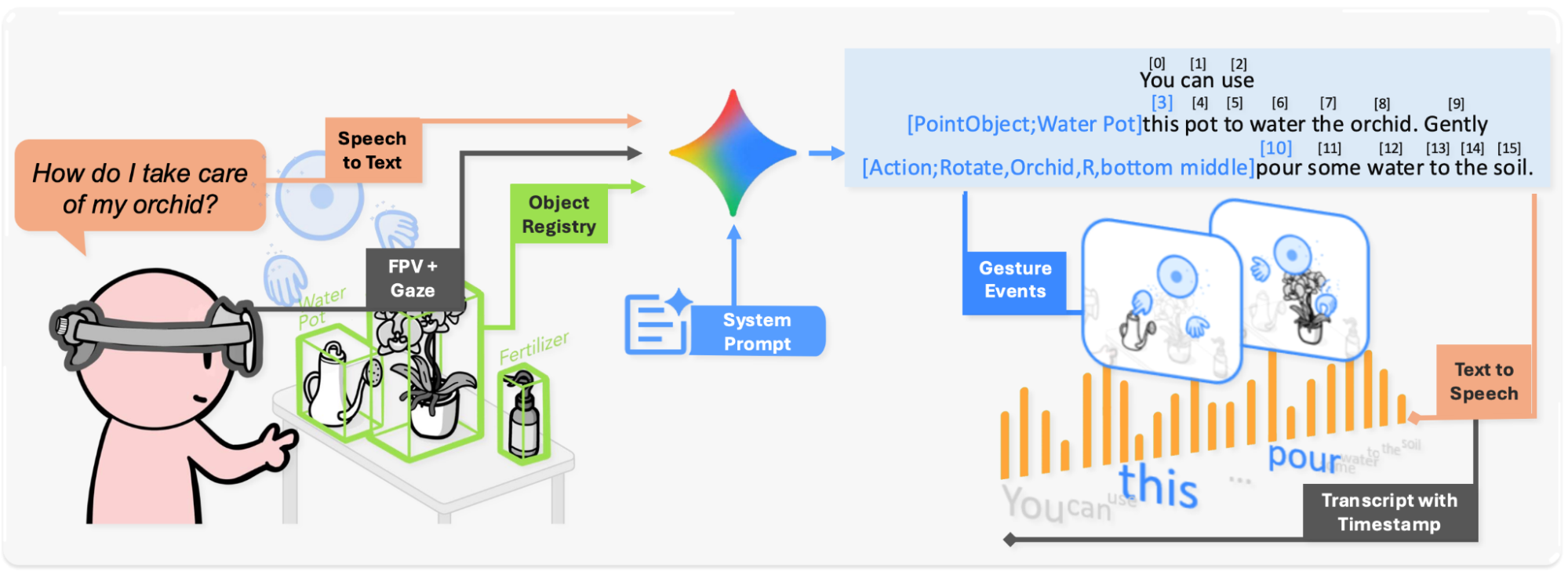
Google AgentHands tests co-speech hand gestures for XR agents
Google’s AgentHands prototype turns LLM responses into synchronized XR hand gestures, aiming to make spatial instructions easier to follow than speech or flat overlays alone.
Community discussions
22 threadsA photographer tests ChatGPT desktop as a Photoshop and Lightroom operator
This is a messy but useful field report: iterative computer-use prompting got a photographer close to outsourced editing quality. The thread also surfaces the immediate business tension—real cost savings versus replacing human contractors.
Claude Code users are turning long plans into handoff protocols
The thread’s useful takeaway: big agentic refactors fail less from planning than from session handoff drift. Commenters suggest explicit handoff skills, PLAN.md fields, done-checks, and only parallelizing disjoint files.
Claude Code spend blow-up turns into a hook-semantics lesson
The post starts with an autonomous SWE burning $1,000 in credits, but the useful thread is about guardrails: Claude Code hooks only block tool calls with exit 2; exit 1 means the hook broke and execution proceeds.
Claude Max users debate subsidy math versus API pricing
The thread pushes back on multiplying Claude Code token logs by retail API prices. Comments add the usual subscription-economics caveat: heavy users can be subsidized by lighter users without proving Anthropic is losing thousands per account.
Cursor Ultra users are trying to price the new limits in real model dollars
The thread turns Cursor’s Ultra plan into a unit-economics debate: $200/month versus claimed pools of $500 for frontier models and $2,000 for Cursor models. Commenters want token-level comparisons and report confusing limit changes across tiers.
Are filesystems becoming the agent-native interface?
The thread argues files are attractive because LLMs already know Unix-shaped workflows. The pushback is real too: visibility, race conditions, scale, locking, and retrieval semantics need more than plain grep.
Builders ask when multi-agent systems are worth the orchestration tax
A practical LangChain thread cuts through multi-agent demos. The best rule of thumb in the comments: split agents when context isolation helps; if everyone passes the same context, you likely need better orchestration.
Builders draw the agent boundary at uncertainty, not vibes
The thread’s best answer is conservative: use agents when the system must interpret messy context or choose tools under uncertainty; keep known steps, risky actions, validation, and state changes deterministic.
State tracking could cut agent tokens, but builders worry about cache economics
The thread likes the SKILL.state idea—carry structured state instead of full history—but the builder pushback is useful: fewer tokens may still mean higher cost if cache-busting hurts long-running tasks.
Local eval: Qwen Flash-Next is faster, but not a clean 27B replacement
A practitioner benchmark finds Flash-Next fast and mechanically reliable, but weaker than dense 27B on sustained symbolic work. The important bit is operational: same alias, same harness, very different failure modes.
A 100K-context Qwen setup on 16GB VRAM gets the right kind of skepticism
The recipe is aggressive: hybrid GGUF quantization, BeeLlama.cpp, KVarN KV cache, high-precision tail tokens, and MTP speculative decoding. The best comment cuts through hype: prompt processing, not tok/s, may decide usability.
Local builders unpack Qwen’s N-gram table tradeoff
The thread’s useful framing: MoE experts do arithmetic, while Qwen-style N-gram tables add recall-like capacity with cheap row lookups. Comments quickly get practical: Optane, SSD writes, expert offload confusion, and thinking-token blowups.
A sober buyer’s guide for local AI Macs
The strongest point here is not the SKU advice; it is the rule of thumb. For local AI, memory decides whether a model exists, bandwidth decides decode, and new accelerators mainly fix prefill.
Claude Code as company operating system, not just coding assistant
The post is a concrete pattern for AI-native ops: markdown knowledge base, SOP-to-skill layer, MCP access to business tools, folder discipline, hooks, and guardrails. The hype claim is speed; the durable insight is structure.
Claude Code users push back on session URLs in PR attribution
The complaint is blunt, but the product issue is real: default PR attribution that includes session URLs makes developers ask what leaks, who can access it, and where human review belongs.
Claude Code history cleanup catches transcript-dependent workflows off guard
The practical warning is simple: if your tooling reads Claude Code transcripts from disk, a silent 30-day cleanup can break you. Commenters discuss backups and longer cleanupPeriodDays settings, but lost history stays lost.
Enterprise Claude chat history is becoming an employee privacy anxiety point
A ClaudeAI thread turns enterprise AI adoption into a governance reminder: assume company tools are monitored. Commenters argue over personal use, chat visibility, endpoint monitoring, and the risk of putting sensitive code or private therapy-like conversations into corporate AI.
Cursor users test the line between bot bundle and useful agent
Cursor Pro users are getting a separate Grok Bot usage pool, but the comments expose the practical bottleneck: agents with “their own computer” still waste cycles on logins, cookies, and blocked websites.
Claude Code users debate whether the CLI still earns its place
The thread captures a real workflow split: desktop and phone integrations are getting good, but some builders still prefer the CLI because it keeps their workbench neutral across Claude, Codex, and whatever comes next.
Local model builders are arguing Qwen versus DeepSeek for real coding work
A LocalLLaMA thread praises Qwen as a local coding workhorse, especially for web UI tasks it can verify with screenshots. The pushback is about concurrency, benchmarks, and whether DeepSeek still wins on larger agentic tasks.
A Blender MCP test claims GLM 5.3 Flash matched the larger model for far less
Atomic Chat’s single Blender-over-MCP test says GLM 5.3 Flash produced a comparable scene for $0.0526 versus $0.8807. It is an anecdote, not a benchmark, but cost-sensitive agent workloads should notice.
Local LLM buyers debate bandwidth versus RAM before a rumored bigger Qwen
A practical hardware tradeoff thread: pay for more GPU cores and bandwidth, or keep 128GB unified memory for future 100B-class local models. The unresolved fear is that 96GB may be a dead zone.
Funding & acquisitions
15 movesNvidia reportedly nears a $12.9B Hugging Face acquisition
TechCrunch says Nvidia has reportedly agreed to buy Hugging Face, while also noting another report said no signed agreement existed yet. If it closes, this is not just M&A; it reshapes open-model distribution around the dominant AI chip vendor.
a16z launches a $1.1B Machine Age fund for AI’s physical stack
Andreessen Horowitz raised a $1.1B Machine Age fund for chips, memory, networking, systems software, power, and machines. The signal: AI infra constraints are now being framed as venture-scale company opportunities.
Instinct raises $250M Series B amid viral assistant hype and privacy questions
Instinct’s round is a pure signal of investor appetite for personal agents. The product is still in private beta, users connect apps and devices, and the same permissions that make the assistant useful are already creating privacy concerns.
Generalist reportedly reaches $3B valuation after nearly $200M extension
Generalist’s reported $200 million extension shows robotics foundation-model funding is still running hot. The practical question remains whether video-demonstration learning can become reliable customer workflows, not just a valuation race.
Gatik raises $200M to scale driverless middle-mile trucks
Gatik’s raise is tied to a concrete autonomous trucking niche: commercial driverless box trucks for middle-mile delivery. The PepsiCo deal gives the funding more substance than a generic autonomy story.
Stability AI raises $76M with entertainment companies in the cap table
Stability AI’s Series B is strategic as much as financial, with music and gaming companies participating. That suggests distribution and licensed creative workflows are now central to its recovery plan.
Keenable exits stealth with $26M to build search infrastructure for agents
Keenable is betting agentic search needs infrastructure built for machines, not human SERPs. The hard part is economics: the company says web-scale indexing is painfully expensive.
Runable raises $21M to push agents from building apps to finding customers
Runable’s positioning is sharper than another app builder: small businesses want customers, not code. The risk is economics—TechCrunch says gross margins are currently negative—while the upside is owning the messy post-build workflow of ads, SEO, outreach, analytics, and support.
Mundo announces a $20M Series A for perceptual-intelligence data
Mundo says it raised a $20M Series A, plus a previously unannounced $4M seed, to build data and evaluations for perceptual intelligence. The company says its datasets and evals are already used by leading AI labs and companies.
Ringg adds $10M from Peak XV for enterprise voice agents in India
Ringg’s new money backs a familiar but real India opportunity: high-volume business calls moving to AI agents. Its shift from low-complexity outbound calls toward workflow outcomes is the key test.
Arga Labs raises $10M to build RL sandboxes for enterprise agents
Arga is attacking a real blocker for enterprise agents: you cannot safely RL-train on live Salesforce, Workday, or email. Digital twins with permissions and webhooks intact could become the missing evaluation layer for business software agents.
IndiGo Ventures backs Sarvam AI as enterprise aviation AI partnership deepens
IndiGo Ventures invested in Sarvam AI’s ongoing Series B, extending an existing collaboration on airline operations, passenger experience, employee support, and workflows. The investment amount was not disclosed.
ESDS heads to IPO with an AI infrastructure expansion plan
ESDS is using a ₹720 Cr fresh-issue IPO to expand data-centre capacity, GPUs, servers, and GPU-as-a-service. The risk is straightforward: AI compute demand is rising, but hardware prices have already moved against the capex plan.
WATER Robotics raises $2.5M for adaptive physical-AI surfaces
Hyderabad-based WATER raised $2.5M led by Endiya Partners to validate adaptive surfaces such as FLOW and CAMA. The sharper idea is VORTEX: a model for sensing and responding to the human body through chairs, beds, and eventually other environments.
Edgeverse raises Rs 3 crore to commercialize edge-AI perception for mobility
Edgeverse raised Rs 3 crore from GVFL for India-specific road intelligence, camera and radar technology, and commercialization of its AI-powered perception stack for mobility and safety applications.
Bengaluru radar
17 events
Codex Community Meetup - Bengaluru
A sold-out Codex meetup with OpenAI team updates, demos, showcases, and AMA. Approved participants only; no on-spot registrations or late check-ins.
Memory, Context & Agents: SurrealDB x Contentstack
A practical agent-memory meetup during Bengaluru Tech Week, with SurrealDB showing cross-app memory architecture live. Approval-only and capped around 50 engineers.
Self Learning Agents builder mixer in Bellandur
A Saturday mixer for founders, engineers, and researchers exploring self-learning agents, RL environments, recursive improvement, and world models.
Hardware Club Bangalore hosts a robotics and Physical AI showcase
Bring robots, drones, boards, sensors, or half-working prototypes. This is demo, debug, and collaboration time for physical-world builders.
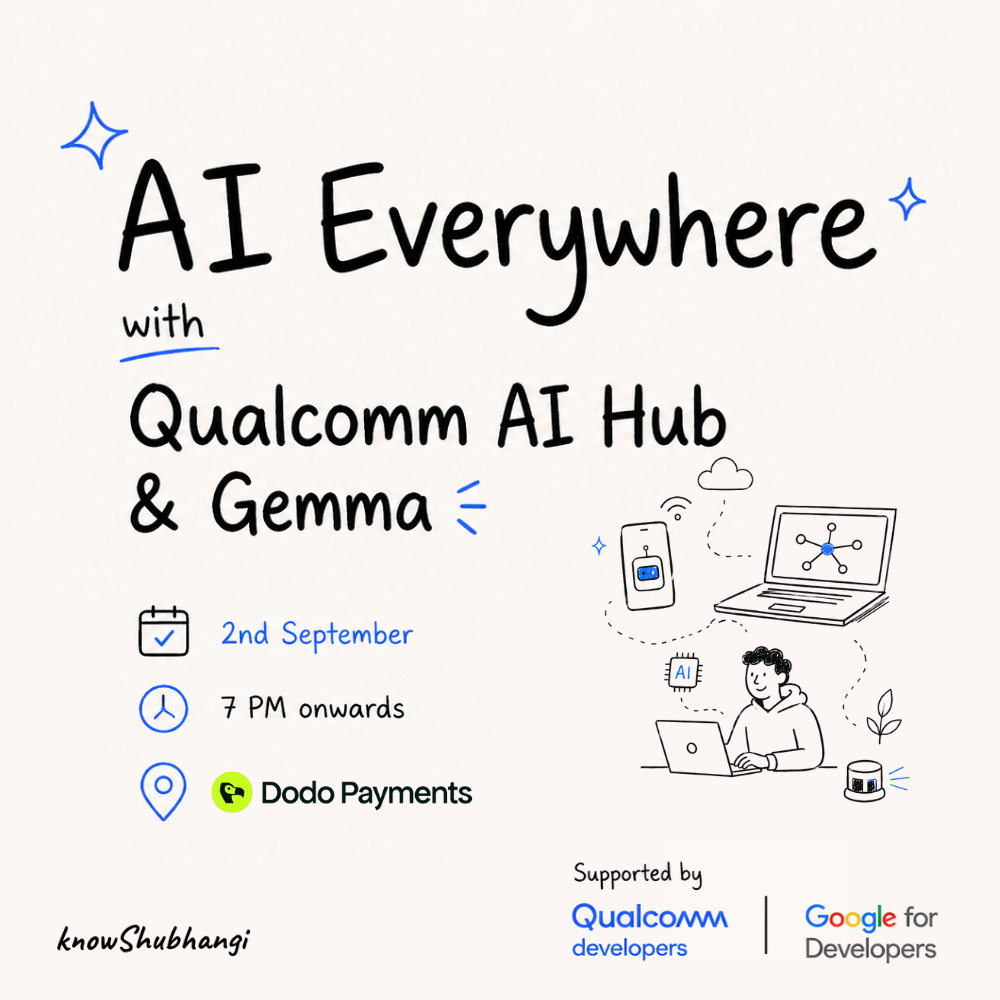
AI Everywhere: Edge, Cloud and Humans
Hands-on Bengaluru session on taking AI models from PyTorch workflows to desktop, mobile, and edge deployment with Gemma and Qualcomm AI Hub.
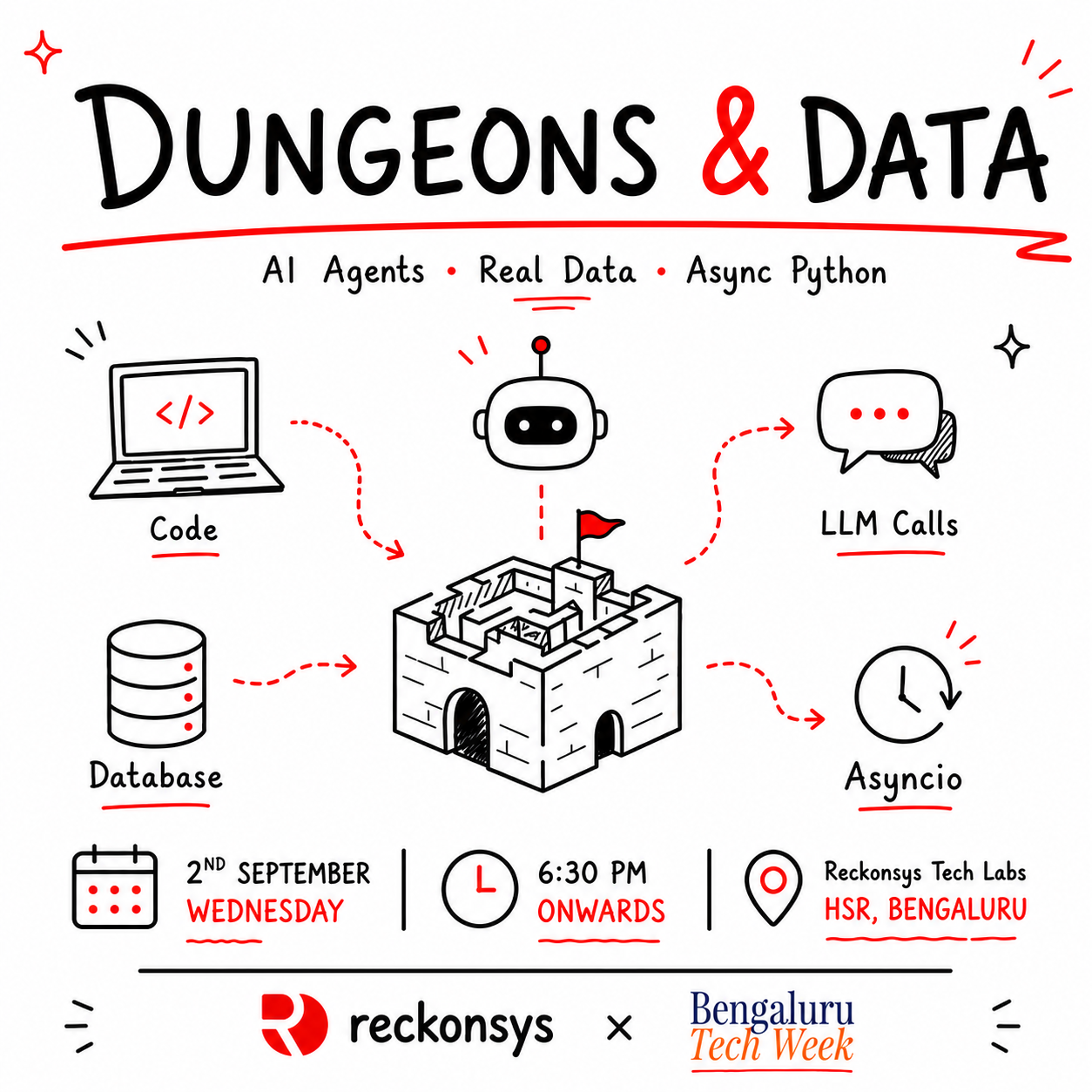
Dungeons and Data
Hands-on session on agents over DocumentDB and Postgres, then Python asyncio patterns for scalable AI workflows. Part of Bengaluru Tech Week.
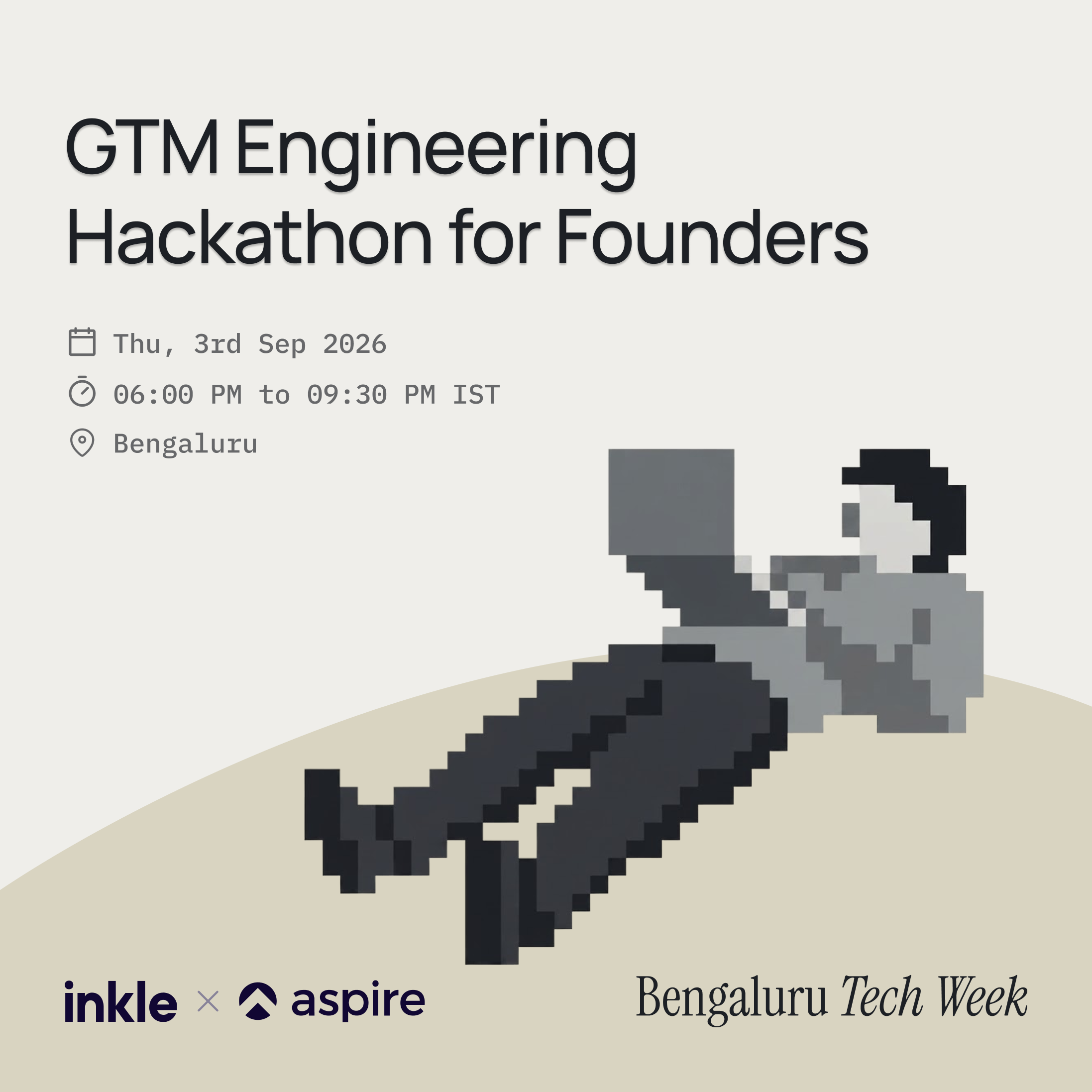
GTM Engineering Hackathon for Founders
A hands-on Inkle x Aspire session to build an AI-powered outbound workflow for U.S. sales. Bring your ICP, target market, and laptop.
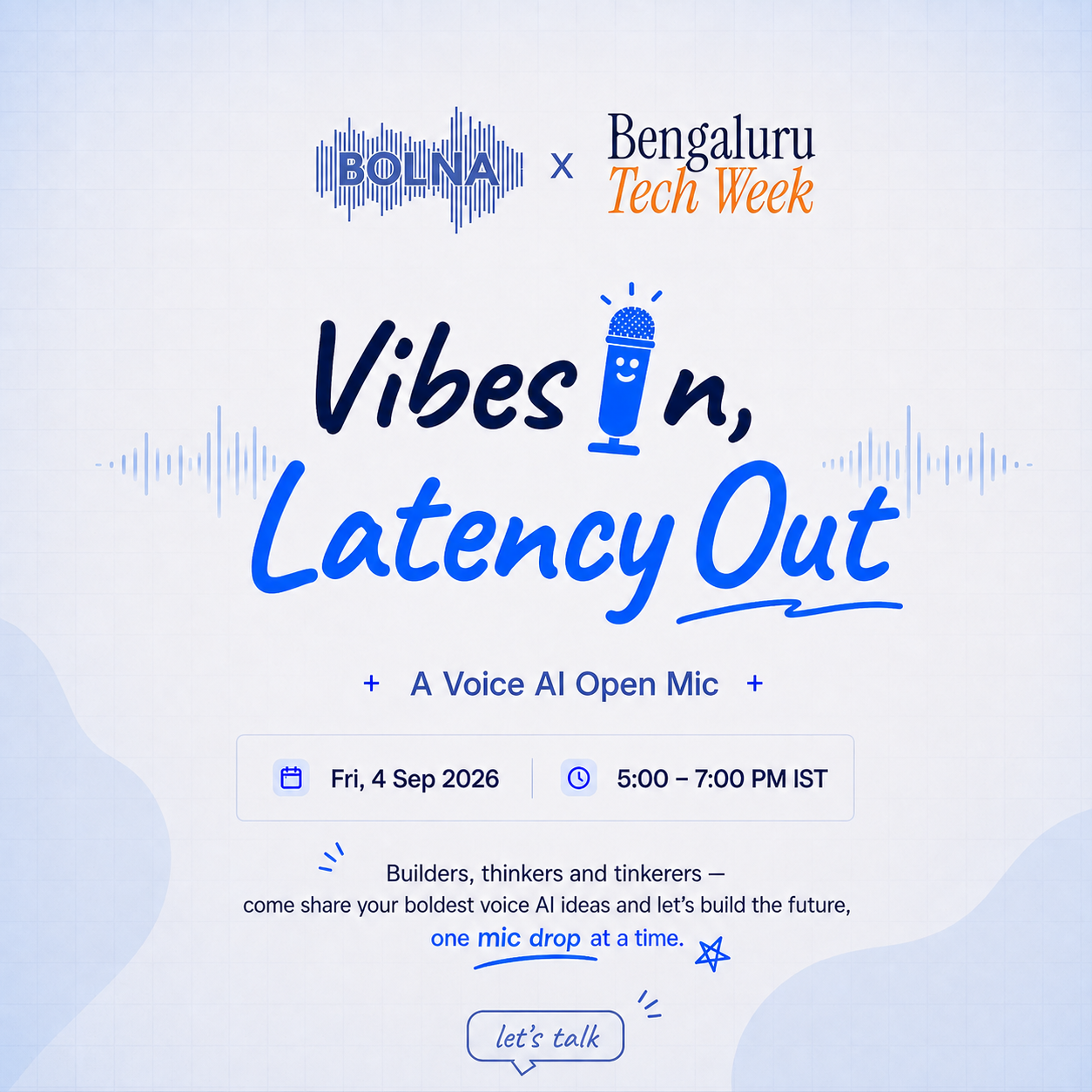
Vibes In, Latency Out: A Voice AI Open Mic
Bolna’s sold-out voice AI open mic gives builders 3–5 minutes to demo, share lessons, or pose hard latency and agent problems.
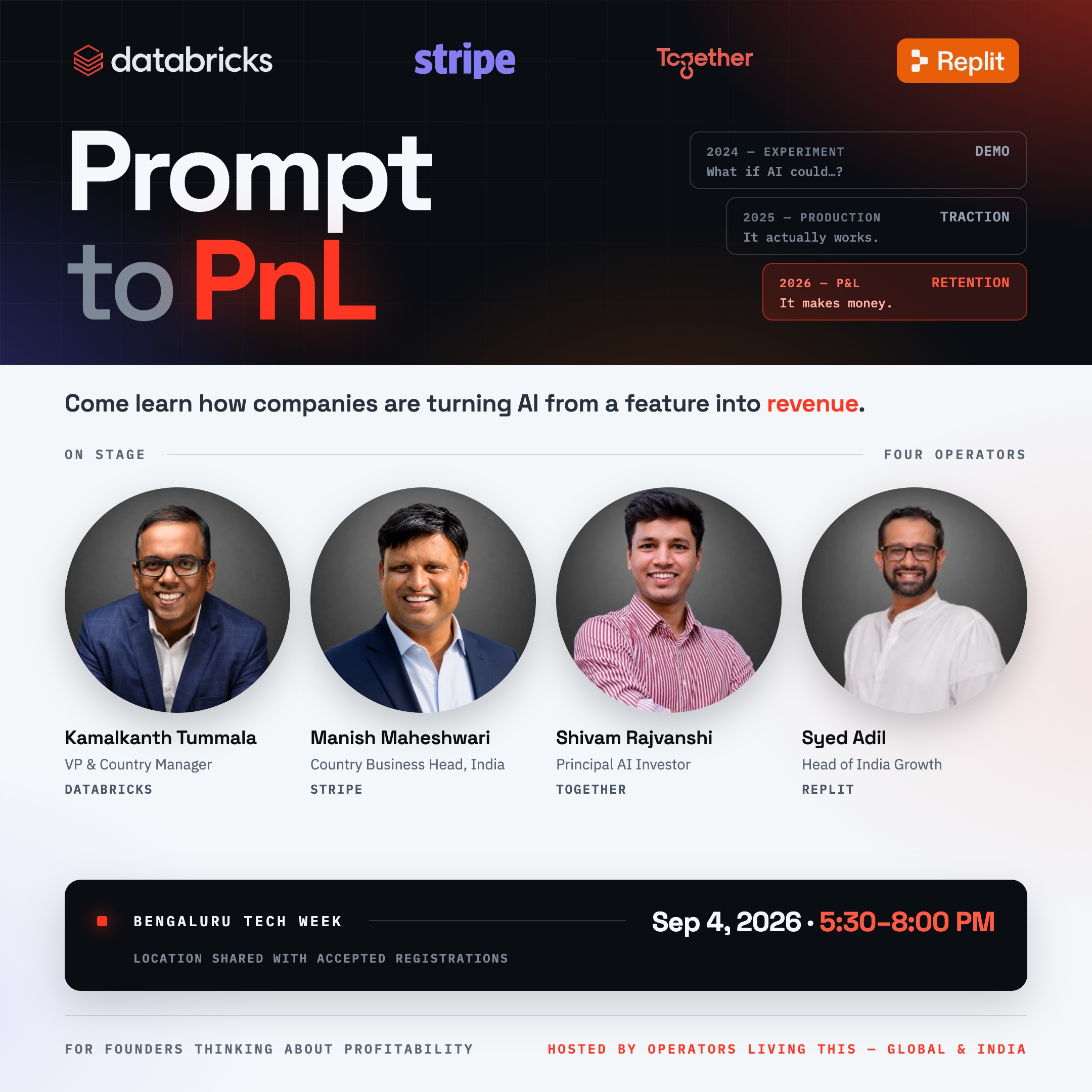
Prompt to PnL
A founder/operator session on whether AI features become real businesses: pricing, margins, retention, and investor-grade AI-native P&Ls.

Agent Arena: AI debates, live quiz, and networking in HSR
Maximem AI is hosting a sold-out Bengaluru Tech Week side event with AI debates, a live agent-run quiz, networking, food, and non-alcoholic drinks.
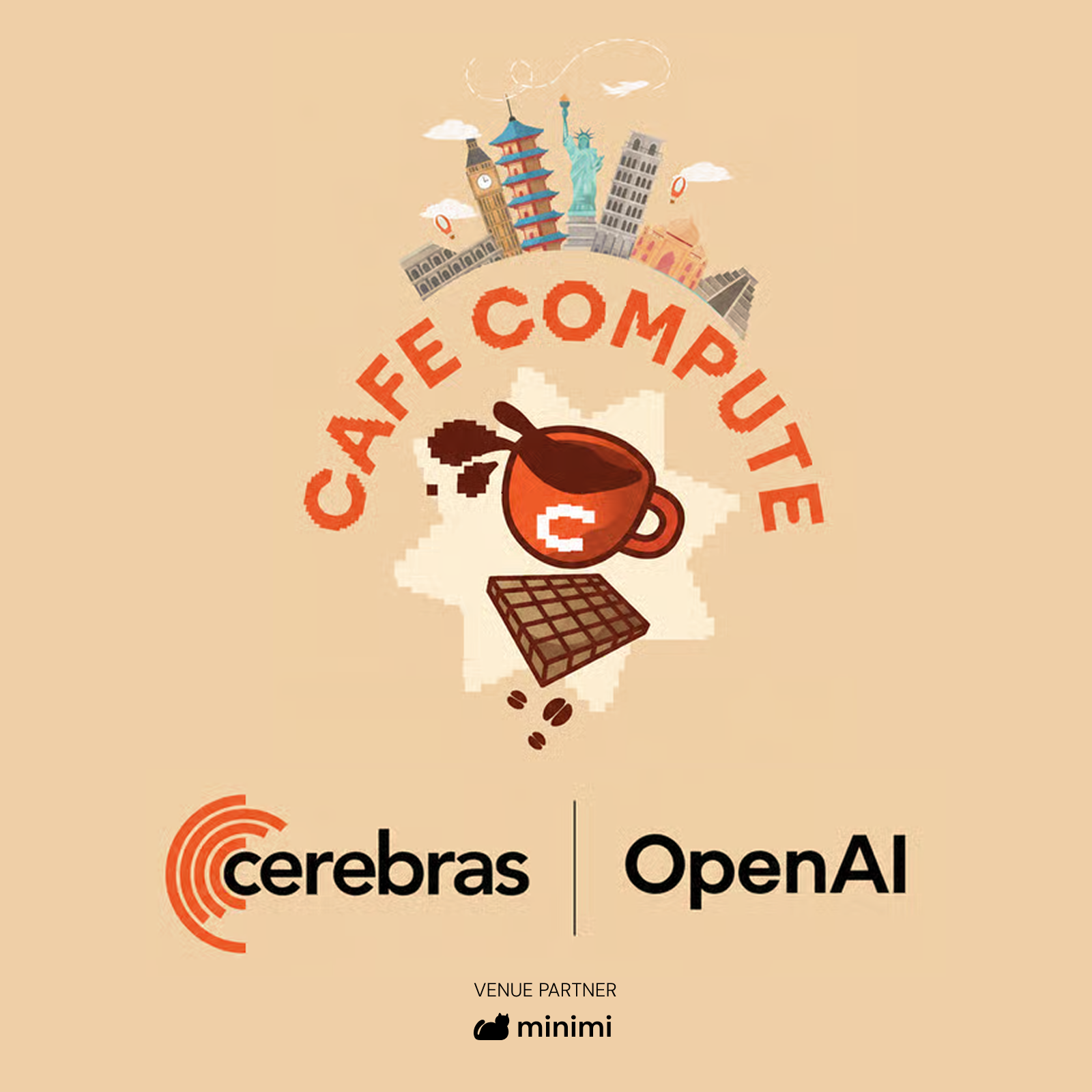
Cafe Compute Meetup: Bangalore
Cerebras hosts a free, in-person coding meetup in HAL 2nd Stage. Bring a laptop for hands-on AI inference experiments, food, and builder networking.

Bangalore Paper Club digs into 1-bit LLMs and KV-cache compression
Small-group ML paper session on BitNet, CAT-Q, and TurboQuant. Come prepared to discuss quantization details, not just skim abstracts.
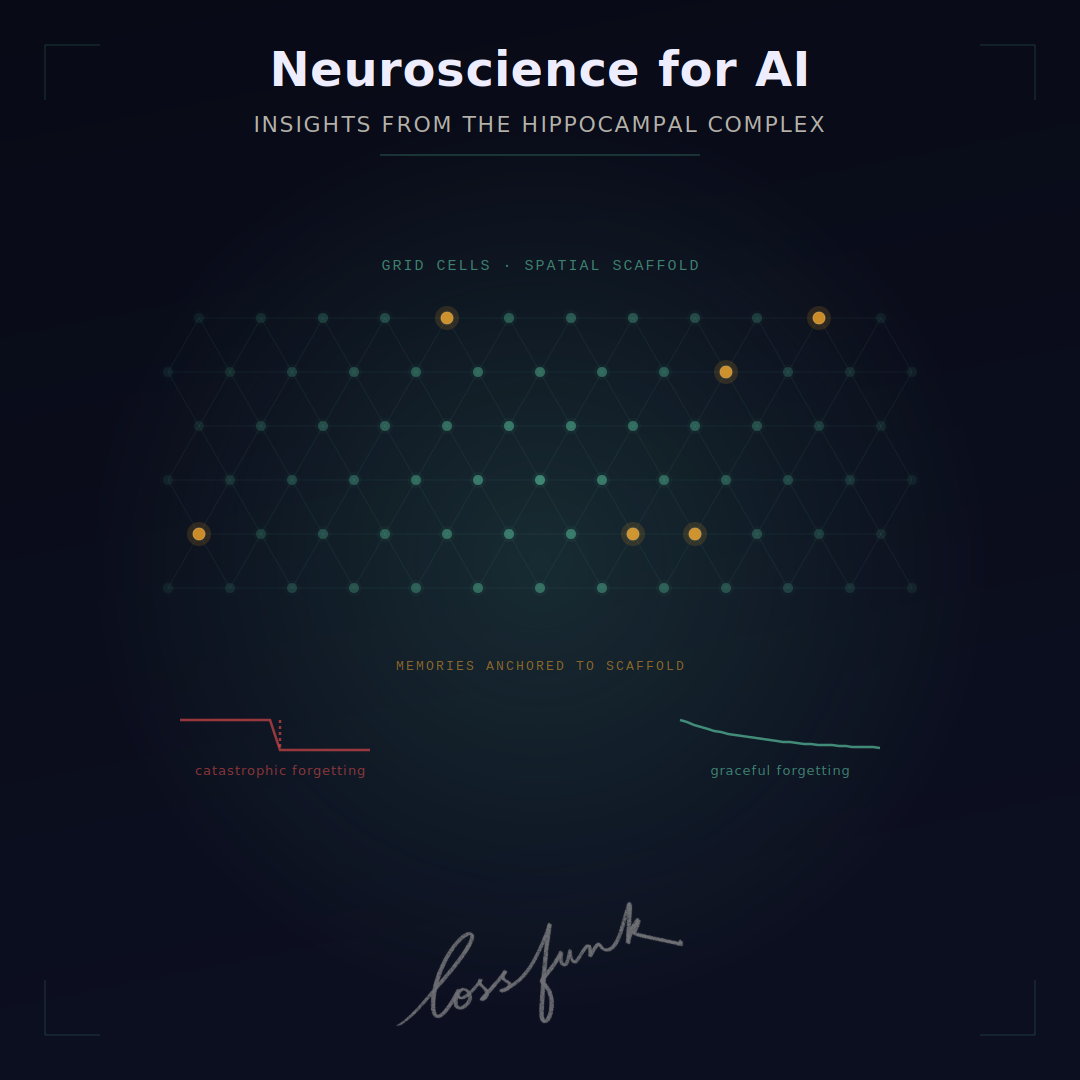
Neuroscience for AI: what hippocampal memory may teach model builders
Sarthak Chandra will unpack hippocampal memory, grid cells, graceful forgetting, and biological modularity for AI researchers and builders.

Reasoning Traces by Together Fund
Small-room alignment salon for researchers, founders, and engineers working on interpretability, evals, oversight, red-teaming, and frontier-model safety tradeoffs.
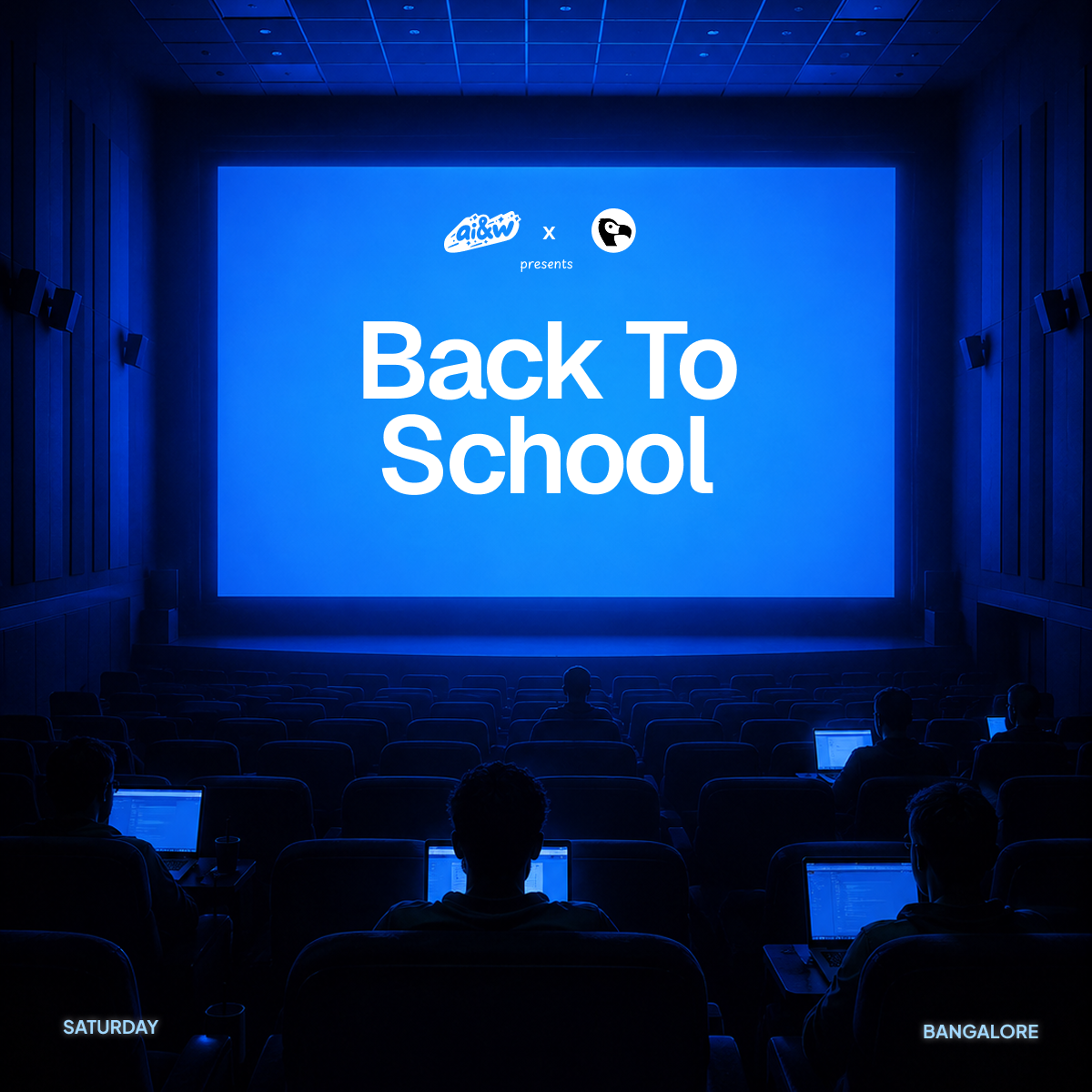
Back to School - Bengaluru BuildStation
Bring a laptop and a project. Open build session for AI builders to meet fellows, get feedback, find collaborators, and ship.
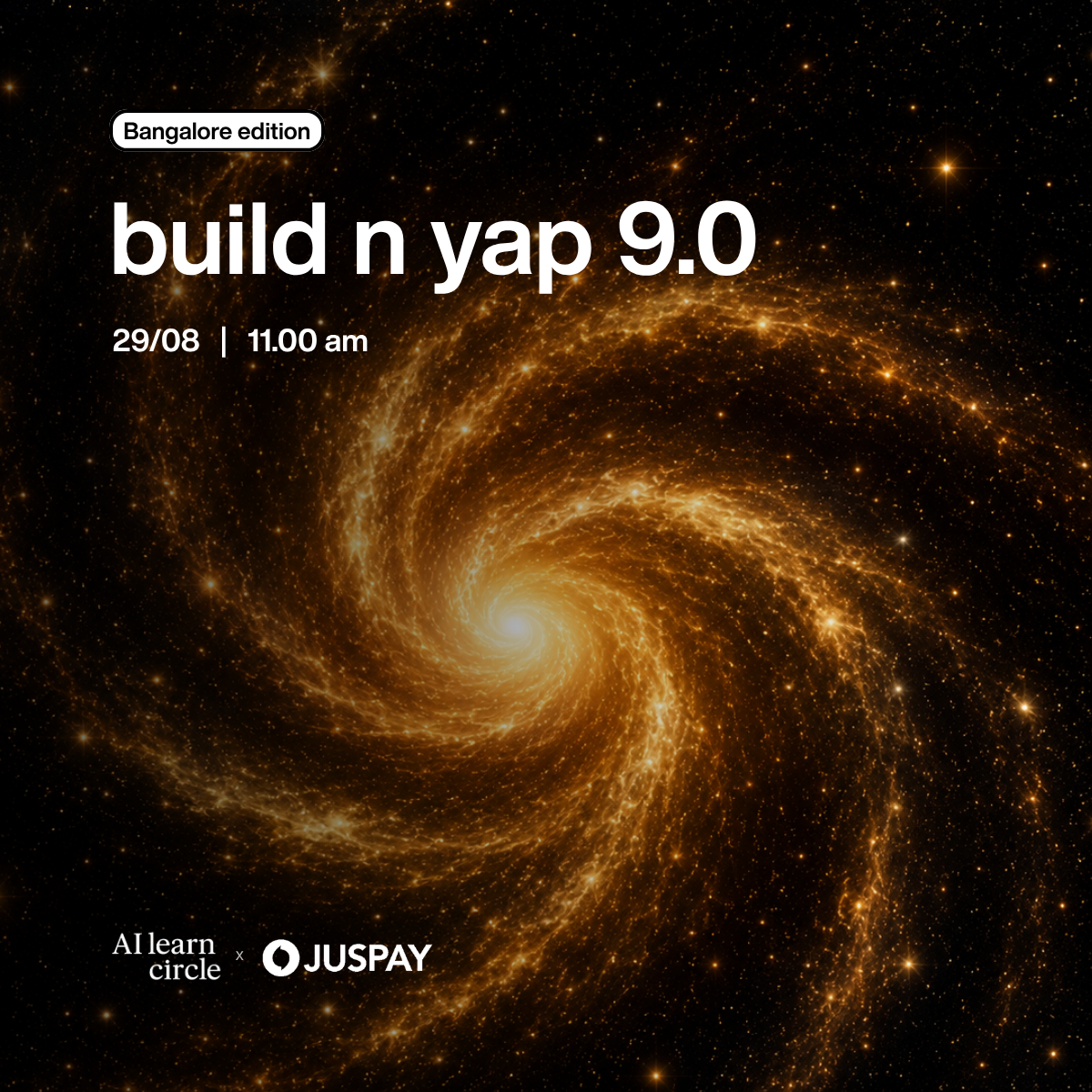
build n yap 9.0 : build in public hours
Curated build-in-public block for 15-20 builders shipping agents, side projects, automations, or startup ideas. Listed as sold out.
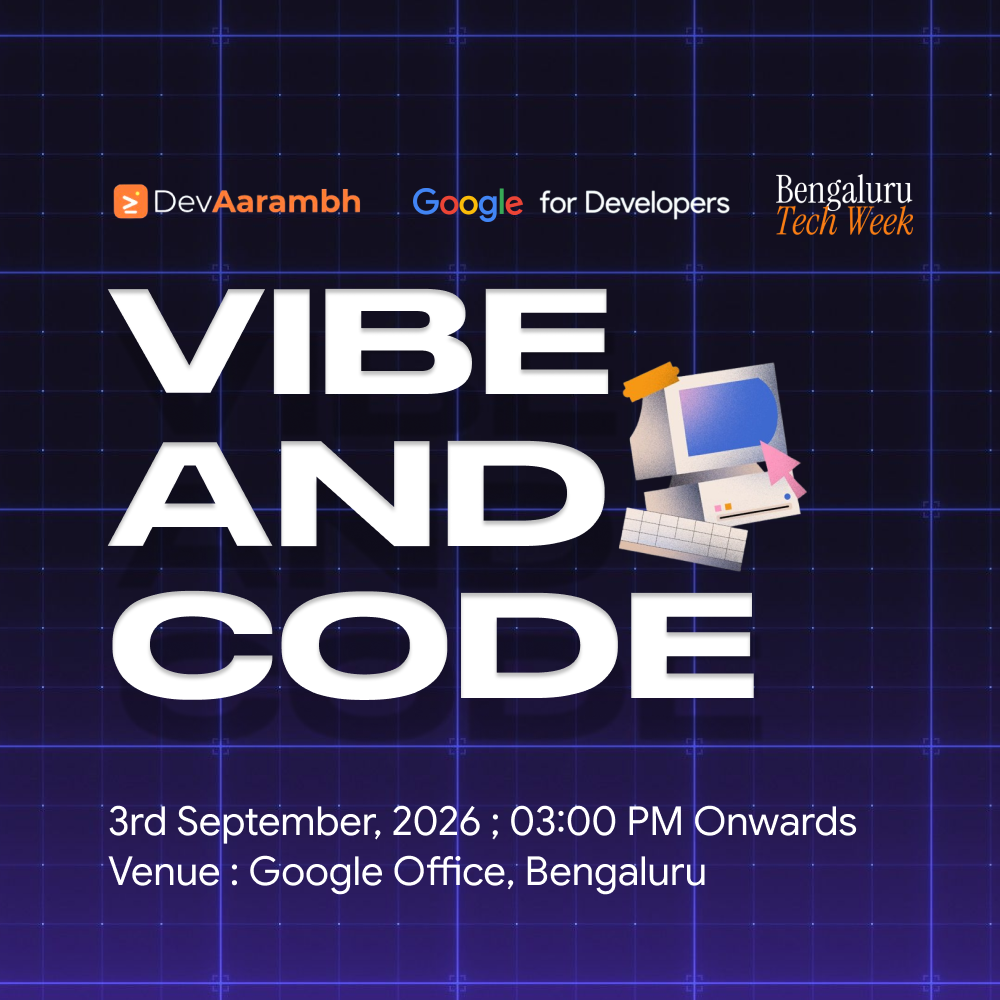
Vibe & Build 2026 brings practical tech sessions to Bengaluru Tech Week
A free, curated in-person evening for Bengaluru professionals across engineering, AI, product, cloud, leadership, and startups.
Inbox edition
Know what matters before your day gets noisy.
Subscribe to Ekloge for one carefully curated AI briefing in your inbox—no endless feed, no filler.