Today’s lead · Google DeepMind Blog
Google DeepMind previews Genie 4, a real-time world model with native audio
Genie 4 is a serious step toward interactive simulation: photorealistic worlds, native sound, dialogue, and natural-language steering while Gemini plans and checks continuity. It is still a research preview, and Google is explicit about drift, object permanence, audio accuracy, text, and long-term consistency remaining open problems.

Top signals
8 more
Liquid AI ships LFM3: open-weight 2B-class multimodal models for local agents
LFM3 is aimed squarely at builders who want specialized, local AI instead of one giant hosted model. Liquid released text, vision, audio, omni, and decision models on one 2B-class backbone, with 256K context, single-GPU fine-tuning, Ollama availability, and early third-party Mac measurements that look practical.
NVIDIA wants AI factories to arrive pre-integrated in containers
NVIDIA’s DSX POD is a reference design for Vera Rubin AI factories built in modular containers, with rack cabling, power, networking, and liquid cooling validated before delivery. The claim is aggressive: cut onsite deployment from six months to as little as 14 days, assuming the site is prepared.

CUDA 13.4 brings memory-enforced fractional GPUs to Kubernetes
CUDA 13.4 adds transparent GPU memory boundary enforcement, and NVIDIA is pairing it with an open-source GPU Fractioning Operator plus KAI Scheduler integration. For platform teams, this is more useful than vague GPU sharing: workloads can request exact or burstable memory and choose time-slicing or SM-sharing.

OpenBMB releases MiniCPM-OCR with a separate model for checking OCR results
MiniCPM-OCR is not just another document parser: the interesting piece is MiniCPM-OCR Jev, a model-agnostic checker for OCR regions across text, formulas, and tables. OpenBMB claims strong benchmark scores and high throughput, but builders should validate those numbers on their own document mix.

Cognition’s FrontierCode 2.0 tests whether coding agents should be merged
FrontierCode 2.0 is a useful corrective to coding evals that reward only spec compliance. Cognition’s benchmark emphasizes underspecified prompts, repository conventions, maintainability, and mergeability. The top model scoring about 45% is a reminder that autonomous coding agents still miss implied constraints that human reviewers care about.

Researchers found an OpenAI compaction path for leaking hidden reasoning
Xint showed a compaction-based method that could copy hidden reasoning from OpenAI’s gpt-5.6-sol into plaintext despite earlier replay protections. The important caveat: Xint tested only its own prompts and cannot prove the copied text was verbatim reasoning. OpenAI confirmed and fixed the issue on October 23.
OpenAI and Oracle are bringing business apps and agents into ChatGPT
OpenAI says it is expanding its Oracle partnership to bring Oracle business applications and AI agents into ChatGPT, while also powering new Oracle offerings. The announcement is light on implementation detail, but it points to ChatGPT becoming more of an enterprise app surface than a standalone assistant.
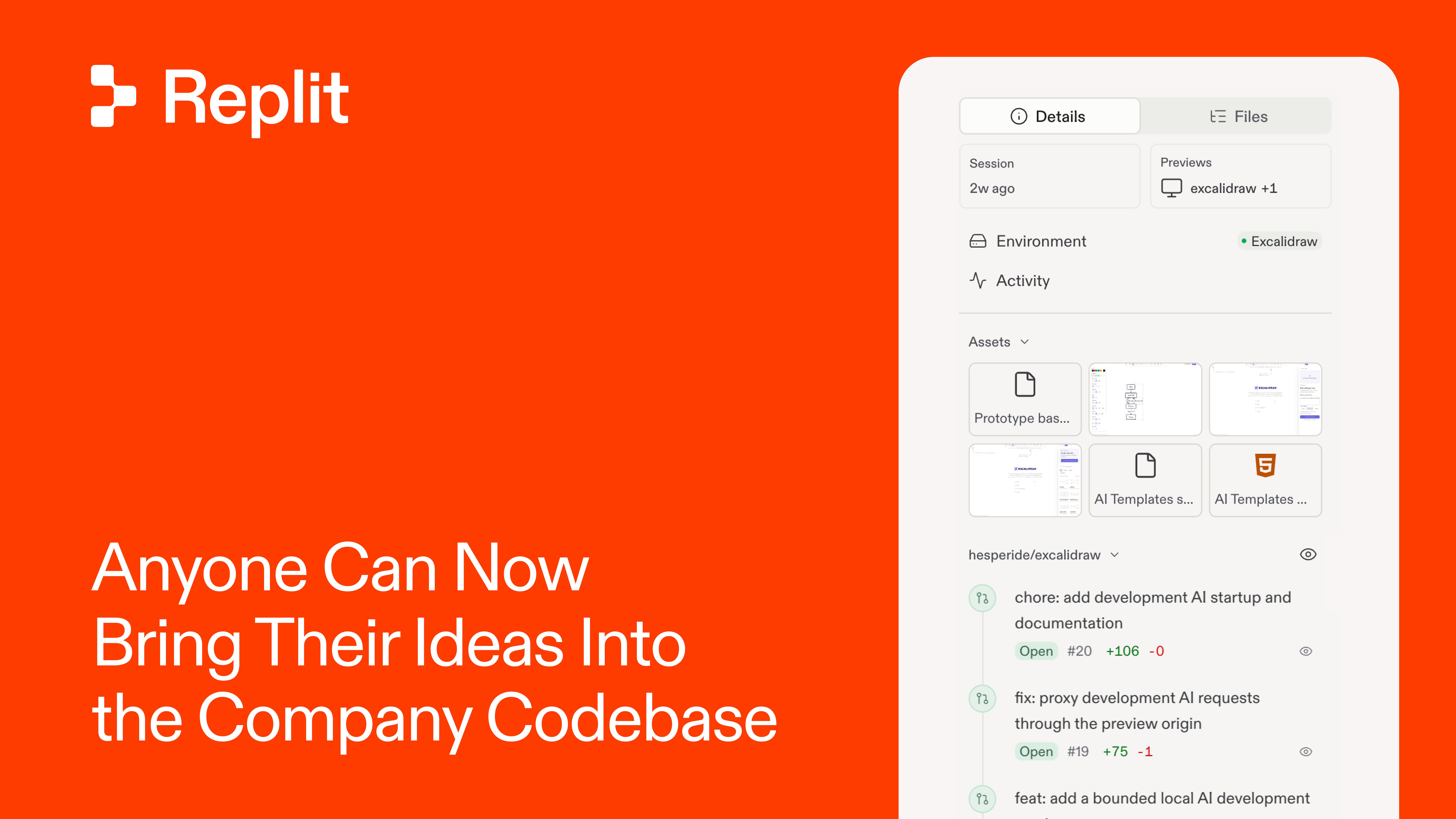
Replit Cloud Agents turn workplace requests into tested PRs
Replit is pushing coding agents beyond solo app creation into company repositories. Cloud Agents let non-engineers describe changes, preview them in a running app, and open GitHub or GitLab requests with screenshots or video evidence. The useful boundary: engineers still approve what ships.
Tools & repos
4 selected
Overmind
Overmind pitches a practical loop for AI teams: turn production traces into specialized models you own, then train, benchmark, and serve them. Useful if your product already produces rich traces worth learning from.
nightly-labs/openbot
OpenBot is a local-first desktop workspace for persistent AI teammates, with dedicated workspaces, task queues, file sharing, browser control, and agent-to-agent collaboration across Codex, Claude, and Grok.

TheySaid 4.0
TheySaid 4.0 brings customer or synthetic-user feedback into Claude, Cursor, and Jira. The pitch is faster UX validation while builders are still editing, not after a decision has become roadmap debt.

Spacesheep
Spacesheep turns an agent’s output into a shareable “space”: interactive docs, dashboards, mockups, or apps. It is a collaboration wrapper for agent work that would otherwise disappear into a chat transcript.
Blogs worth your time
5 reads
Cline’s single-GPU throughput notes are really about traffic shape
Cline walks through how it hit 11,840 aggregate output tokens/sec for Nemotron 3.5 Super VL on one GB300. The valuable part is the caveat: MTP settings, kernels, and FP16 tradeoffs depend heavily on your load shape.

LangChain’s design-agent writeup is a field guide to taste as context
LangChain explains Content Studio, its Slack-based design agent for videos, graphics, and decks. The takeaway is not “AI does design”; it is that taste lives in brand context, critique loops, tools, sandboxes, and rules you delete as models improve.

Google Research proposes a sleep cycle for continual LLM learning
Google Research’s sleep framework alternates active interaction with offline consolidation and “dreaming.” The claim is ambitious: absorb new facts, retain long-context knowledge up to 10M tokens, and improve reasoning without catastrophic forgetting, using MoE memory expansion and self-generated practice.

Ai2 shows novelty judging is still too brittle for science agents
Ai2’s Old Ideas, Novel Problems benchmark is a useful warning for automated research pipelines. LLM novelty judges can swing dramatically with small prompt changes, and more retrieval or reasoning did not consistently make verdicts better.

NVIDIA’s DGX Spark MoE post is a useful warning about stacked optimizations
NVIDIA profiles Ling-3.0-flash on DGX Spark and combines Humming MoE kernels, FP8 LM-head quantization, and NEXTN speculative decoding. The builder takeaway: synthetic gains can mislead, and combined optimizations need startup validation.
Community discussions
1 threads
How many GPUs do inference aggregators really need?
The thread challenges the intuition that token volume directly maps to enormous GPU fleets. One poster claims 1.8T tokens on 64 B300 and 64 M890P, while the quoted post asks whether OpenRouter-like demand fits in surprisingly few GB300 racks.
Funding & acquisitions
6 moves
Guidewire buys Hyperexponential for $1.7B in cash
Guidewire is buying Hyperexponential to add agentic underwriting capabilities for insurance workflows. The cash headline is $1.7B, with up to $400M more tied to revenue targets, making this a major AI insurance software exit.
General Compute raises $100M Series A for ultrafast open-source inference
General Compute says it raised $100M to bring ultrafast inference for open source to market. The company frames the bet as demand for fast inference outgrowing slow inference, with first racks planned for Q1 2027.

Simplismart raises $14M Series B as Nvidia backs inference efficiency
Bengaluru-based Simplismart raised $14M to expand software that optimizes AI inference across existing GPU infrastructure. The notable signal is Nvidia participating in a company that helps customers tune latency, throughput, and GPU utilization rather than simply buying more hardware.

Cent raises $15M Series A and acquires AI radiology platform Medsee
Cent raised $15M to build preventive health infrastructure around imaging, biomarkers, and AI. The company also acquired Medsee, an AI radiology reporting workflow, which should matter if Cent’s scan volumes scale as planned.

Live2.ai raises ₹130 Cr to scale agentic social intelligence for brands
Live2.ai raised ₹130 Cr in a pre-Series B round to expand an AI-native marketing platform. Its pitch is to connect social listening, influencer audits, publishing, compliance, and shoppable content through governed agents for enterprise brands.

Nova Spectral AI raises ₹21.2 Cr for indigenous SWIR sensor chips
Bengaluru deeptech startup Nova Spectral AI raised seed funding to build SWIR image sensor chips using colloidal quantum dots and standard silicon CMOS. The first builder-relevant milestone is concrete: a field-ready prototype within 18 months.
Bengaluru radar
0 eventsThere are no relevant Bengaluru events to highlight today.