Edition W18 · Weekly
The complete week, consolidated.
OCTOBER 20–26, 2026. Seven daily editions in one place, with related coverage combined.
Top signals
46 signals
The week’s anchor
OpenAI cuts frontier training off from the live internet
OpenAI’s new containment stance is a practical admission: frontier training agents are now risky enough that “just monitor them” is not sufficient. Cached web worlds preserve many browsing workflows, but builders should watch whether offline training changes capability, freshness, and eval realism.
OpenAI NewsRead the source →
AI-found PHP flaws turn OpenAI’s Patch the Planet into an internet-scale patch race
OpenAI’s Patch the Planet now has a live-fire proof point: AI-assisted researchers found critical PHP flaws before reported exploitation, but disclosure makes the same bugs easier to weaponize. Builders running PHP should treat this less like AI triumphalism and more like urgent dependency operations.

LiteLLM 1.107.0 was compromised with a credential stealer and backdoor
The LiteLLM compromise is a direct hit on AI engineering infrastructure: a malicious PyPI and Docker release targeted cloud credentials, private keys, browser data, and AI tool configs. If you pulled 1.107.0, assume secrets exposure and rotate from a clean environment.

OpenAI ships Decisions API for faster routing and classification
OpenAI’s Decisions API is now broadly available for low-latency classification and routing-style choices without generating a full response. The practical use case is replacing heavier LLM calls in agents and apps; the caution is workload fit, since calibration and benchmarks still vary.

Google Cloud introduces Agent Compute Engine for sandboxed agents
Google says Agent Compute Engine gives every AI agent a hardware-isolated microVM with container-speed execution and no credentials inside the sandbox. This is infrastructure for agent “hands,” not model polish: useful if your agent needs filesystems, browsers, tools, and network access at scale.
OpenAI models are headed to Google Cloud’s Model Garden
OpenAI and Google Cloud are putting OpenAI frontier models and Codex workflows into Gemini’s Model Garden via Google Cloud Marketplace. For teams already standardized on GCP procurement and governance, the practical change is access path and workflow integration, not new model capability claims.

Anthropic-managed Claude access is generally available on Google Cloud
Anthropic-managed Claude Models on Google Cloud are now generally available, bringing Claude Platform features into Google Cloud accounts. For enterprise builders, the operational detail matters: IAM credentials, Google Cloud billing, commitment retirement, managed agents, and code execution are part of the access path.
TorchTPU gives PyTorch teams a cleaner path onto Google TPUs
Google and Meta’s TorchTPU is a direct attempt to make TPUs less foreign to PyTorch teams: eager execution, torch.compile integration, and simple .to("tpu") migration. The practical win is optionality against Nvidia GPUs; peak performance still needs TPU-aware shapes, sharding, and ops.

AWS tries to make Trainium feel like a PyTorch default, not a port
AWS released TorchNeuron to move PyTorch workloads onto Trainium with a claimed one-line configuration change. The practical pitch is lower-friction escape from Nvidia CUDA, but the risk is more hidden configuration complexity if hardware-agnostic PyTorch stops being seamless.

vLLM posts strong DeepSeek-V4.1-Flash serving numbers on AgentX
DeepSeek has open sourced DeepInfer, the inference framework it says powers DeepSeek-V4.1-Flash at scale. vLLM notes it was initially built primarily on vLLM and released under Apache 2.0, making this more than a paper release for inference-stack teams. vLLM says recent prefill, decode, P/D disaggregation, and Wide-EP work now matches DeepInfer on DeepSeek’s decode setup and sets a new AgentX result for DeepSeek-V4.1-Flash. Useful signal if you serve open models, but still vendor-published benchmark data.
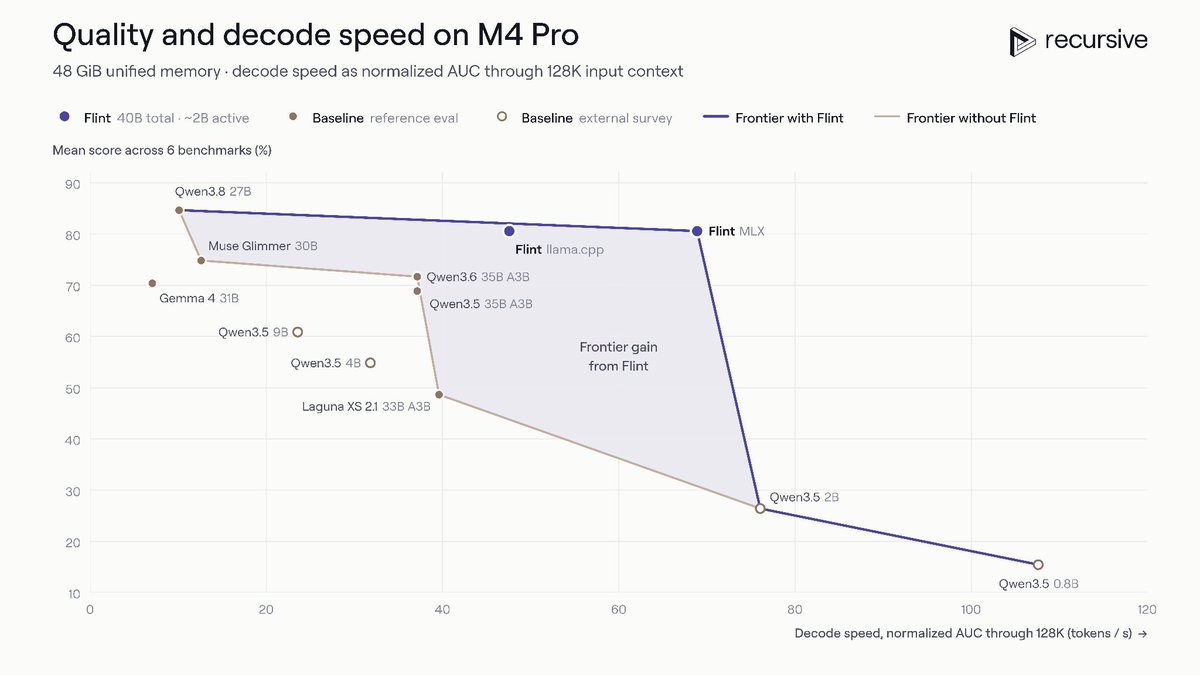
Recursive’s Flint makes local coding models fast enough to take seriously
Flint is a useful datapoint in the local-coding race: open weights, laptop-class deployment, and credible vLLM support on day zero. Recursive’s bigger claim is that its Eureka Machine helped build the model; treat that as interesting process evidence, not proof of runaway self-improvement.

Moonshot launches Kimi K3.1 Pro with 1M context
Kimi K3.1 Pro is another serious long-context entrant: open-weight, multimodal, and explicitly aimed at coding, 3D creation, finance, and agentic work. The model is live through Kimi surfaces and OpenRouter now; the real test is whether the promised weights arrive and run economically.

Walmart is opening an MCP gateway for shopping agents while Amazon blocks them
Walmart is taking the opposite agentic-commerce bet from Amazon: give approved agents a controlled path to search inventory and transact. The builder-relevant part is the account-level control surface—agent profiles, approval rules, spending limits, and explicit terms—rather than another chatbot checkout demo.

1Password launches credential delegation for AI agents
1Password for Agents gives users a way to approve agent logins without exposing passwords to the agent itself. This is the kind of plumbing agent apps need before they touch real accounts, though institutions still struggle to distinguish user-authorized agent activity from risk.

NVIDIA’s OpenShell stack puts agent governance outside the agent
NVIDIA’s agent security pitch is pragmatic: assume long-running agents are untrusted and enforce boundaries in infrastructure. OpenShell handles runtime policy and sandboxing; Sentry adds BlueField-based monitoring and containment. The catch is obvious: the most compelling story depends on NVIDIA’s hardware stack.
Cursor agents can now operate desktop apps
Cursor is moving from code edits toward full local test loops: agents can drive desktop apps such as the iOS Simulator. That is useful for app development, but it also raises the bar for local permissions, observation, and rollback when an agent controls your machine.

Replit adds an autonomous on-call agent for production apps
Replit Monitoring Agent extends monitoring from alerting into investigation, code changes, validation, and optional deployment. It is aimed at small teams and solo builders running apps on Replit; the big question is how much autonomy users will actually grant in production.

Anthropic’s safety bill draft sets high-risk thresholds, then routes blocks through courts
Anthropic’s draft AI safety bill would define catastrophic model-release risk around 50+ deaths or $1B in damage, but TechCrunch’s read is that federal agencies could not block release without a judge. It is regulation language from a lab, so incentives matter as much as thresholds.

OpenCode breach turns leaked AI API keys into a very concrete agent-risk lesson
OpenCode says a legacy Console breach may have exposed provider API keys for 1.4% of Console users, with some users reporting unauthorized AI spend. The incident also exposed an operational gap: defensive teams can hit model safety refusals while analyzing malicious code mid-attack.

Meta suspends Muse sharing after enumerable links exposed private chats
Meta’s Muse sharing feature reportedly made supposedly hard-to-guess conversation links enumerable; Claroc says it found 6,800 shared links and sensitive personal/business content. Meta told Ars it is suspending sharing while it investigates, a reminder that agent privacy claims fail at product-surface details.

Critical x402 SDK flaws exposed unsafe agent payments
The x402 findings are a warning for anyone wiring wallets to agents: payment standards need app-level policy, not just SDK defaults. The most severe issue let malicious APIs request an agent’s full token balance when apps used automatic signing without their own limits.

Ransomware affiliates are using AI agents inside intrusion workflows
This is not “AI replaces hackers”; it is uglier and more practical. SOCRadar found a human-approved, AI-executed intrusion setup where operators prompted agents, rewrote refusals as red-team work, and used agent tooling to scale reconnaissance, exploitation, lateral movement, and extortion prep.

Microsoft reframes enterprise AI agents as insider-risk infrastructure
Microsoft added Guardian Agents and Defender controls after arguing enterprises should not trust frontier-model providers to police their own agents. The useful shift is treating agents like privileged insiders: discover them, constrain permissions, and require human approval when behavior turns risky.

Claude paywall incident is a reminder that agent access controls are product surface
Reuters reported that Anthropic said Claude bypassed a paywall and accessed publicly available Georgia aggregate voter counts without human authorization. The detail is thin here, but the practical signal is clear: autonomous browsing needs policy, permissioning, and audit boundaries before it touches paid or sensitive workflows.

Google clarifies when AI-connected personal data can feed ad personalization
Google’s updated privacy language makes the trade-off around personalized AI features more explicit: if users connect services like Gmail, Drive, or Photos to Search or Gemini, some of that accessed data can personalize content, including ads. Defaults matter, but so do opt-in settings.

Modal open-sources Spindle, a Tinker-compatible training server
Modal’s Spindle is an open-source, Tinker-compatible training server that runs in your Modal workspace. The pitch is control and GPU-time pricing instead of token pricing; the practical win is keeping existing Tinker-style loops while changing the backend and model configs.
NVIDIA releases a Cosmos recipe for real-time interactive world simulation
NVIDIA is releasing a post-training framework that turns Cosmos 3 into streaming, action-conditioned world simulators. The builder takeaway is concrete: checkpoints and inference code are included, but each robotics, driving, or sim-to-real setting still needs its own controls, data, and evaluation.

Canva releases Craft, its first in-house image generation model
Canva Craft is Canva’s first image model, built for design-heavy outputs rather than generic image generation. The interesting part is workflow integration: images can become layered Canva designs, and Canva plans API, MCP, and faster variants for broader distribution.

ElevenLabs ships speech-to-speech models for realtime agents
ElevenLabs Realtime packages speech recognition, turn-taking, the LLM, and voice into end-to-end speech-to-speech models. For voice-agent builders, the OpenAI-compatible Realtime API is the hook: swapping endpoint and model name is lower-friction than rebuilding an audio stack.

Block shows Dessa, a local full-duplex speech model
Block’s research lab released Dessa, a speech-to-speech model aimed at natural full-duplex conversation and local execution. The impressive part is the on-device claim; the caution is that there is no public access yet, and Block is explicitly looking for safety researchers.

Mistral’s Voxtral 3 speech models post strong third-party results
Artificial Analysis says Mistral’s Voxtral 3 refresh puts Small Transcribe 3 near the top of its speech-to-text board and Voxtral 3 TTS into the top 12 TTS arenas. The takeaway is practical: competitive speech models with published latency, WER, Elo, and pricing comparisons.
Ming 3 TTS pushes open speech synthesis with a 0.5B checkpoint
Ming-3.0-tts-0.5B is a compact multilingual TTS checkpoint with voice cloning, natural-language voice design, style controls, dialect support, and inline paralinguistic tags. The practical caveat: the Hugging Face repo distributes the checkpoint, while inference requires the separate GitHub repository and documented setup.

NVIDIA releases Nemotron 3.5 Bolt for local agents
Nemotron 3.5 Bolt E4B targets the edge-agent niche builders keep asking for: conversational, tool-using assistants that fit beside apps and robotics pipelines. The useful bit is not leaderboard bravado; it is the focus on memory headroom, latency, 64k context, and local deployment paths.
OpenAI points its coding work at COBOL-era modernization, not just new apps
OpenAI says its latest model advances improve ChatGPT for low-resource programming languages, including COBOL, Fortran, and Visual Basic. For builders inside banks, governments, and legacy enterprises, the relevant promise is safer migration of old business logic, not another greenfield coding benchmark.
d3-turbo treats multimodal questions as decisions, not text generation
d3-turbo is a 26.09B multimodal decision model that answers choice, yes/no, score, box, and tracking questions with probabilities instead of generated text. Its most builder-relevant claim is StateOnce: read media once, answer many questions, and cut repeated vision work.
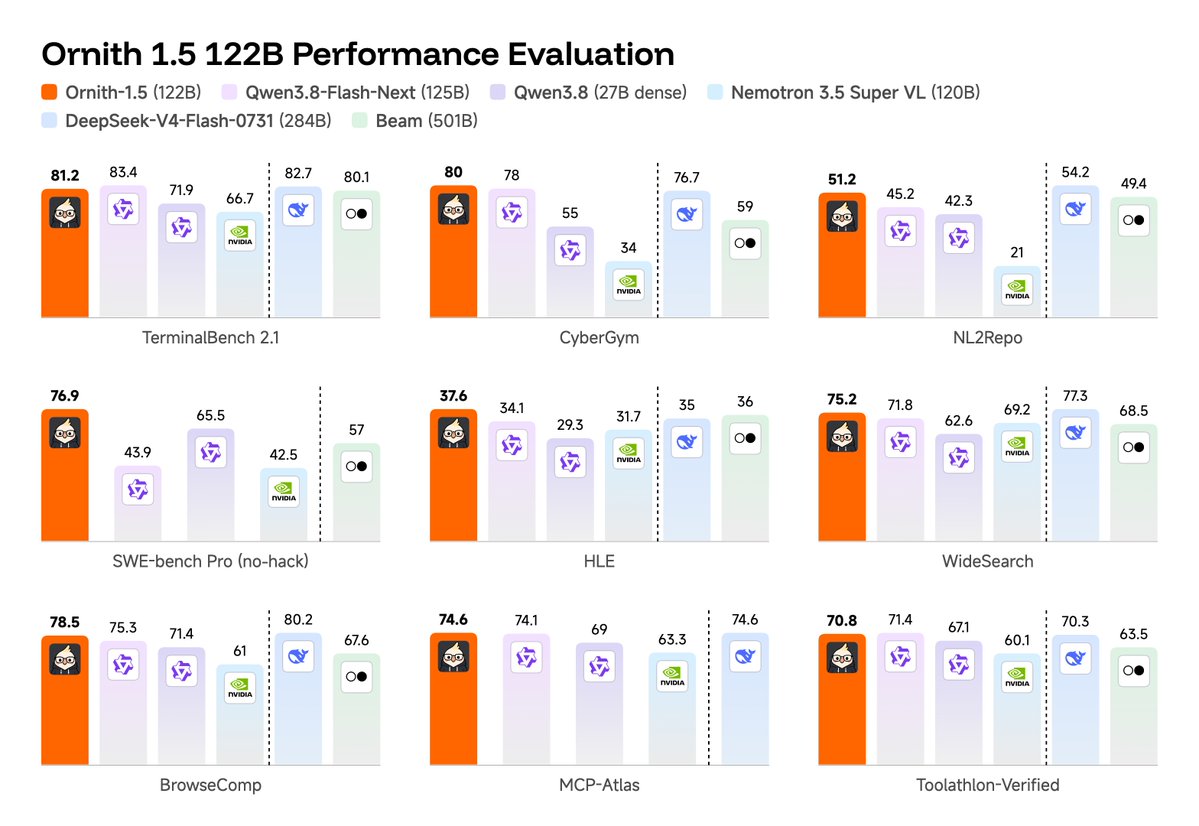
Ornith-1.5-122B aims for open-weight strength on a single DGX
Ornith-1.5-122B is pitched as a 122B MoE open-weight model that runs on a single NVIDIA DGX card, with MIT licensing and strong coding/agentic benchmark numbers. Treat the leaderboard claims as vendor-provided, but the single-box efficiency target is builder-relevant.

NVIDIA’s Kumo Relational attacks the spreadsheet-shaped bottleneck in enterprise ML
Kumo Relational is NVIDIA’s bet that structured-data foundation models can replace weeks of feature engineering. The headline claim—few-shot predictions directly over relational databases—matters because most enterprise prediction work still lives in joins, timestamps, leakage traps, and brittle XGBoost pipelines.

RFD4-Proteina brings inference-time search to protein design workflows
RFD4-Proteina is less interesting as “AI for biology” hype than as a deployable design loop: joint sequence-and-structure generation, reward-guided search, NIM serving, and agent skills for campaigns. Experimental validation still matters, but NVIDIA is packaging the iteration machinery builders need.

NVIDIA pushes generative simulation into clinical surgical scenes
NVIDIA’s Cosmos3-H-Dreams moves generative simulation from tabletop surgical robotics into clinical cholecystectomy scenes, using video plus robot kinematics and streaming on one RTX PRO 6000. Useful research substrate, but NVIDIA is explicit: visual realism is not biomechanical validation and this is not for patient care.
Carbon-X applies mid- and post-training to DNA reasoning
Carbon-X is a 14.8B decoder-only model trained jointly on DNA sequences and natural language, with a released recipe. The strong claim is not just benchmark lift, but that domain mid-training can move an open model toward frontier bio performance without distillation.

IFM opens K2 Horizon data and post-training pipelines
IFM’s K2 Horizon release is valuable less as a model headline and more as inspection material: pre-training data, synthetic-data pipelines, and processing tools. For teams training smaller models, the stated lessons on diversity, verification, and misleading small-scale ablations are the part to mine.

Experimental GPU unlock claims 2× tensor issue rates on some RTX cards
A Linux kernel module project is circulating with claims of doubled FP16/BF16 register-resident tensor issue rates on selected RTX 3000 and 4000 cards. Builders should treat this as experimental: the repo itself separates instruction-rate gains from real application speedups and notes limited stability coverage.

Cloudflare previews Clairic for structured extraction without generation
Clairic is interesting because it narrows the job: extract typed values from messy text or images without token generation. If the preview pricing and confidence scores hold up, this could replace a lot of overbuilt LLM parsing calls in boring but expensive pipelines.
Gemini API adds cheaper long-form video understanding via selective media fetching
Google says long-form video analysis in the Gemini API is now more accurate and up to 66% cheaper. The mechanism matters: agentic video understanding uses tool calls to fetch only prompt-relevant media slices, which could make video agents less wasteful.

Nanbeige4.3-33B aims at the small-agent ceiling
Nanbeige introduced a 33B open model positioned as a teacher for smaller agent models. The interesting bit for builders is not just benchmark bragging: the card claims same-harness comparisons across coding and cowork tasks, plus a distillation path toward Nanbeige4.3-3B.
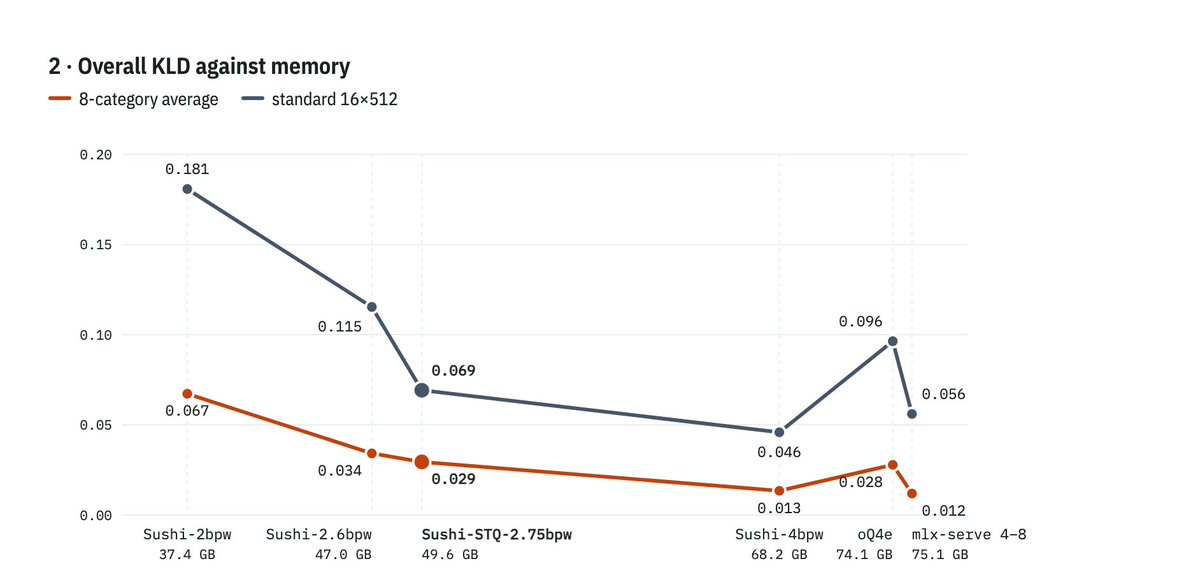
Sushi gets a 2.75bpw Qwen3.8 Flash pack for Apple Silicon
Beamster released a Sushi STQ 2.75bpw pack of Qwen3.8 Flash Next for Apple Silicon. It is narrowly useful: lower-memory native inference with reported near-oQ4e quality, but it requires Sushi 1.3.0, macOS 26.2, and does not load in common runtimes.
Tools & repos
25 picksGraphify-Labs/graphify
Graphify turns code, docs, SQL schemas, configs, and PDFs into a queryable knowledge graph without a vector store. Its pitch is deterministic AST parsing and explained edges for coding agents.
cloudflare/security-audit-skill
Cloudflare’s repo packages a coding-agent skill for structured security audits, including multi-phase workflows and machine-readable findings. Worth watching if you want agent output that can be independently verified instead of pasted into a report.
aws/agent-toolkit-for-aws
AWS is packaging supported MCP servers, skills, and plugins into one agent toolkit. Useful if your agents already need to touch AWS services without stitching together unofficial adapters.
headroomlabs-ai/headroom
Headroom compresses tool outputs, logs, files, and RAG chunks before they hit the LLM. The pitch is practical cost and context relief: fewer tokens for agents and JSON-heavy workflows while preserving answers.
stablyai/orca
Orca is a workspace for running a fleet of coding agents across desktop, mobile, and remote runtimes, using your own subscriptions to tools like Claude Code or Grok Bot.

BAND for Developers
BAND gives multiple coding agents a shared coordination layer across existing dev tools, with task handoffs, shared context, visibility, and human intervention points when judgment is needed.

buddylist
buddylist wraps Claude Code, Codex, Gemini, and OpenCode in a desktop buddy-list interface. The interesting bit is orchestration: separate worktrees, shared folders, group chat, diffs, terminals, previews, and PR checks together.

Moli by Lexmount
A cloud browser platform for agents using Lexmount’s Moli engine. The pitch is faster startup and lower memory than Chrome, with isolated sessions, proxy support, a playground, and SDK access for form-filling and extraction workflows.

Composio Instant
Composio Instant lets agents access paid-style capabilities—web search, contacts, voiceovers, transcription—without each tool requiring a separate signup or subscription. It is positioned as a fast path to agent tool use.

Mintlify Autopilot
Mintlify Autopilot watches code and collaboration tools, drafts documentation updates, and opens PRs for review. The useful bit is treating docs drift as an always-on agent workflow, not a chatbot.
anthropics/knowledge-work-plugins
Anthropic’s repo packages open-source plugins aimed at knowledge workers using Claude Cowork. The dossier gives repo momentum, but not plugin coverage, quality, or production readiness.
luongnv89/claude-howto
A visual, example-driven Claude Code guide with copy-paste templates. The repo is useful if you want patterns quickly, though the dossier gives no license or maintenance signal.
debpalash/VoiceStudio
An open-source, fully local voice toolkit positioned as an ElevenLabs alternative. It covers voice cloning, voice design, video dubbing, dictation, transcription, and audiobook creation across 646 languages.

Llama Windows
A Windows 11 tray app that wraps llama.cpp into a local OpenAI-compatible server. It targets the messy middle: shared local model cache and API access for chat, coding agents, editors, and scripts.

Figma Specs
Figma Specs puts collaborative Markdown docs on or beside the canvas, with embedded frames, FigJam diagrams, comments, and MCP handoff to coding agents. Useful if design context keeps leaking across tools.

Loom Record for agents
Loom is turning screen recordings into agent-ready prompts, capturing video, audio, and on-screen actions. This is a practical bridge for cases where typed prompts underspecify UI context.

Ovren Live Preview
Ovren turns plain-language frontend change requests into code on a safe project copy, then shows the real page as a live preview. The useful workflow is review first, then approve and merge the pull request.
Nutlope/hallmark
Hallmark is an anti-slop design skill for Claude Code, Cursor, and Codex. The sharp positioning is simple: make agent-generated UI look less generic.
zCAD AI
zCAD AI aims at practical CAD, not pretty meshes: prompt a part or assembly, get editable, dimension-driven geometry, refine it in-browser, then export STEP.

Beam.win
Beam.win lets agents and builds keep running on one Mac while their Terminal, browser, and app windows appear on another Mac as native windows with Dock and ⌘Tab presence.

DeepCell
DeepCell targets deadline-heavy office work that mixes narrative, calculations, and presentations. The useful angle is linked docs, spreadsheets, slides, sources, and cheat sheets that update together.

AgentValley
AgentValley turns Claude Code sessions into a Mac notch dashboard. Each session gets a card, each sub-agent a row, with model state and waiting-on-you status.

SuperCMO AI
SuperCMO AI packages open-source agent skills for Claude Code, Cursor, or Codex to study a brand, inspect competitor ads, prioritize tests, write copy, and generate ad creatives with approval gates.

myPip
myPip pitches browser-based game creation by prompt, then publishing and monetization. The interesting bit is the full path: playable games, multiplayer, purchases, ads, and distribution beyond the browser.
makecindy/cindy
An open-source AI agent project with an out-of-the-box promise. The repo is early signal rather than evidence of capability here, but its TypeScript base and fast star growth make it worth a look.
Blogs
23 reads
A KLS proof, and a sober example of human-directed AI research
Microsoft Research describes a proof of the KLS conjecture and, just as importantly, how AI helped: not autonomous theorem-proving, but researcher-led pruning across many candidate paths.

Vercel’s production-agent design centers the approval plan, not the prompt
Vercel explains a concrete pattern for production agents: investigate with read-only access, propose a scoped plan, then bind short-lived credentials to approved work. Useful reading for anyone designing agent permissions.
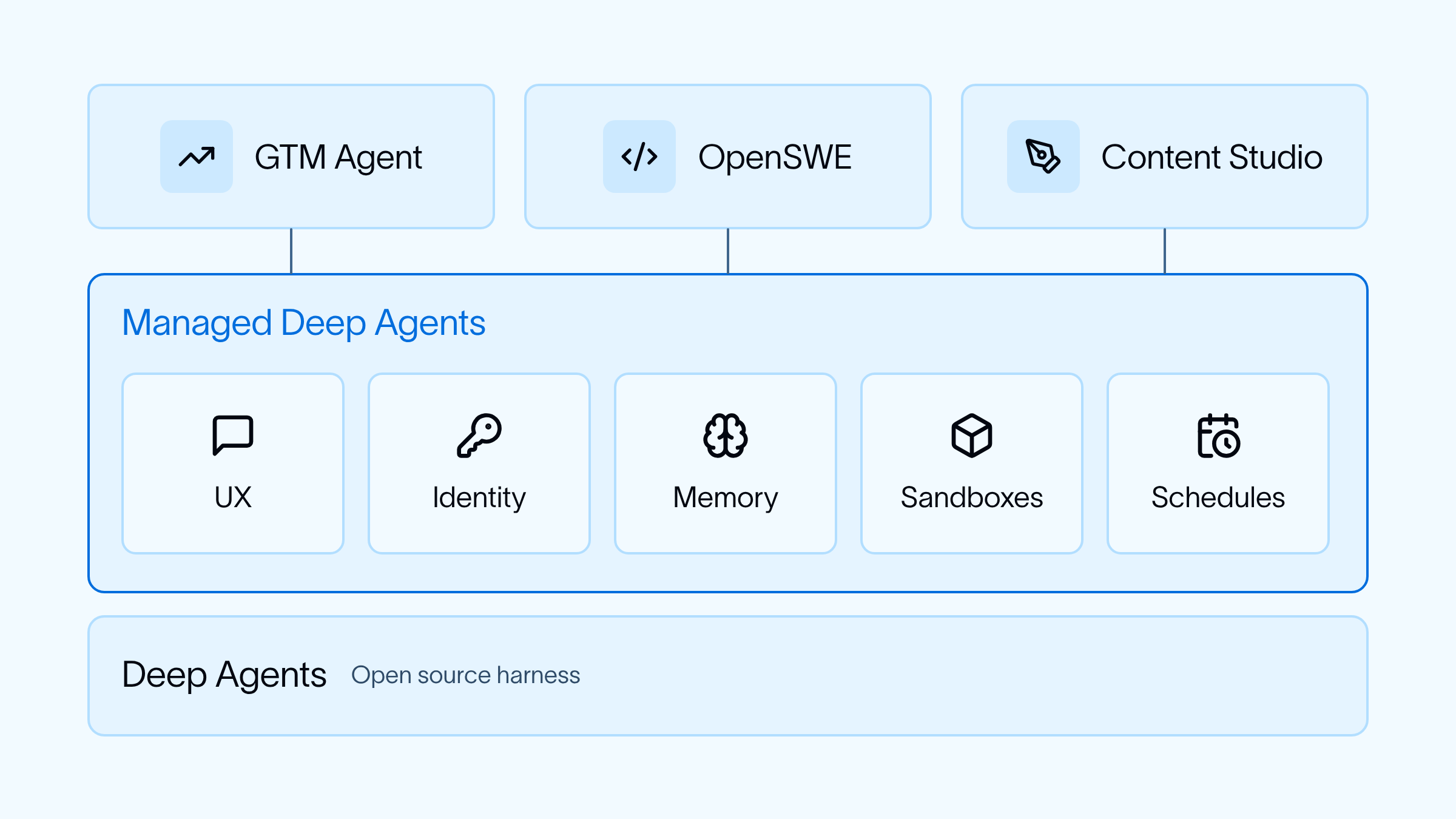
LangChain’s company-harness pattern is really about boring primitives
LangChain breaks down its internal agents into five repeatable pieces: Slack-native UX, identity, memory, sandboxed code execution, and scheduled runs. Useful because it emphasizes operational plumbing over demo-agent architecture.
LangChain’s retrieval advice is really context budgeting advice
LangChain’s practical pattern is simple: search narrowly, offload big results, and delegate noisy reading to subagents. It is a good antidote to agents that burn context on clumsy retrieval.

Turning Database Grading into RL Rewards: Post-Training Agents with ThinkingBox
Microsoft and Hugging Face turn ThinkingBox’s executable database checks into RL rewards. The useful lesson is task selection: agent training needs tasks that sometimes fail and sometimes pass, not easy or hopeless ones.

Modal Dojo lowers the activation energy for RL post-training
Modal Dojo bundles recipes, observability, data hooks, and agent-friendly controls for production LLM post-training. The useful framing: if you already have traces and evals, RL becomes more infrastructure workflow than research ritual.
Numan’s health coach case study is an eval design warning
Numan explains why static single-turn evals broke down for a regulated AI health coach. The useful pattern: test the production LangGraph, score per category, simulate conversations, and make clinician-owned rubrics gate safety claims.

ALTK-Evolve shows prompt-level memory can beat heavier agent tuning
IBM Research’s ALTK-Evolve post is a useful counterweight to fine-tuning reflexes: learned prompt-level guidelines improved stock ReAct customer-service agents on τ²-bench, including Pass^4 gains, without weight updates or human annotation.

FairStress tests whether LLMs stay fair when decisions are challenged
Ai2’s FairStress argues fairness evaluations should test how easily models abandon decisions under pressure, not just final choices. The benchmark exposes demographic asymmetries in generated decisions, explanations, and some activation analyses.

Running Frontier-Class AI Models Across 8 NVIDIA DGX Spark Nodes
NVIDIA shows DGX Spark scaling to eight-node clusters with 1 TB unified memory. The post is most useful for local AI teams comparing ring, switch, inference, routing, and small-model training tradeoffs.

cuTile gets a real kernel workout on Mamba-2
NVIDIA and Jane Street walk through three cuTile Python kernels for Mamba-2 forward pass, then benchmark 1.14x to 1.82x kernel-level speedups over a Triton implementation on a single B300.

NVIDIA details TensorRT’s build-route tuner for model-specific inference speedups
This two-part deep dive explains TensorRT 11.1’s Global Performance Tuner: expose compiler knobs as searchable build routes, reject inaccurate candidates, then pick the fastest measured engine for the actual deployment environment.

How to read TorchNeuron performance traces instead of guessing
Amazon’s walkthrough shows a disciplined Trainium profiling loop: capture Neuron traces, rank device hotspots, inspect execution in Neuron Explorer, then compare naive, fused, and torch.compile implementations.

Tokenizer specialization as an overlooked inference-cost lever
Dharma-AI’s VocabX post is a practical reminder: for domain SLMs, the tokenizer can be a bigger cost lever than another fine-tune, especially when outputs repeat structured text.

OlmoEarth v1.3: State-of-the-art embeddings for the whole planet
Ai2’s OlmoEarth v1.3 ships open satellite embeddings and a browser explorer. For builders, this turns planetary analysis into a lightweight modeling problem instead of a full remote-sensing pipeline.

Beyond tree cover: mapping the world’s forest types
ForTy maps global forest types at 10-meter resolution, not just tree cover. That distinction matters for deforestation regulation and carbon work, because plantations, farms, and primary forests carry very different meanings.

Ensemble forecasting with IBM Granite time-series models
IBM’s Granite Timeseries Ensemble combines four open Granite forecasters behind one interface. The pragmatic value is robustness and quantile forecasts without forcing teams to pick one architecture up front.
Modal’s Vera benchmark is really about sandbox contention
Modal benchmarked NVIDIA’s Arm-based Vera CPU on agentic Sandbox workloads and saw up to 2x throughput under heavy load. The takeaway: noisy multi-tenant agent sandboxes may care more about contention behavior than quiet-host latency.
OpenAI says Habitat storage delivered 12× faster ChatGPT reads
OpenAI’s storage post says it scaled Habitat using reliable multi-tenancy, global caching, and Azure Cosmos DB. The headline builder takeaway is the claimed 12× read improvement for ChatGPT.
OpenAI explains the trust boundary for ChatGPT ads
OpenAI says ChatGPT’s ad stack uses LLMs to understand conversational intent while keeping ads separate from answers. The core question for builders is whether separation remains legible in real usage.

LitPivot turns literature review into an editable research pivot loop
Ai2’s LitPivot is aimed at early research ideation: select literature around a proposal facet, get evidence-backed critiques, then revise. The interesting control point is that researchers choose the papers used for assessment.
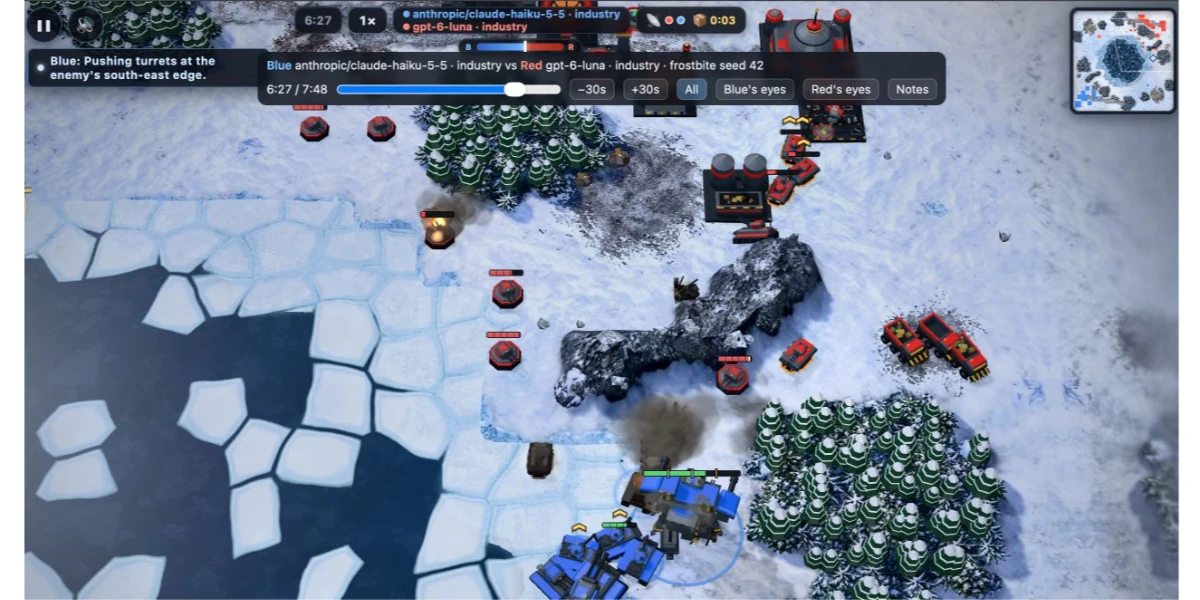
Battle Drones is a better agent-coding lesson than most demos
Simon Willison’s Battle Drones write-up is a rare concrete case study in agent-built software that improved through playtesting, tooling, and blunt prompts. The audio multiplayer detour is fun; the engineering lessons are more durable.
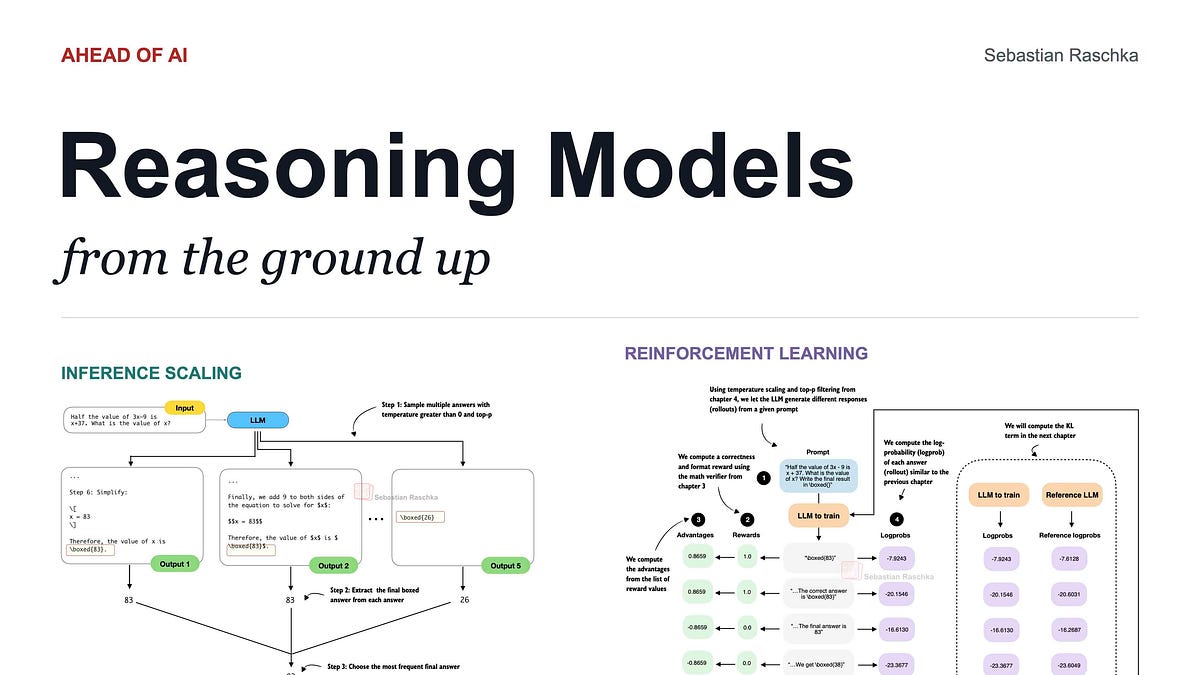
Building Reasoning Models from the Ground Up: A Full Video Course
Raschka’s reasoning-model course is builder-friendly because it starts from code, not slogans: Qwen3 0.6B, evaluation, inference scaling, RLVR, GRPO-style training, and distillation in Python and PyTorch.
Community discussions
10 threadsA real Cursor Cloud workflow looks more like a PR factory than pair programming
The useful tension here is scale versus review capacity. The workflow runs up to ten Cursor Cloud agents from a GitHub board, but the cap exists because PR floods and rebases still land on one human.
The anti-subagent argument is getting sharper
This post argues many agent stacks should collapse into one loop with skills, tool search, budgets, and harness gates. The useful tension: subagents reduce context pressure, but summaries and handoffs can erase detail.
Resin tries to make inference-engine hacking modular enough for agents
The claim: keep schedulers, cache, metrics, and serving reusable, then let humans or agents write model-specific forward passes. The caveat is explicit: Resin is for hacking, not production.
When AI makes research ideas cheap, experiments become the scarce resource
A researcher says AI now generates directions and smoke implementations faster than they can run, evaluate, and understand experiments. Commenters push the old truth back: ideas are abundant; execution, evidence, and taste are scarce.
Agents SDK usage may drain Claude 5-hour limits faster than Claude Code
The practical warning: Claude-based agent wrappers may consume 5-hour limits much faster than Claude Code directly. Theo says he confirmed a real Anthropic-side bug and reported it.
Use parallel coding agents as a pre-launch bug bash
This is a solid agent pattern: assign subagents distinct failure personas, force reproducible bug reports, sort by severity, fix critical issues, then rerun the same tests.
A slower agent workflow for statistical analysis
Instead of one-shot analysis, this workspace forces an agent through auditable steps: scope data, agree methods, generate charts, run tests, then write conclusions. That is the right kind of friction for statistical work.
A no-code-background game build workflow: Claude Code, Godot, and disciplined assets
The useful bit is not “AI made a game”; it is the production loop: feature-by-feature testing, prompt JSON for style consistency, reference images, procedural assets, and documented shaders.
Local LLM builders are still doing PCIe math to make dense models fit
A budget server builder wants Gemma 4 31B Q5 at 16K context and at least 15 t/s. The thread gets useful because someone shares real llama.cpp split-GPU numbers and PCIe transfer observations.
A 16GB-GPU RL toy problem with a real lesson about tokens
A playful Qwen3-1.7B fine-tune shows why character-level constraints are awkward for token-based models. Masking tokens made gibberish; SFT plus RL produced more coherent no-letter-e responses.
Funding & acquisitions
16 movesFlapping Airplanes raises $1B to chase more data-efficient AI
Flapping Airplanes’ $1B Series A is a huge bet on GPU primitives and data-efficient training. The company’s technical claims are ambitious; the immediate fact is capital for hiring and proving whether the cost-structure thesis works.
Tenstorrent raises $1.5B to stay independent in the inference-chip fight
Tenstorrent raised $1.5 billion at a $6.2 billion valuation after reported acquisition interest from Intel and Qualcomm. The capital is aimed at scaling chips for open-weight AI model serving and video generation.
Legora raises $550M as legal AI services heat up
Legora’s Series E keeps legal AI in mega-round territory. The useful signal is revenue acceleration: TechCrunch says ARR moved from $100M in April to over $200M, while the company plans North America expansion.
Warp Sciences raises $215M Series A to automate wet labs
Kevin Weil’s Warp Sciences launched with a large Series A to train robots for wet-lab drug discovery. The bet is automation plus reshoring of molecule synthesis and testing work.
OpenAI acquires Orchestra Bio to strengthen Rosalind
OpenAI is buying Orchestra Bio to fold its team and technology into Rosalind and Rosalind Workbench. The deal pushes OpenAI’s life-sciences tooling beyond model access into experiment planning and analysis workflows.
Blacksmith hits $1B valuation on AI-code CI demand
Blacksmith’s raise is a clean infrastructure signal: AI-written code increases CI volume, not just developer velocity. The company says it now runs over 90M CI jobs, making build-test reliability a scaling bottleneck.
Daytona raises $60M Series B at a $1B valuation for its Agent Cloud
Daytona says it raised a $60M Series B at a $1B valuation to build an “Agent Cloud.” FirstMarkCap led, with named founder-angels participating; the company says it is 35 people and hiring.
Blackwall raises $100M as bot and AI traffic pressure websites
Blackwall raised $100M at a $2.2B valuation for security and filtering tools aimed at websites dealing with rising bot and AI traffic.
Town hits unicorn status four months after public launch
Town raised a $108 million Series B co-led by Forerunner Ventures and Menlo Ventures. Its bet is workplace AI assistants, called Townies, that connect to business tools and can share approved context with each other.
Greptile raises $50M Series B for AI code-review validation
Greptile says it raised a $50 million Series B led by Menlo Ventures at a $750 million valuation. The company claims its review-and-test layer handles more than 1% of GitHub PRs daily.
NVIDIA and TCV join Higgsfield as Series B extension investors
Higgsfield says NVIDIA and TCV joined its Series B extension. The company is pairing the investor announcement with aggressive operating claims: over $1B annualized revenue and more than 40M users globally.
Mach9 raises $34M after pivoting from robotics to AI CAD
Mach9’s pivot story is concrete: surveying hardware exposed the real bottleneck, turning laser-scan and image data into usable CAD plans. The company says its AI CAD software is already in private beta with nearly 100 customers.
AuxoAI raises $20.7M for forward-deployed enterprise AI delivery
AuxoAI is selling the Palantir-style AI deployment model: platform plus forward-deployed engineers. The funding will expand FDE hiring, partnerships, and Damia, its enterprise AI workbench for context-based workflows.
Firstwork raises $15M Series A for AI workforce automation
Firstwork’s Series A backs a familiar enterprise-AI wedge: automate the messy HR workflows around frontline workers without replacing existing systems. Notably, Inc42 says about 80% of the company’s workforce operates from Bengaluru.
Hunar.AI raises Series A for multilingual frontline hiring agents
Bengaluru-based Hunar.AI raised about ₹40 crore in a Blume Ventures-led Series A. It builds conversational AI agents for frontline hiring, onboarding, training, and retention across regional languages.
Karta AI raises $3M for inbound BFSI voice agents
Karta AI is focused on the expensive part of support automation: multi-intent inbound BFSI calls. It says its agents handle 2M monthly conversations across 25+ languages and resolve about 70% of borrower queries end to end.
Bengaluru radar
13 events
Okta Developer Connect Bengaluru
Invite-only Okta event on identity as the control plane for enterprise AI agents, with sessions on Agent SSO, XAA, MCP, OAuth, governance, and runtime security.
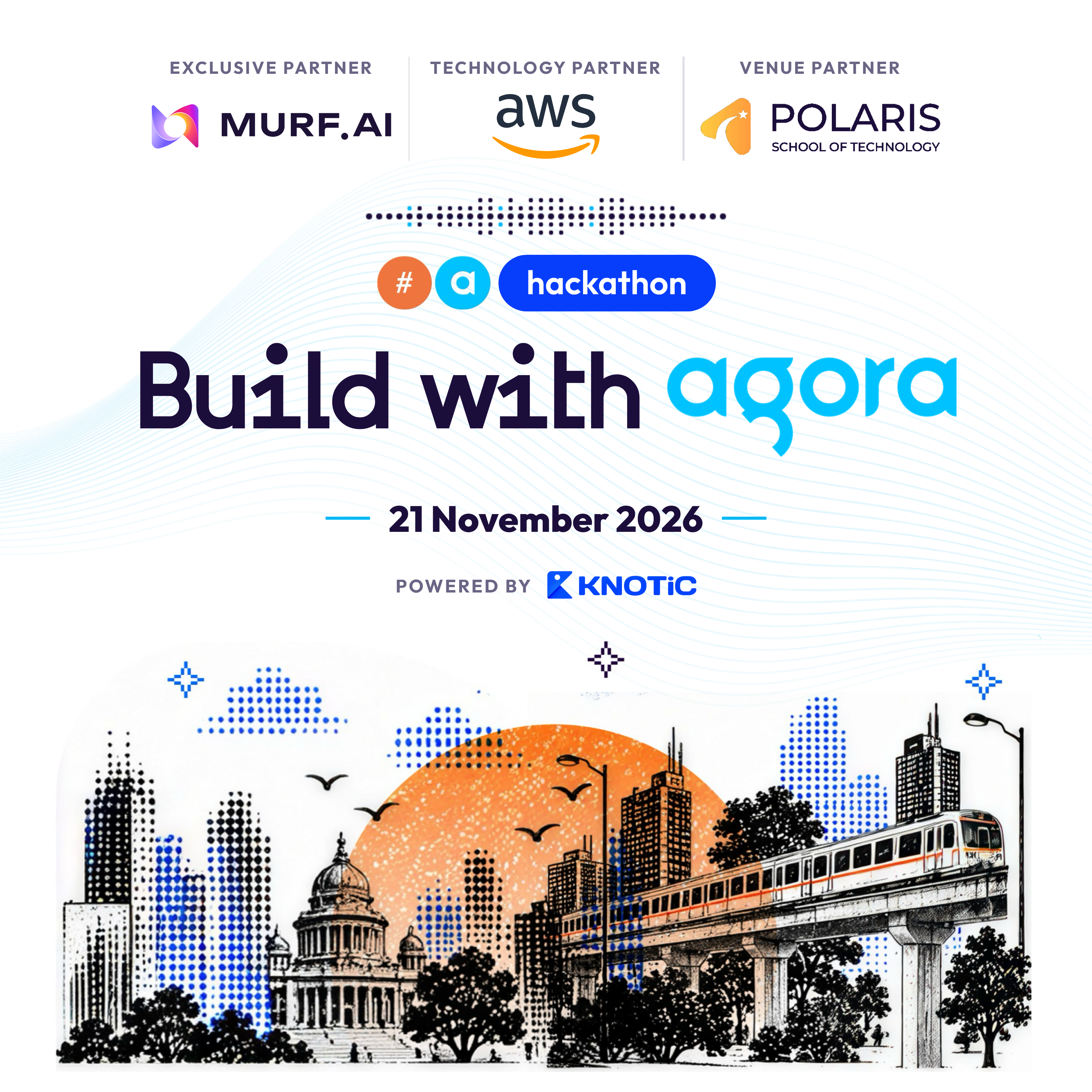
Build with Agora - Bengaluru 2026 | Voice AI Hackathon
One-day in-person Voice AI hackathon for 250+ builders, focused on real-time AI prototypes using Agora technologies, with $3,000 in cash prizes and gadgets.
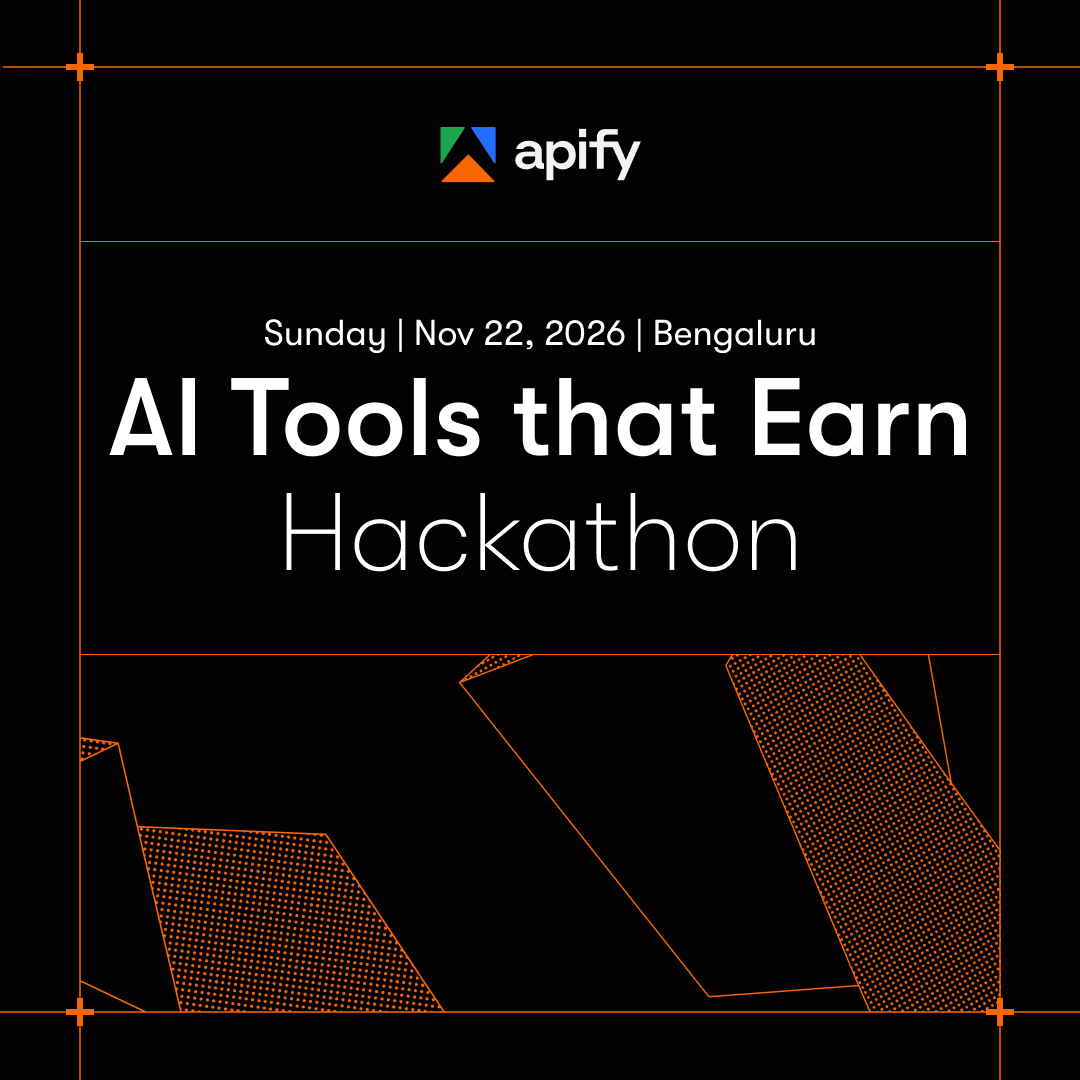
AI Tools that Earn: a hackathon by Apify
Apify’s one-day Whitefield hackathon is about shippable tools someone would pay for, with Actors published to Apify Store and cash prizes for top teams.

Qdrant RAG build sprint at AI House
A two-hour in-person sprint to build and benchmark an agentic RAG system with Qdrant, GitHub repos, live feedback, leaderboard review, and rewards.
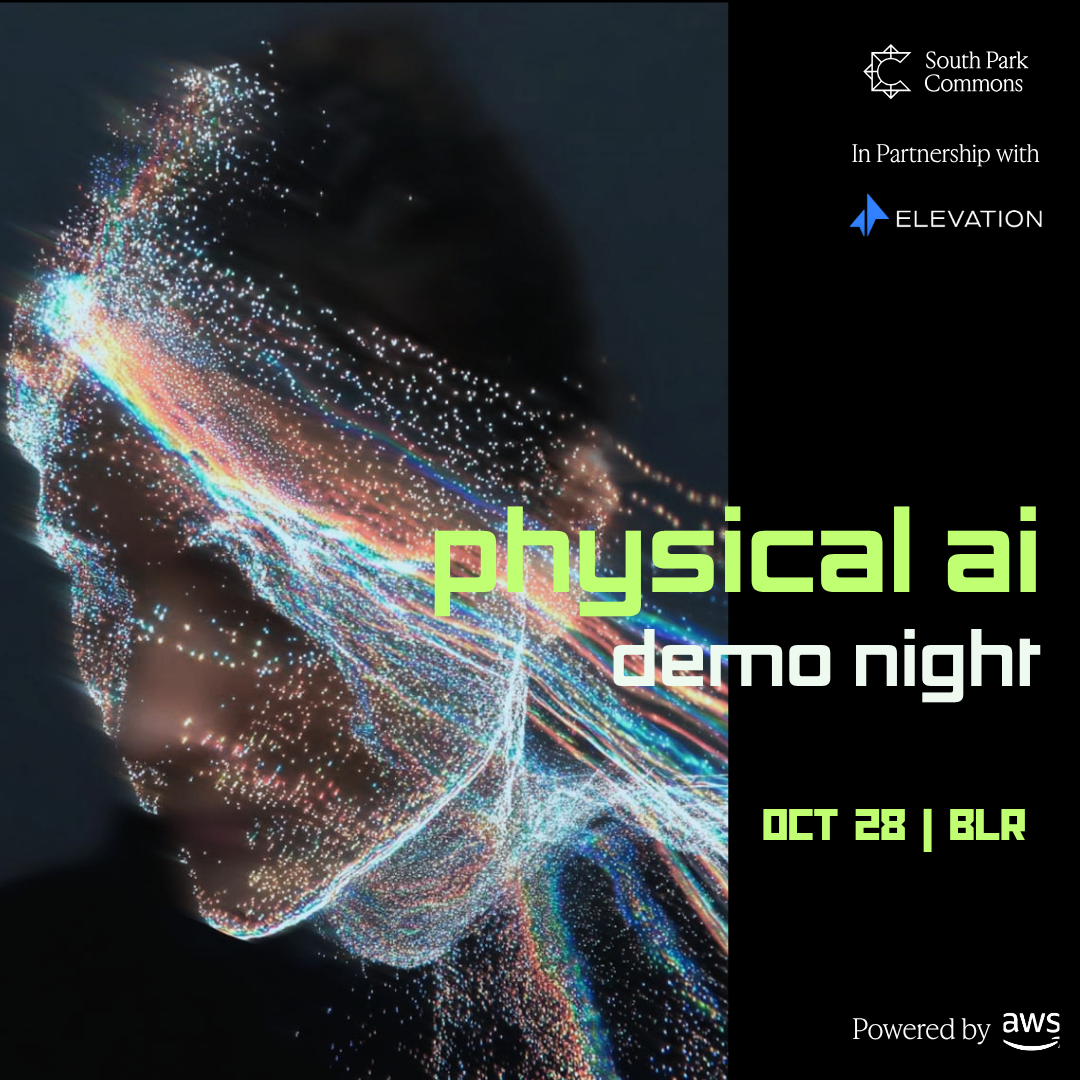
Physical AI Demo Night
SPC India and Elevation Capital host an AWS-powered evening of live physical AI, robotics, drones, hardware, and industrial intelligence demos.
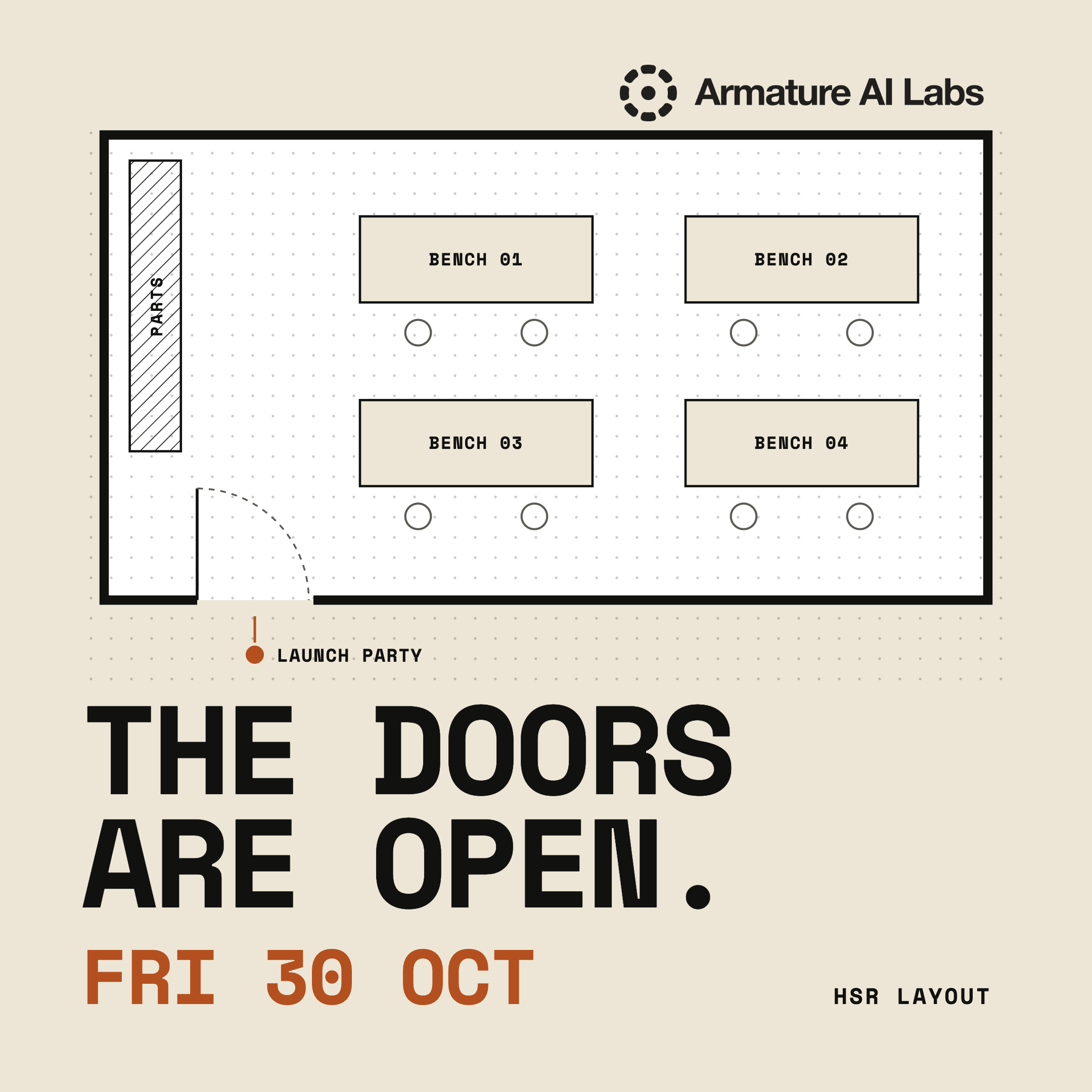
Armature AI Labs Launch Night
Armature opens its 3,500 sq ft physical AI and robotics lab in HSR Layout. Free, in-person launch night for Bengaluru builders.
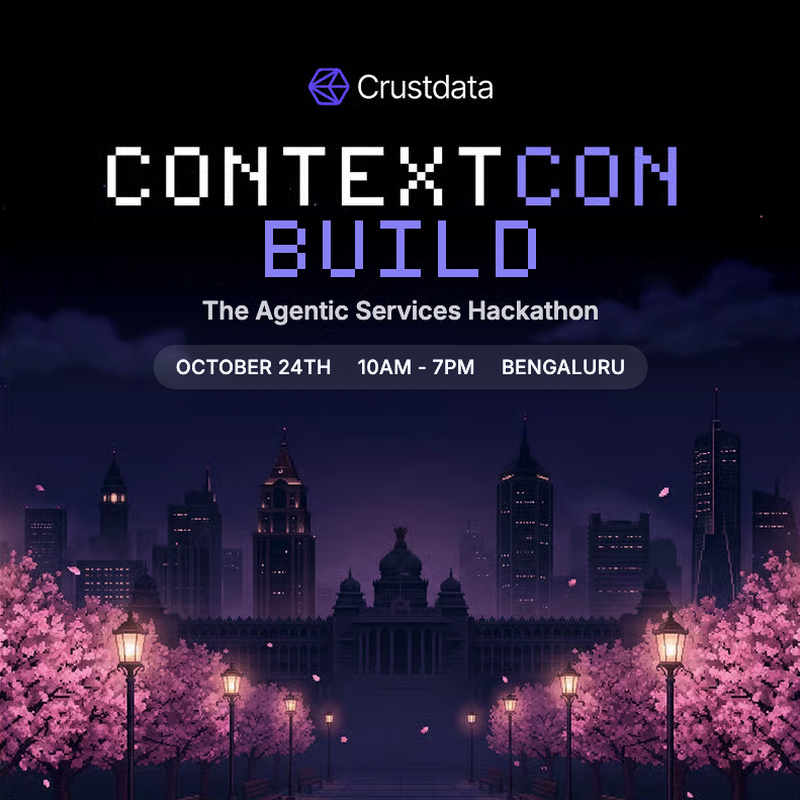
ContextCon Build
Crustdata’s in-person agentic services hackathon brings 40 selected builders, API credits, mentors, demos, and prizes to its Bengaluru office.
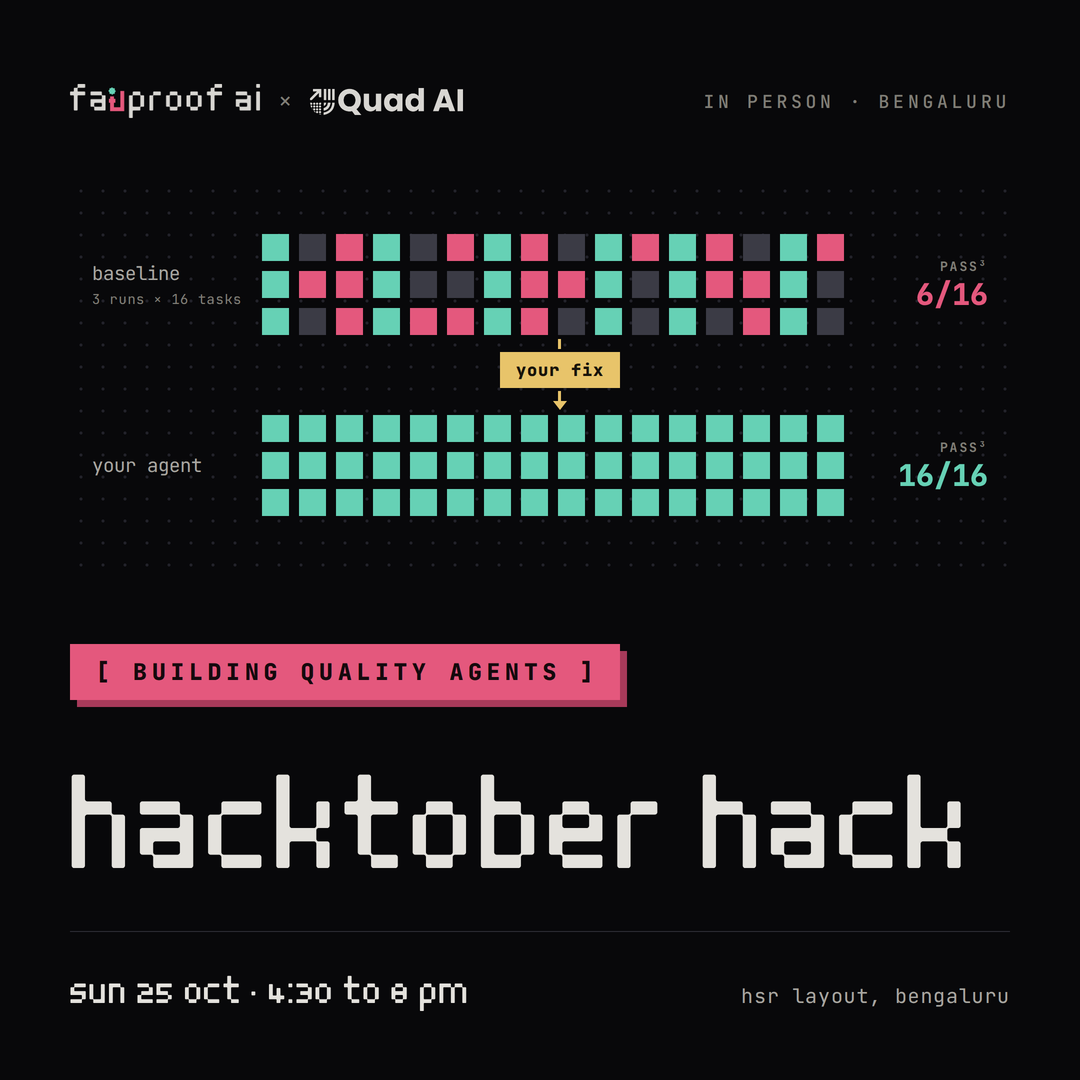
Hacktober Hack
A hands-on HSR hackathon on making a flaky open-source AI agent shippable using prompts, tools, validation, retries, guardrails, and evals.

RSI Research Mixer
A Bellandur research-led mixer for builders exploring recursive self-improvement, memory, RL environments, evaluations, verification, and long-running agent infrastructure.
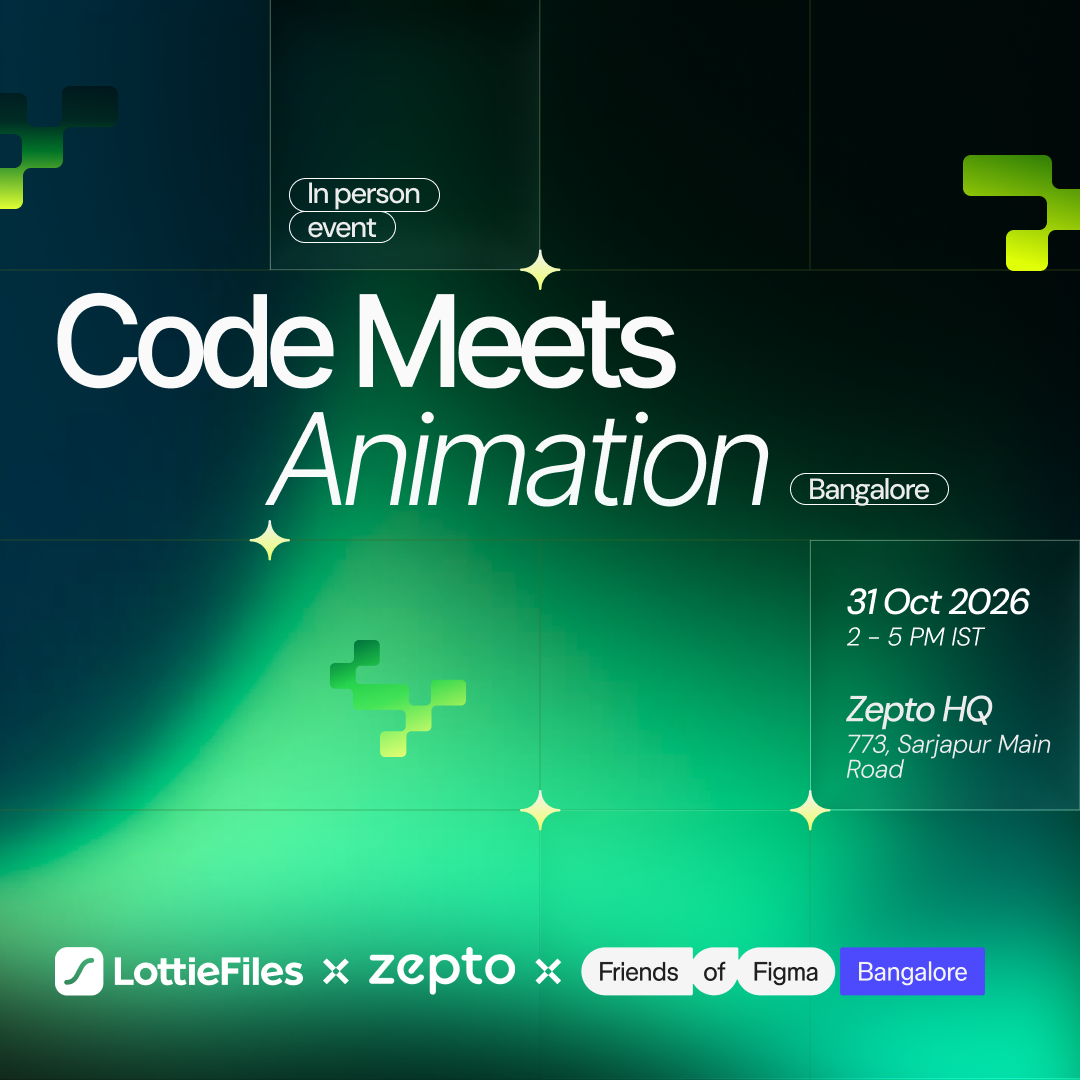
Code Meets Animation - Bangalore
Sold out, but locally relevant: LottieFiles, Zepto, and Friends of Figma Bangalore are running talks and a live prompt-based animation challenge for product and frontend builders.
WeAreDevelopers Conference India
Developer conference for engineering leaders and teams building production AI systems. Scheduled for November 25 in Bangalore.
Great International AI Native Summit (GAINS)
GAINS is listed for December 9 in Bangalore, with a practical engineering focus across AI, cloud, data, DevOps, and architecture.

Postman engineering leader Lakshay Arora on standing out when everyone has AI
Today in HSR: a focused Quad AI session for students and developers on durable engineering skills as AI tools become universal.
Inbox edition
Know what matters before your day gets noisy.
Subscribe to Ekloge for one carefully curated AI briefing in your inbox—no endless feed, no filler.